
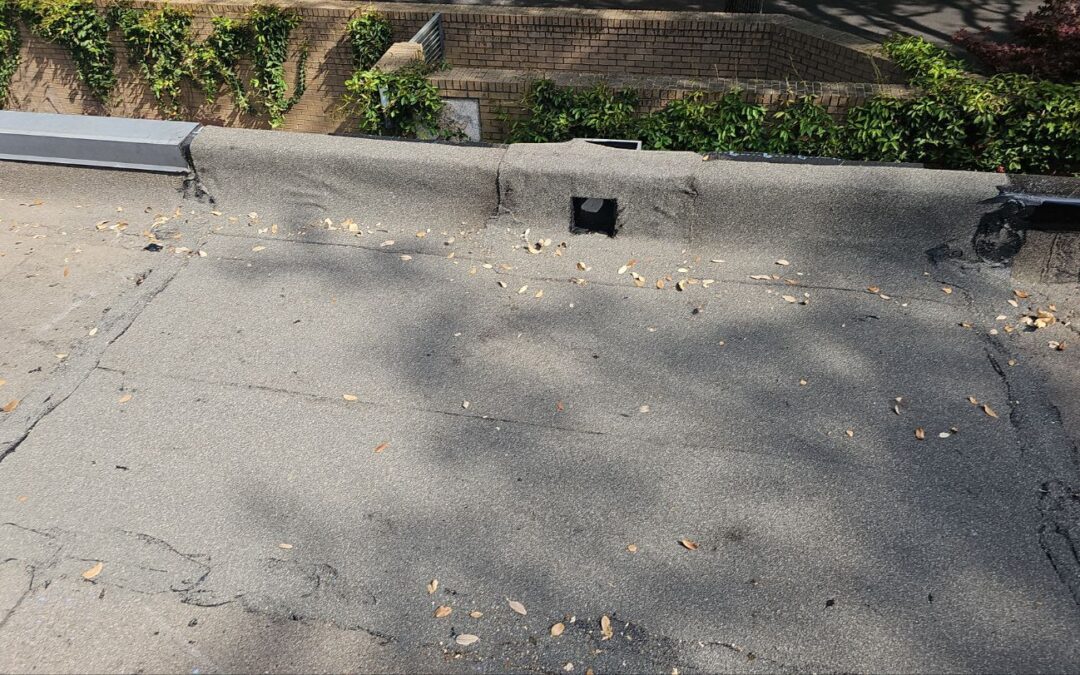
Low Pitch Modified Bitumen Roof Repair in Dallas
Low slope roofing is a different animal. This project is a good example of why.
We recently worked on a low pitch modified bitumen repair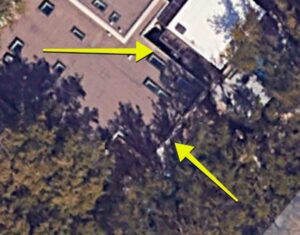 on a high-end home in Highland Park. While the home itself is unique, the roofing problem is not. We see the same types of issues regularly in East Dallas, especially on older homes that have been added onto over time.
Where This Type of Problem Shows Up
In East Dallas, a lot of homes have been modified over the years. Additions get built onto the back of the house, and those additions often introduce low slope or flat roof sections tied into a traditional sloped roof.
The original roof may have been straightforward. The additions usually are not.
You end up with low slope sections that rely on scuppers or drainage through walls, minimal pitch that is sometimes barely enough to move water, multiple roofing systems tied together, and transitions at walls and parapets that were not always detailed correctly. These areas tend to be where leaks develop first.
Why This Work Falls Through the Cracks
There is a gap in the market on this type of roofing.
Most residential contractors focus on steep slope systems like shingles. Low slope roofing uses different materials and different details, and it is not something every contractor deals with regularly.
On the other side, many commercial roofing companies that specialize in low slope systems do not typically work on residential properties. In some cases, they are not set up for that type of work, and in others their insurance or classifications limit or discourage residential projects.
That leaves a relatively small group of contractors who are comfortable working in both environments.
Bert Roofing falls into that category. In addition to being an RCAT licensed residential contractor, we also have experience and certifications on the commercial side. That combination matters on projects like this, where the details are closer to commercial roofing than typical residential work.
Project Overview
This project involved two leaking scuppers at the rear of the home. Water was backing up at the wall and working its way into the structure. Interior damage had already started, and the general contractor had portions of the ceiling open to assess framing conditions.
This was not a surface repair. It required opening the roof system and rebuilding it correctly.
The scope included removal of roofing down to the deck at both scupper locations, coordination with carpenters to repair damaged framing and blocking, fabrication and installation of two new custom scuppers, localized drainage correction at the scupper inlets, and rebuilding the modified bitumen system.
Material for this project was sourced through ABC Supply.
We were also working in coordination with other trades. On many of these types of homes, the front of the house may have a steep slope roof using higher-end materials, while the rear addition is low slope. We often work alongside contractors like Scotty Ballantyne Roofing, who handle slate and tile work, while we handle the low slope portions.
The Repair Approach
Once the roof was opened, the condition underneath confirmed the issue. There was deteriorated decking and evidence of prolonged moisture exposure around both scupper locations.
We rebuilt the system from the structure up with new decking and backing where required, a Dens Deck cover board over the repair areas, a self-adhered base sheet to minimize flame exposure near framing, and a torch-applied modified bitumen cap sheet for a fully bonded surface.
We also added localized tapered insulation at the scupper inlets. Even a small amount of slope helps move water toward the scupper instead of letting it sit against the wall.
The new scuppers were set with proper outward pitch, and the sleeve penetrations were sealed and backed to prevent water from tracking into the wall cavity.
Why These Details Matter
Low slope roofing does not have much margin for error.
On a steep roof, water sheds quickly. On a low slope roof, water moves slowly. That means small issues tend to show up over time. Minor dips can hold water. Transitions at walls are more vulnerable. Aging materials fail first at penetrations and edges.
This is why these repairs need to be approached as a system rather than a simple patch.
Final Thoughts
This was a targeted repair, but it required understanding how low slope systems behave and how they tie into the rest of the structure.
While this project was in Highland Park, the same types of problems are common in East Dallas. Any time a home has been added onto, especially with a low pitch section, the details at the transitions and drainage points matter.
If you are dealing with a low slope or flat section that continues to give you trouble, it is worth having it looked at by someone who works with these systems regularly. The fix is not always complicated, but it does need to be done correctly.
Minimum Pitch/Slope of An Asphalt Shingle Roof