What is the minimum Pitch/Slope of an Asphalt Shingle Roof?
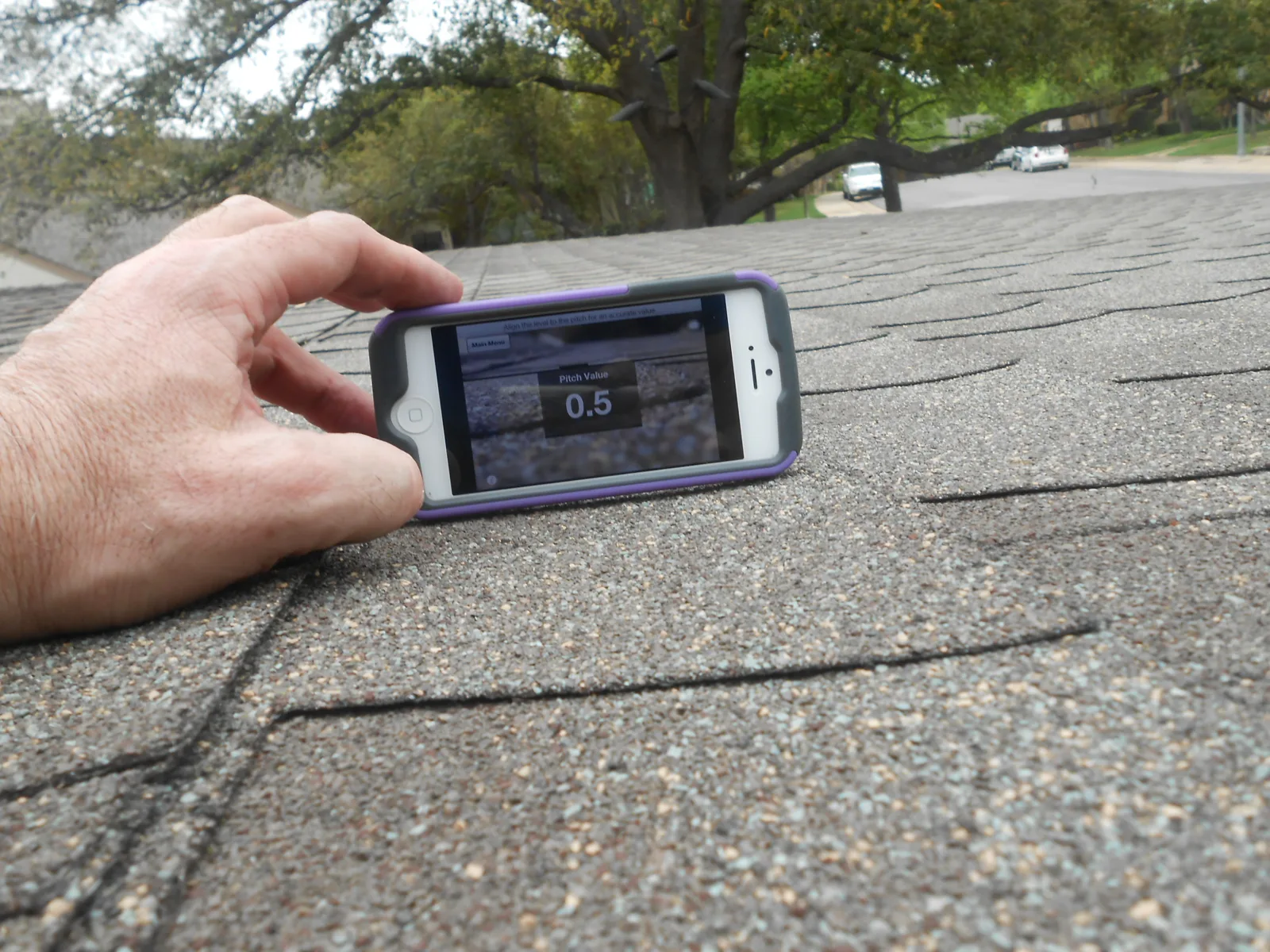 Slope Meter Reading
Minimum Pitch for an Asphalt Shingle Roof
Asphalt shingles are designed to shed water, not hold it. For them to work the way the manufacturer intended, the roof needs enough slope so water runs off quickly instead of slowing down or backing up. The absolute minimum pitch where you can even consider using standard asphalt shingles is 2/12 – two inches of rise for every 12 inches of horizontal run, roughly nine degrees. On paper, a 2/12 roof can meet most manufacturer instructions and building codes if special underlayment details are followed. In the real world, especially here in North Texas, a roof that flat is always living on the edge. Wind-driven rain, debris, and minor framing irregularities make 2/12 shingle roofs far more likely to leak over time, no matter how careful the installer was.
Normal Shingle Slope vs. Low-Slope Shingle Slope
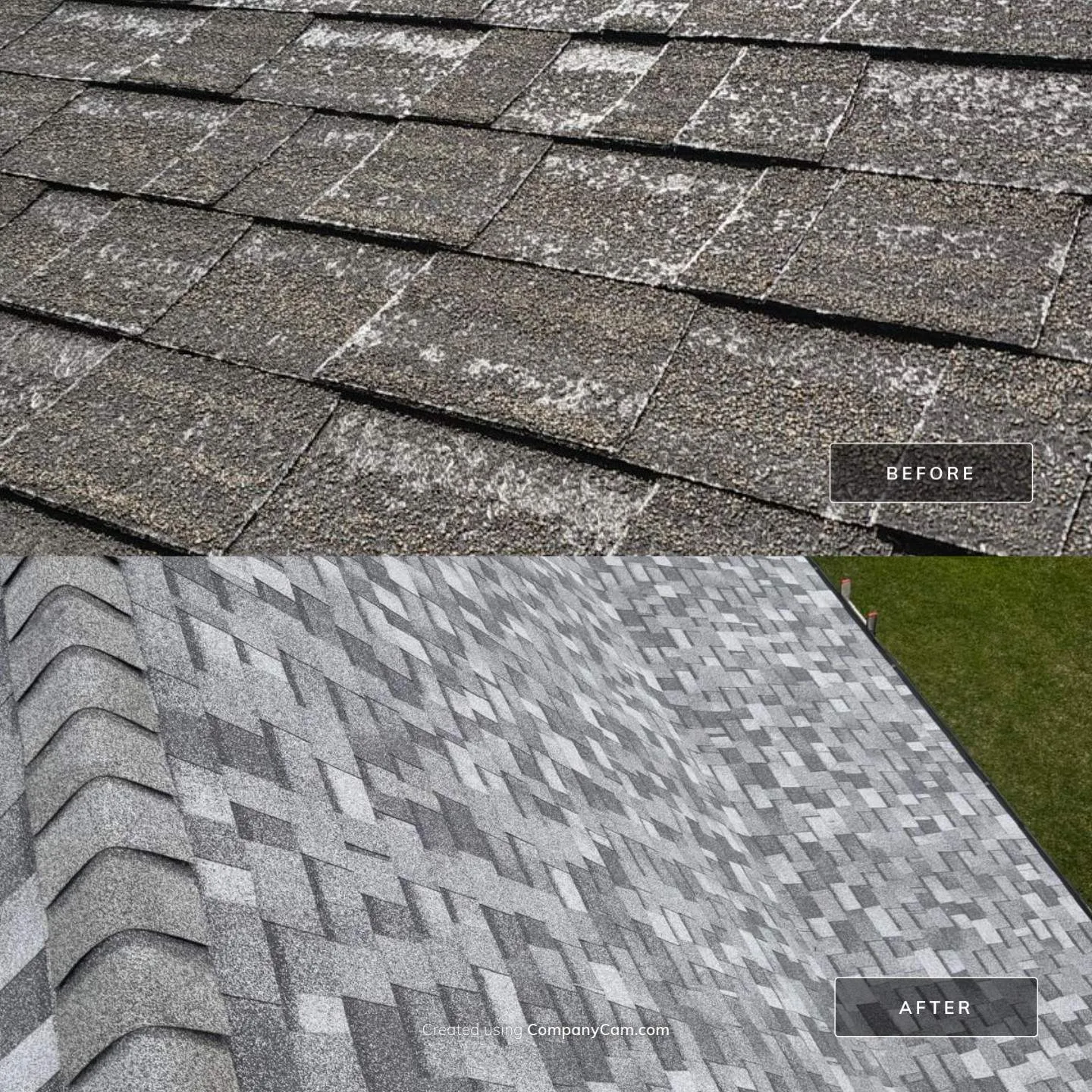
A “normal” shingle roof starts at 4/12 and goes up from there. At 4/12 and steeper, water is moving fast enough that a standard underlayment and standard shingle installation are allowed by most manufacturers. This is the sweet spot for typical composition roofs you see all over Dallas. Roofs between 2/12 and 4/12 live in a gray area. Manufacturers usually allow shingles in this range only if you upgrade the underlayment. That can mean a double-layer of ASTM-rated felt lapped correctly, or a full-coverage ice-and-water-type membrane under the entire shingle area. CertainTeed, for example, spells out these low-slope requirements in their shingle application manuals.
Why Minimum Slope Shingle Roofs Are Riskier
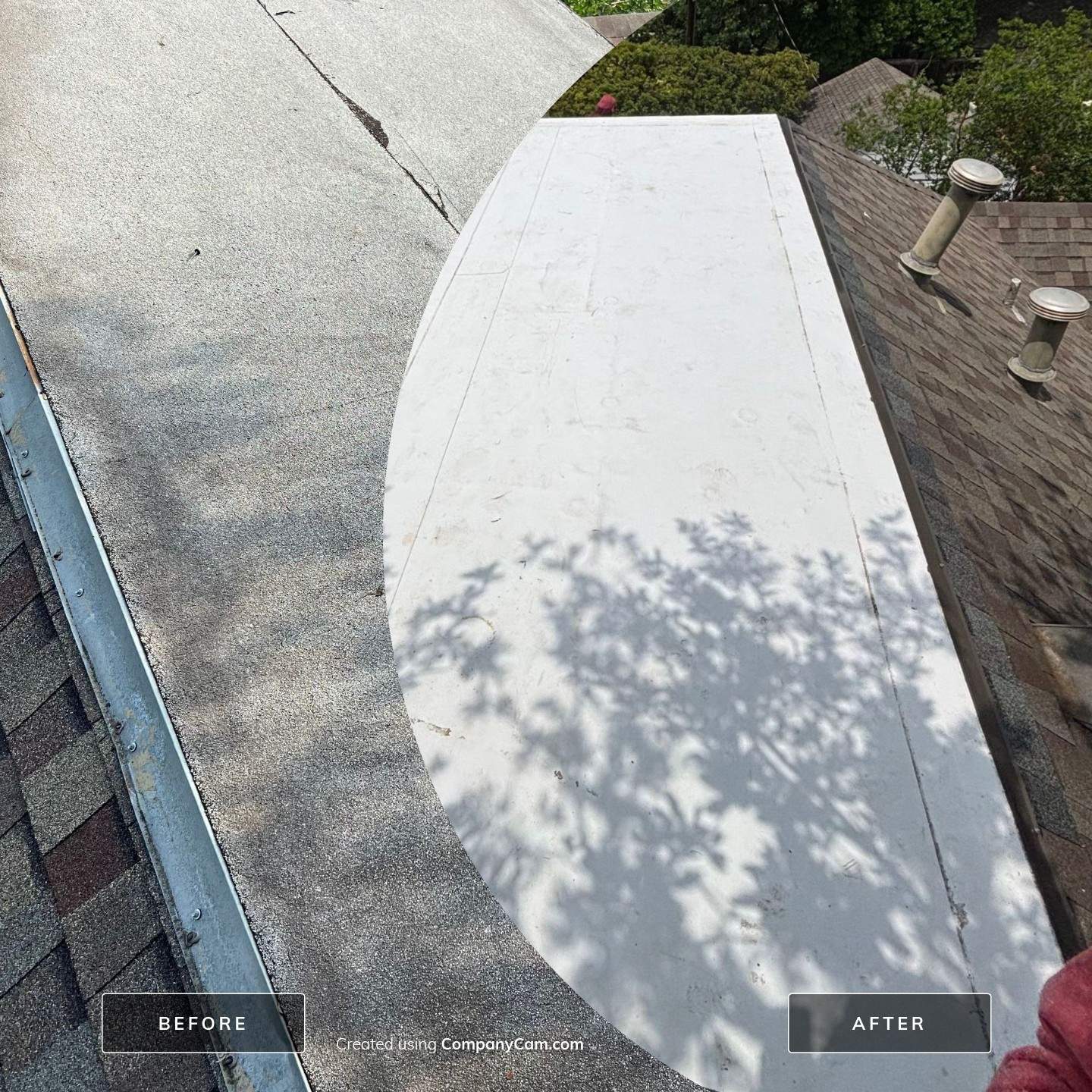
At low slopes, water hangs around longer. Any small dip in the deck, buildup of leaves, or poorly placed nail hole becomes a potential leak path. Shingles are not a solid, waterproof sheet; they are an overlapping system that depends on gravity and slope to keep you dry. The closer you get to the minimum 2/12 pitch, the less margin for error you have. We see this most often on shed roofs, porches, and add-on garages where the original builder pushed the slope as low as possible to tuck under an existing wall or window. If the shingle roof is already near the minimum slope and has a history of problems, switching to a true low-slope system (modified bitumen, TPO, or similar) is often a smarter long-term solution than trying to “band-aid” it with more shingles.
When to Consider a Different Roofing Product
If your roof is just barely above the minimum pitch, shingles may technically be allowed, but they may not be the best choice. A different product that is designed for low-slope conditions can offer better protection and fewer headaches over the life of the roof. If you are not sure what you have, or you are dealing with a chronic leak on a shallow section of roof, we can help you sort it out. Visit our roof installation and replacement page to learn more about your options, or contact Bert Roofing for an on-site inspection and honest recommendation for your specific roof. Flat vs. Pitched Commercial Roofs: Which Is Your Best Option? Why We Refused a Shingle Bid: The Danger of Low-Slope Roofs