What is Drip Edge?
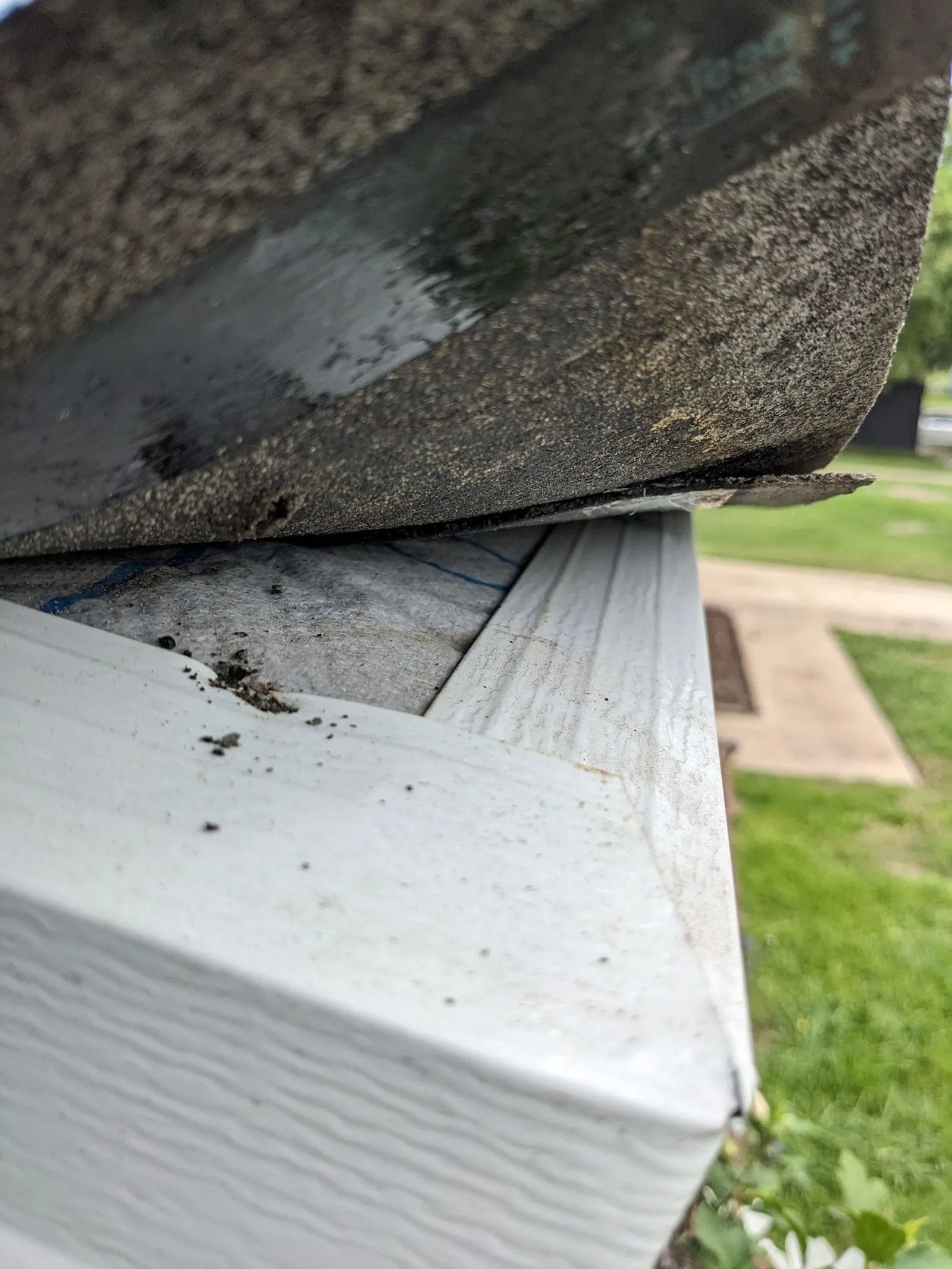
A metal drip edge is an essential component in roofing, particularly for shingle roofs. It is a metal flashing installed at the edges of the roof to direct water away from the fascia and into the gutters, protecting the underlying roofing components from water damage.
Purpose and benefits:
- Water management. Directs water off the roof, preventing water from seeping under the shingles and causing damage.
- Protects the fascia. Keeps water away from the fascia, preventing rot and deterioration.
- Prevents capillary action. Stops water from being drawn back up under the shingles through capillary action.
- Wind protection. Helps secure the shingles at the edges, reducing the risk of wind damage.
Dallas, and most local municipalities, follow the International Residential Code (IRC).
Does the IRC Require a Drip Edge?
Yes. The IRC has required drip edge on shingle roofs since the 2018 edition. The relevant section is R905.2.8.5, which outlines the need for drip edge at the eaves and rakes of asphalt shingle roofs.
IRC 2018 Section R905.2.8.5: Drip Edge
- Location. Drip edges are required at both the eaves and rakes of shingle roofs.
- Installation.
- At eaves, the drip edge should be installed under the underlayment.
- At rakes, the drip edge should be installed over the underlayment.
- The drip edge should be lapped a minimum of 2 inches.
- The underlayment should extend over the drip edge at the eaves.
- Overlap. Sections of drip edge should overlap by at least 2 inches to ensure continuous protection.
Do Shingle Manufacturers Require a Drip Edge?
Yes. Every major shingle manufacturer requires drip edge as part of their warranty requirements and to ensure proper roof performance.
GAF
GAF, one of the largest roofing manufacturers, requires drip edge for both eaves and rakes in their installation instructions. They emphasize that drip edge is crucial for protecting the roof deck from water infiltration and wind-driven rain.
CertainTeed
CertainTeed specifies the use of drip edge in their shingle installation guidelines. They require it at both eaves and rakes to help manage water flow and protect the roof’s structural components.
Owens Corning
Owens Corning’s installation instructions call for drip edge at eaves and rakes. They highlight its importance in preventing water damage to the roof deck and extending the life of the roof.
IKO
IKO includes the requirement for drip edge in their roofing installation guidelines. They require it at both eaves and rakes to enhance the roof’s water-shedding capabilities and protect against moisture damage.
It is very important to follow manufacturer instructions so that warranty requirements are met.
Are There Size Requirements for Drip Edge?
Yes. The IRC specifies the size and installation details for drip edge in Section R905.2.8.5. The required size is a minimum of 0.019 inches (0.48 mm) in thickness, and the metal must extend at least 2 inches (51 mm) back from the roof edge before bending downward to cover the fascia or the edge of the roof decking.
IRC 2018 Section R905.2.8.5: Drip Edge Size Requirements
- Thickness. The drip edge must be a minimum of 0.019 inches (0.48 mm) thick.
- Dimensions.
- The horizontal flange (the part that extends back from the edge of the roof) must be at least 2 inches (51 mm).
- The vertical leg (the part that bends downward) must cover the fascia or the edge of the roof decking adequately.
So Where Do Most Contractors Go Wrong?
Size. The most widely sold drip edge in Dallas roof supply yards is 1.5 inches by 1.5 inches. The code requires the horizontal flange to be at least 2 inches up the roof, so the most commonly stocked drip edge in Dallas does not meet code or manufacturer instructions. Many roofing supply shops continue to stock the smaller profile despite the lack of code compliance. They sell a great deal of it.
Your roof will not fall apart with the wrong drip edge, but the exposure is real. If you go to sell your home two years from now and a buyer’s inspector flags it, you could be looking at a $1,600 repair to bring it up to code. A shingle manufacturer may decline to honor a warranty on an improperly installed roof. The metal piece itself is inexpensive. The labor to redo it after the fact is not.
What Drip Edge Does Bert Roofing Use?
Any drip edge that meets the IRC. Our standard is 2 inch by 2 inch, pre-painted to match the trim. The pre-painted finish looks best from the street and stops the cut edges from rusting. A compliant alternative is 1 inch by 2 inch galvanized metal where the painted version is not available.
How to Check Your Own Roof
You usually do not need a ladder. From the ground, look at the bottom edge of the roof line where the shingles meet the gutter. You should see a thin painted metal strip extending under the shingles and bending down over the fascia. If you can see bare wood or the back side of the shingle, drip edge is either missing or installed incorrectly.
If you want a professional eye on it, we offer free roof inspections in Dallas, Garland, Plano, Richardson, and the surrounding cities. We’ll measure the existing drip edge, document any code issues with photos, and put the findings in writing.