Storm Damage Roof Repair in Dallas: Here's What Actually Happens Next
Hail and wind damage is the most common reason for a roof replacement in Dallas, and the most common reason homeowners get burned by storm-chaser scams. Bert Roofing has handled insurance claims in Dallas since 1988. We document the damage, work directly with your adjuster, and never ask you to "waive" your deductible (which is illegal in Texas).
Insurance claim handling since 1988 · No deductible-waiving · A+ BBB
BBBA+ Accredited
CertainTeedMaster Shingle Applicator
RCATLicensed Contractor
Owens CorningPreferred Contractor
GAFCertified Contractor
VELUXCertified Installer
Why Storm-Chaser Roofers Are a Problem
The People Knocking on Your Door Are Not Your Roofer
After every major Dallas hail event, out-of-state crews descend on the metroplex with magnetic truck signs and a clipboard. They knock doors, offer to "handle everything," sometimes promise to absorb your deductible, and take the insurance check. Six months later their LLC dissolves and you are the one talking to the warranty manufacturer who has no record of the install.
Two specific Texas laws matter here. Under HB 2102, a contractor offering to rebate, waive, or absorb a homeowner's deductible is committing insurance fraud, and the homeowner can be on the hook too. Under Chapter 1304, your roofer must be RCAT-licensed to handle insurance work. Bert Roofing is RCAT licensed, A+ BBB rated since 1990, and incorporated in Dallas County since 1988. We are still the company you can call in year five when the warranty actually needs to do something.
Before You Call Anyone
Six Signs of Storm Damage You Can Check From the Ground
Most hail damage is invisible from the street. These six signs are what you can look at first, before you climb anything. If any of them are present, an inspection is worth doing.
Granule Loss in Gutters
After a hail event, asphalt shingles shed granules into the gutters and downspouts. A handful of granules is normal weathering. A pile is a sign of hail impact.
Soft, Round Bruises on Shingles
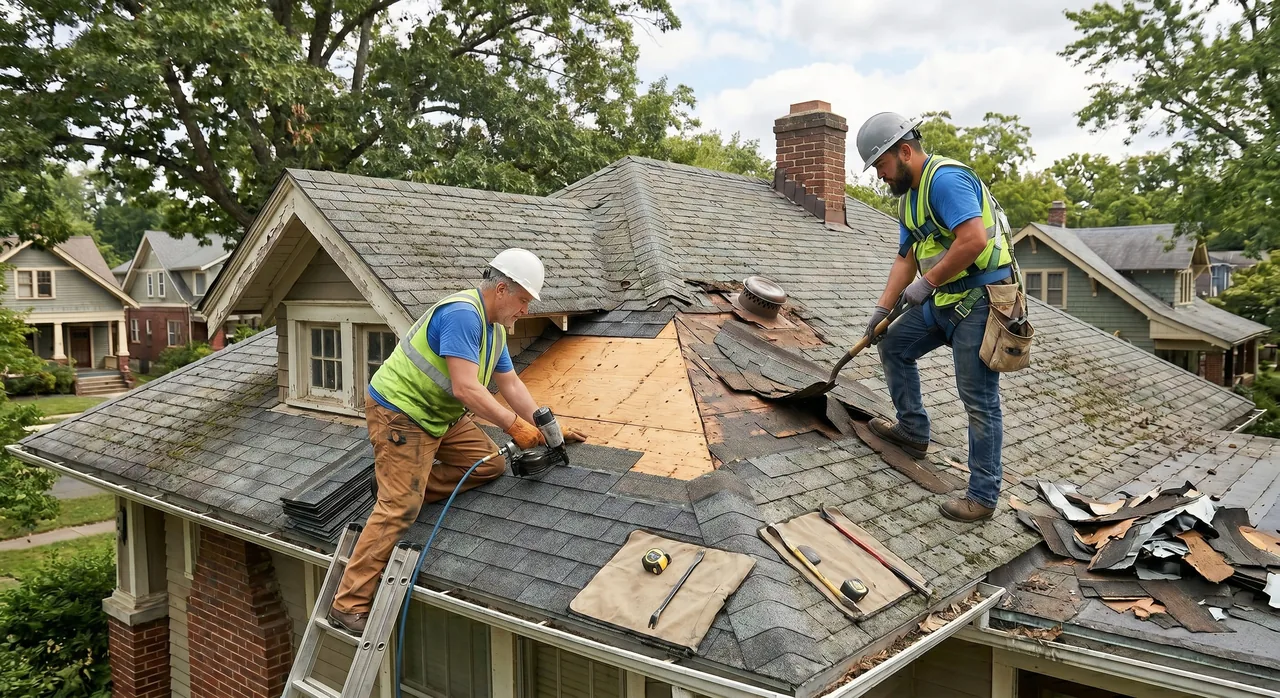
Visible only from the roof. Hail strikes leave round depressions where the granule layer has been knocked off, exposing the black asphalt mat. These bruises will fail within 1 to 5 years.
Bent or Dented Metal
Look at gutters, downspouts, vents, AC fins, and metal flashing. Hail leaves dents in soft metals. If those are dented, your roof was hit too.
Active Leaks After the Storm
Ceiling stains, drip sounds, water down a wall. Hail rarely causes immediate leaks, but wind can lift shingles enough to let water in. Tarp first, inspect later.
Missing or Lifted Shingles
Wind speeds above 60 mph can lift shingles even on a sound roof. Lifted shingles seal back down imperfectly and become long-term failure points.
Storm-Bent Skylights or Vents
Anything sticking up off the roof takes a disproportionate hit. Skylight frames bend, ridge vents collapse, turtle vents crack.
How the Claim Actually Works
Six Steps From Inspection to RCV Release
01
Free Inspection
A project manager climbs the roof, finds and documents every hail strike and wind-lifted shingle with photos. We tell you whether the damage is claimable before you involve your insurance company.
02
File the Claim
If the damage is claimable, you call your insurance company to open the claim. We give you the address, photos, and a statement of the loss you can submit.
03
Adjuster Inspection
The adjuster comes out to verify the damage. We can be there with you, point out the strikes the adjuster might miss, and supplement the scope where needed.
04
Scope Approval
The adjuster issues an estimate with a scope of loss. We review it line by line. If items were missed (ridge cap, drip edge, ventilation, code upgrades), we file a supplement before approval.
05
Install
You sign a contract, we pull permits, and install the new roof. Tear-off and replacement run the standard 2 to 3 days for most homes.
06
Final Documentation and RCV Release
We send invoice, photos, and completion certificate to your insurance company. The depreciation portion (the difference between ACV and RCV) gets released to the homeowner.
Active Water in the House
Storm Just Hit and Water Is Coming In?
Three things in order: control, cover, call. Put a bucket under the active drip. Cover any furniture in the affected room with plastic. Then call us at 214-321-9341. We tarp and board up active water entry the same day if conditions allow (no one can safely walk a wet roof in the rain or after dark). The tarp and board-up are usually a covered expense on your claim.
Storm Damage Questions, Answered Honestly
What does hail damage to a roof look like?
Hail damage on asphalt shingles shows up as round black or dark bruises where the granules have been knocked off, exposing the asphalt mat underneath. From the ground it is usually invisible. From the roof it is unmistakable. We document every bruise for the adjuster.
How soon after a storm should I get my roof inspected?
Within a few weeks if possible. Most policies have a one-year statute of limitations for hail claims, but waiting also gives small bruises time to deteriorate into leaks. A free inspection tells you whether you have a claimable loss before the timer matters.
Will my insurance company use my preferred roofer?
Yes. Texas law gives the homeowner the right to choose the contractor on a covered claim. Your insurance company may recommend a "preferred vendor" but you are not required to use them. We work directly with all major carriers.
What is the difference between ACV and RCV?
ACV (actual cash value) is what your roof is worth today, after depreciation. RCV (replacement cost value) is what it costs to install a new one. Most policies pay ACV first, then release the depreciation as RCV once the work is completed and documented. We handle the depreciation paperwork.
Will you offer to "absorb" my deductible?
No. Insurance fraud is a felony in Texas under HB 2102. Any contractor who offers to waive, rebate, or absorb your deductible is committing insurance fraud and exposing you to liability. We charge the contracted price, and the deductible is the homeowner's responsibility.
Do you board up or tarp roofs after storms?
Yes. If your roof has active water entry after a storm, we will tarp or board up the affected area to prevent further damage. This is documented in your claim and is typically a covered expense.
Tell us where you are and what happened. A Bert Roofing project manager will inspect the roof, document any damage, and tell you whether it is worth filing a claim. No obligation, no high-pressure pitch, no door-knock surprise visits.