Insurance May Never Buy You a Roof
I recently had a homeowner ask a question I hear more often than you’d think: “Doesn’t insurance always replace your roof?” In this case, the roof was simply old. There was no obvious storm damage—no clear hail impacts, no wind-related issues, no “fresh” event that would reasonably trigger a claim. It was a legitimate question, and it’s also a common misunderstanding. Here’s the plain truth: homeowners insurance is not a roof maintenance plan. Insurance is designed for sudden, accidental, and extraordinary events—most commonly wind and hail. Normal wear and tear is the homeowner’s responsibility. If a roof is simply at the end of its life, that does not create an insurance claim.
Dallas is a “hail market”… but that doesn’t mean you’ll get hail
Greater Dallas often gets called a “hail market,” and that label isn’t crazy. But it’s also misleading if you take it to mean “my roof will eventually get replaced by a storm.” Even in a hail-prone region, the geography is huge and storm paths are highly localized. Some areas can get hit more than once in a short period. Around 2015–2016, there were stretches where parts of Plano and Wylie seemed to take repeated hits along similar paths. Meanwhile, other neighborhoods can go years without meaningful hail at all. It can feel random because, at the homeowner level, it often is. The practical takeaway is simple: you can’t plan on a storm replacing your roof. It may happen. It may never happen. But if your plan is “wait for hail,” that’s not a plan.
The “self-insured roof” is becoming normal
Another hard reality: many homeowners are becoming self-insured on roofs, whether they realize it or not. Roofs are one of the most common and most expensive claim categories for carriers. When insurers get hit repeatedly in storm-heavy regions, they respond by tightening roof coverage and shifting more cost back to the homeowner. Deductibles have risen over time, and percentage deductibles (based on your home’s insured value) are now common. Bert Roofing has also noted the shift away from the old low deductibles and the move toward higher percentage deductibles—and even rumors of more carriers pushing deductibles higher. ( Avoid A Deductible?) When deductibles rise, the math changes fast. A roof claim that used to feel like “insurance pays for most of it” can turn into “insurance pays some of it, and the homeowner pays a big chunk.” In real-world terms, that can feel like being self-insured—especially when the roof is older and depreciation is involved.
ACV vs. RCV: why the check can be a lot smaller than you expected
A second trend is how insurers pay roof claims. Two terms matter:
- RCV (Replacement Cost Value): meant to cover the cost to replace (usually with depreciation handled through the process).
- ACV (Actual Cash Value): factors depreciation into the payment more directly, which can reduce what you receive upfront and sometimes overall.
If you’ve ever wondered why an insurance check doesn’t match what the roof costs, this is often why—along with the deductible and depreciation/betterment. Bert Roofing’s insurance FAQ breaks down deductible vs. depreciation and the RCV/ACV concepts in plain language. (FAQ Replace Roof With Insurance) The bigger point: even when insurance does pay, the homeowner share is commonly larger than people expect, and it’s trending larger over time.
Roof age can affect insurability even when the roof still works
This part frustrates homeowners, because it doesn’t always feel “fair.” A roof can be functional and still become a problem on paper—especially when you’re switching insurance companies or buying/selling a home. Bert Roofing has pointed out that many mortgage companies and insurance companies may hesitate to take on a new client if the roof is around 15 years or older, even though plenty of roofs are still performing at that age. That’s one more reason “I’ll just wait for a storm to buy me a roof” can backfire. Sometimes the pressure to act comes from underwriting, not leaks.
What you can control: maintenance, repairs, and extending roof life
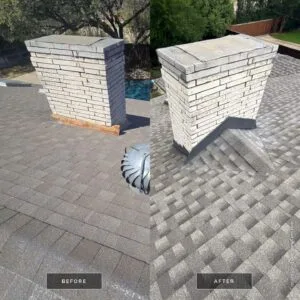
If your goal is to get the most life out of your current roof, the best strategy is boring—and it works: consistent maintenance and small repairs before they become expensive repairs.
 A short list of high-value basics:
- Keep valleys, gutters, and downspouts clear.
- Remove debris that holds moisture on the roof surface.
- Trim branches that scrape shingles or break during wind events.
- Address small leaks and flashing issues early.
Bert Roofing has multiple resources that go deeper on this, including roofing maintenance tips and debris removal/cleaning guidance that’s especially relevant on tree-covered Dallas lots. And when you’re deciding whether you’re still in “repair territory” or you’ve crossed into “replacement makes more sense,” use this framework: Repair or Replace Roof: Expert Advice. (That post also covers the 15-year insurability reality mentioned above.)
If insurance won’t help, financing may be the practical bridge
Sometimes repairs and maintenance are not enough, and replacement is the responsible call—even if insurance isn’t paying. If that’s your situation, Bert Roofing can help you evaluate repair vs. replace and provide a no-cost estimate. And if the challenge is cash flow (because a roof is a big-ticket item now), Bert Roofing offers financing through Service Finance Company as part of the Owens Corning Preferred Contractor program. (Paying Your Deductible) You can start the process online through the financing link on the Bert Roofing site (or call and ask about current options). Financing terms and approval details vary, but the goal is simple: give you flexibility when insurance isn’t buying the roof. If you just need a ballpark range to plan, Bert Roofing also offers a quick online roof-quote tool you can use before you ever schedule an on-site visit. (DFW Roofing) For a free estimate or to talk through options, call 214-321-9341 or use the contact form.