Some roof repairs are not about replacing an entire roof. They are about solving one specific weak point before it turns into a larger problem.
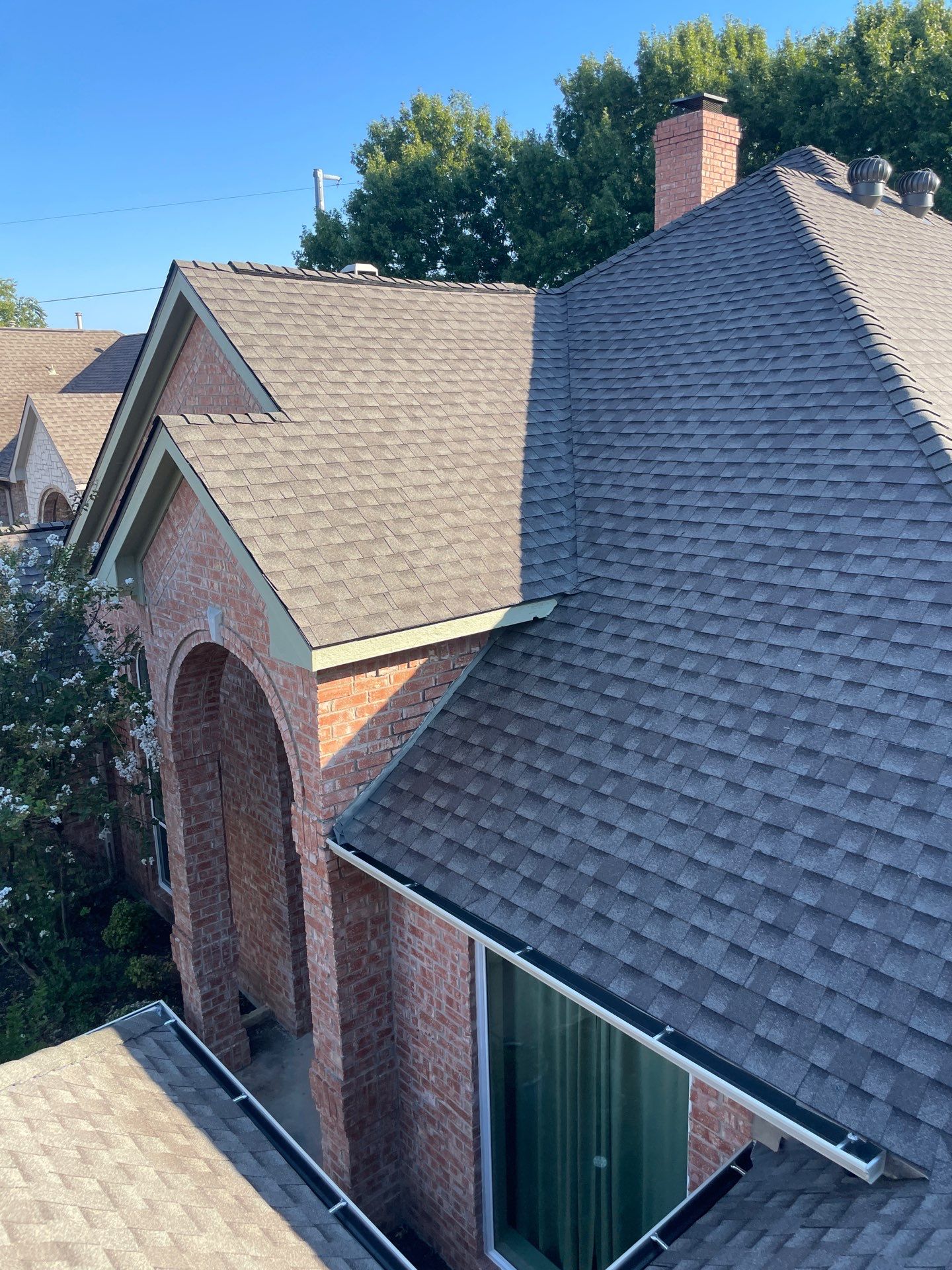
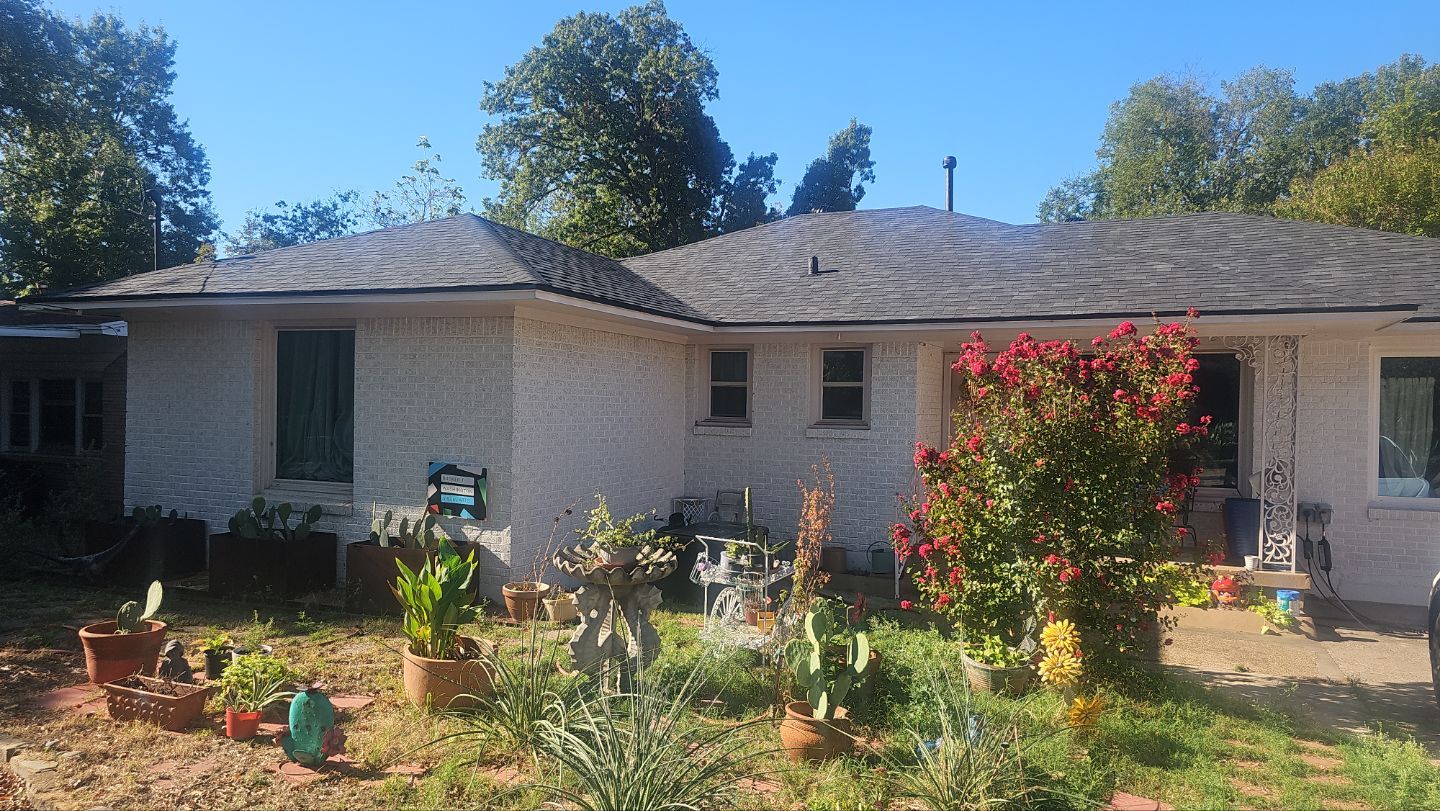
Bert Roofing recently completed a targeted roof repair in Old Lake Highlands on Tarleton Street in East Dallas, not far from St. John’s Episcopal School and the Burger Schmurger area on North Buckner. This was not a full roof replacement. The main issue was a rear roof section where the roof met a wall.
The Problem: Wall Flashing That Had Reached Its Limit
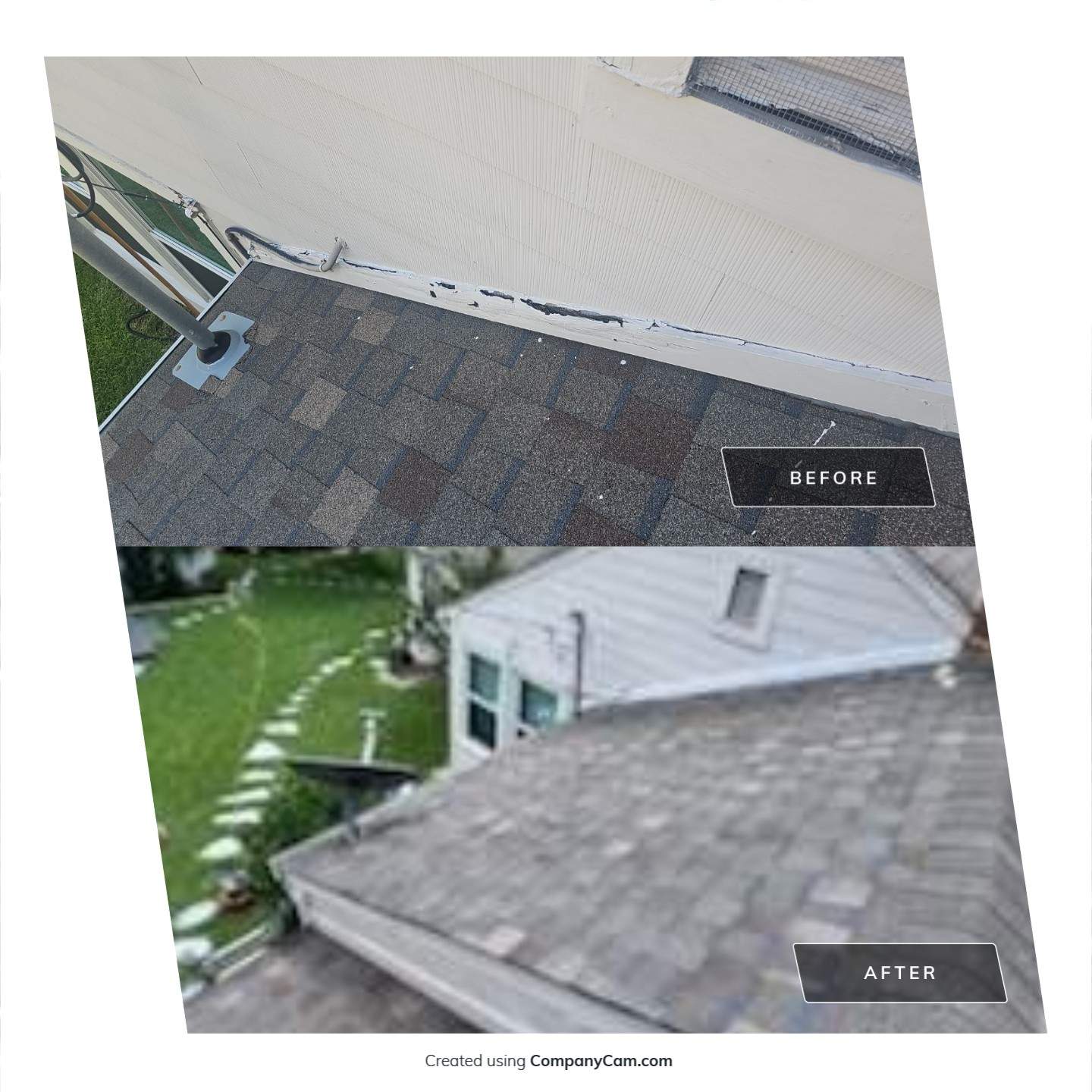
The rear roof section had step flashing along the wall, which is the correct basic method for protecting a roof-to-wall transition. However, the counterflashing had been installed on the outside face of the wall siding, then sealed and painted.
That is not the ideal construction. In a perfect setup, the wall flashing would be integrated behind the siding so water is directed properly onto the roof surface. But that is not always practical on older homes. 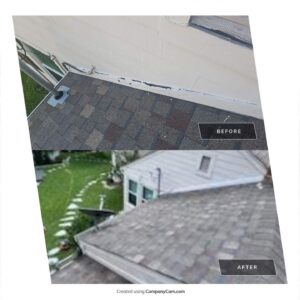
In this case, the siding material was brittle and not readily available for replacement. It behaved somewhat like older Masonite or a thin fiber-cement type siding. Removing it would likely have damaged the original wall material and created a larger siding problem.
Why We Used an Exterior Counterflashing Detail
Someone before us had used a similar method on this same wall. The concept was not necessarily wrong for the circumstances. The problem was that the old caulk and paint had been left too long. Over time, the sealant failed, the paint broke down, and the roof-to-wall joint became vulnerable.
For this repair, we removed the affected roofing in the rear section, reflashed the wall, installed new counterflashing, added a 1x4 trim detail, caulked the exposed joints, and painted the repair area.
This was a practical repair for the conditions on this house. It was not the theoretical perfect wall-flashing detail, but it was the right solution when the siding could not be removed and replaced without causing more damage.
Extra Protection With Ice and Water Shield
Because this rear roof section was not especially large, we installed ice and water shield over the entire repaired roof surface instead of using standard felt underlayment. Traditional felt would have met the basic requirement, but full ice and water shield gave the repair area added protection. The roof section was the roofed with CertainTeed Landmark laminated shingles. This is a Class 3 IR Shingle.
The repair also included new drip edge, starter strip, CertainTeed Landmark shingles, and new ridge where needed. All job-related debris was cleaned up and hauled away. The signed repair scope described the work as a rear laundry room roof repair with full tear-off of the affected section, wall reflashing, ice and water shield, drip edge, starter, shingles, ridge, 1x4 counterflashing, paint, caulk, and cleanup.
A Targeted Repair, Not a Full Roof Replacement
Not every leak requires a full roof replacement. In this case, the main roof was not the focus. The issue was a specific roof-to-wall transition on one rear section of the home.
Good repair work often comes down to judgment. The goal is to understand why the original detail failed, what can realistically be changed, and what solution gives the homeowner the best practical result without turning a smaller repair into unnecessary construction.
For this East Dallas home, replacing the flashing, sealing the wall transition, painting the counterflashing detail, and upgrading the underlayment in the repair area solved the problem without replacing the entire roof.