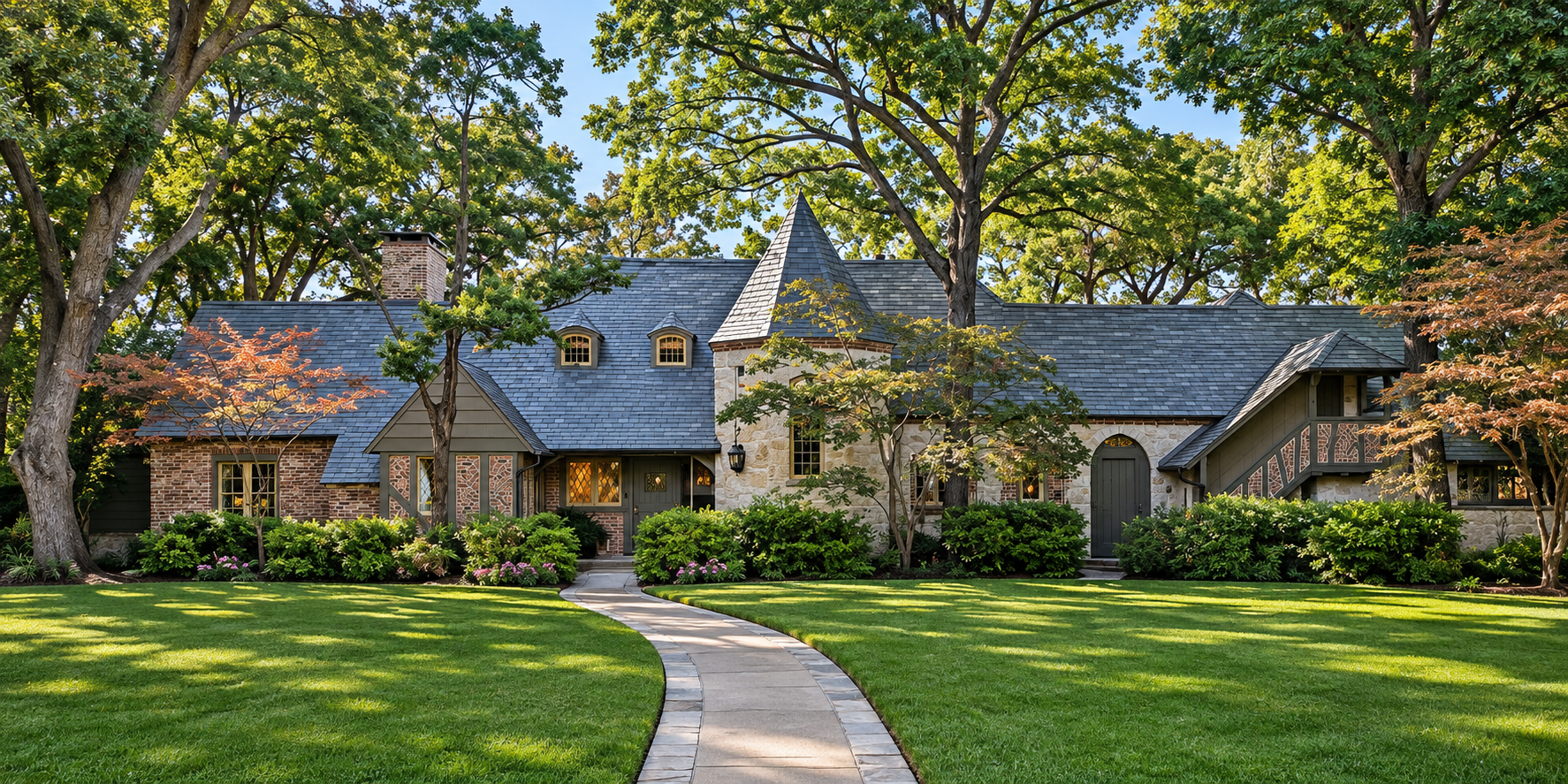
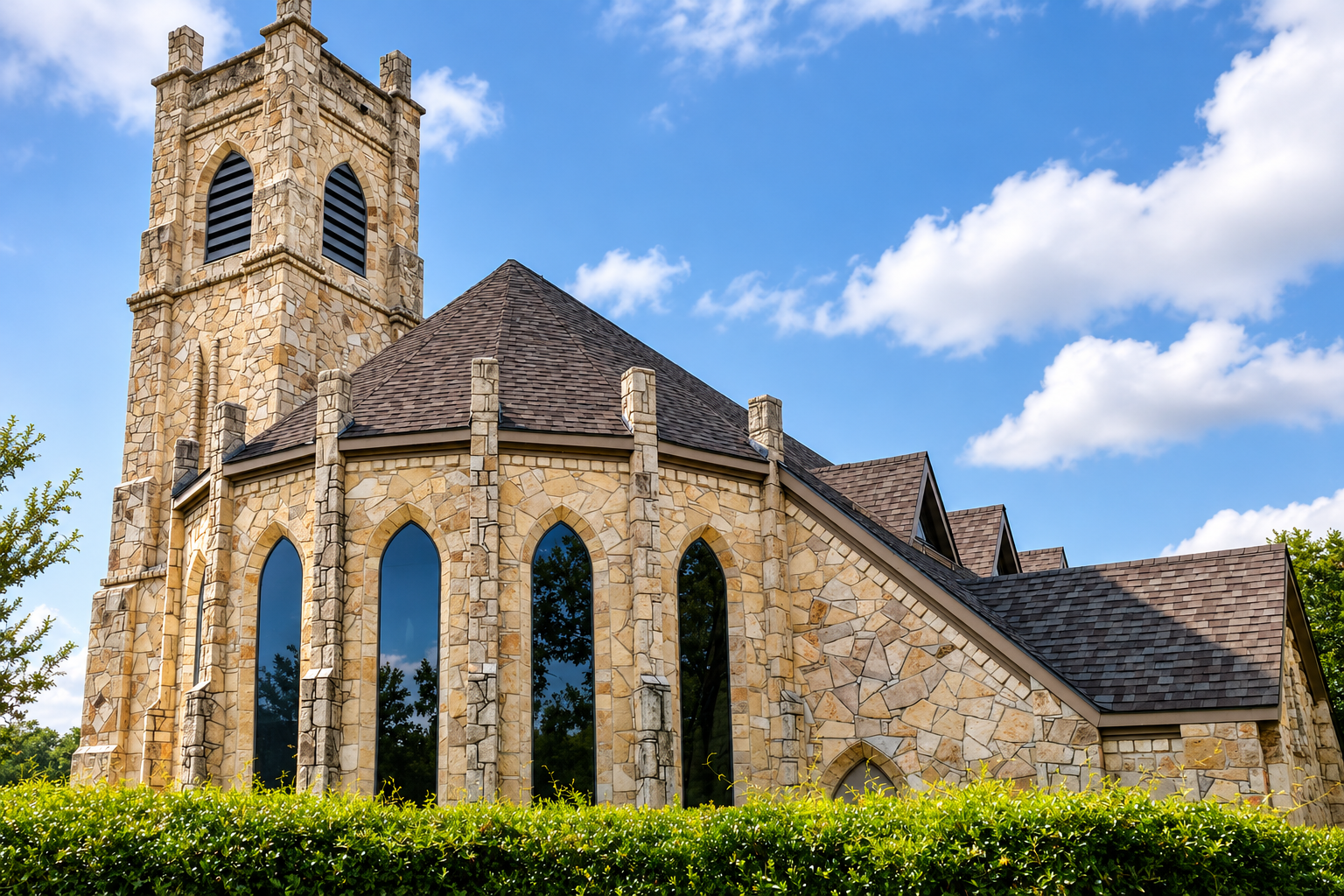
Anyone familiar with Lake Highlands probably recognizes St. James Episcopal Church at the corner of McCree and Audelia. Its distinctive stone architecture and tall bell tower make it a neighborhood landmark. Every fall, the church is also known for its popular pumpkin patch, a longstanding tradition for Lake Highlands families.
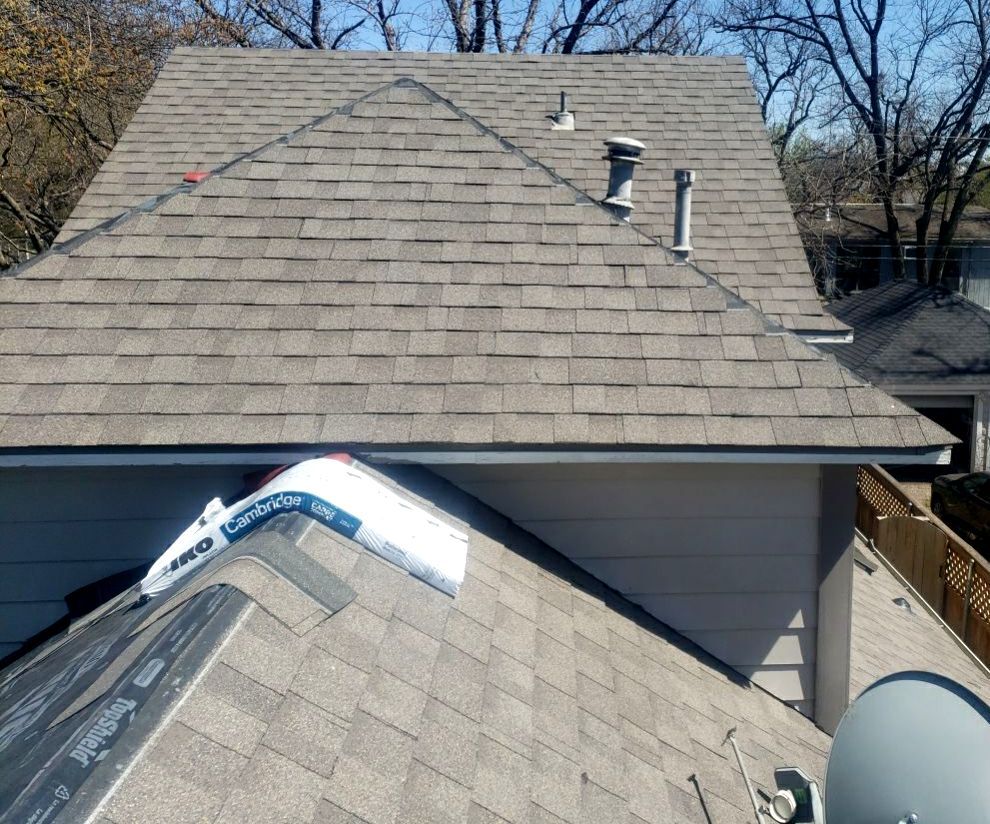
Bert Roofing was selected to replace the roofs on much of the St. James campus following a hail insurance claim. The project was one of the more complicated storm-damage roofing jobs we’ve handled in Lake Highland. The project involved two major stages, unusually steep roof sections, extensive flashing work, and careful scheduling around the church’s school operations.
A Relationship That Started With a Residential Roofing Project
Our connection to St. James came through a retired architect who headed the church’s building committee. Bert Roofing had previously completed a complicated project at his residence involving roofing, low-slope areas, and siding.
That earlier relationship brought us into discussions about the church’s roofing needs.
Commercial and institutional roofing projects often involve more people in the decision-making process than residential jobs. At St. James, we worked with the church’s representatives to plan the roof replacements, address the different roofing conditions, and coordinate the installation schedule.
Two Stages of Roof Replacement
The work was divided into two principal stages.
The first involved the main sanctuary and parish hall. These were the more architecturally distinctive sections, with steep rooflines and numerous stone projections that complicated the roofing installation. Owens Corning Duration architectural shingles were used on the main shingle roof sections, with installation details adjusted for the dramatically different roof pitches across the campus.
The second stage covered the classrooms and offices, along with additional school-related roofing.
One important consideration was the school calendar. We needed to schedule roofing operations when classes were not in session so children would not be present around the work areas.
Removing an existing roof creates considerable activity, from material deliveries and debris removal to crews working overhead. On an occupied school campus, that requires planning beyond the installation itself.
Unusually Steep Roofs and Extensive Stonework
The main sanctuary presented some of the project’s most interesting roofing challenges.
Certain sections reached a pitch of 26/12, an exceptionally steep slope compared with a typical residential roof. These sections required additional attention to access, installation methods, and shingle sealing requirements.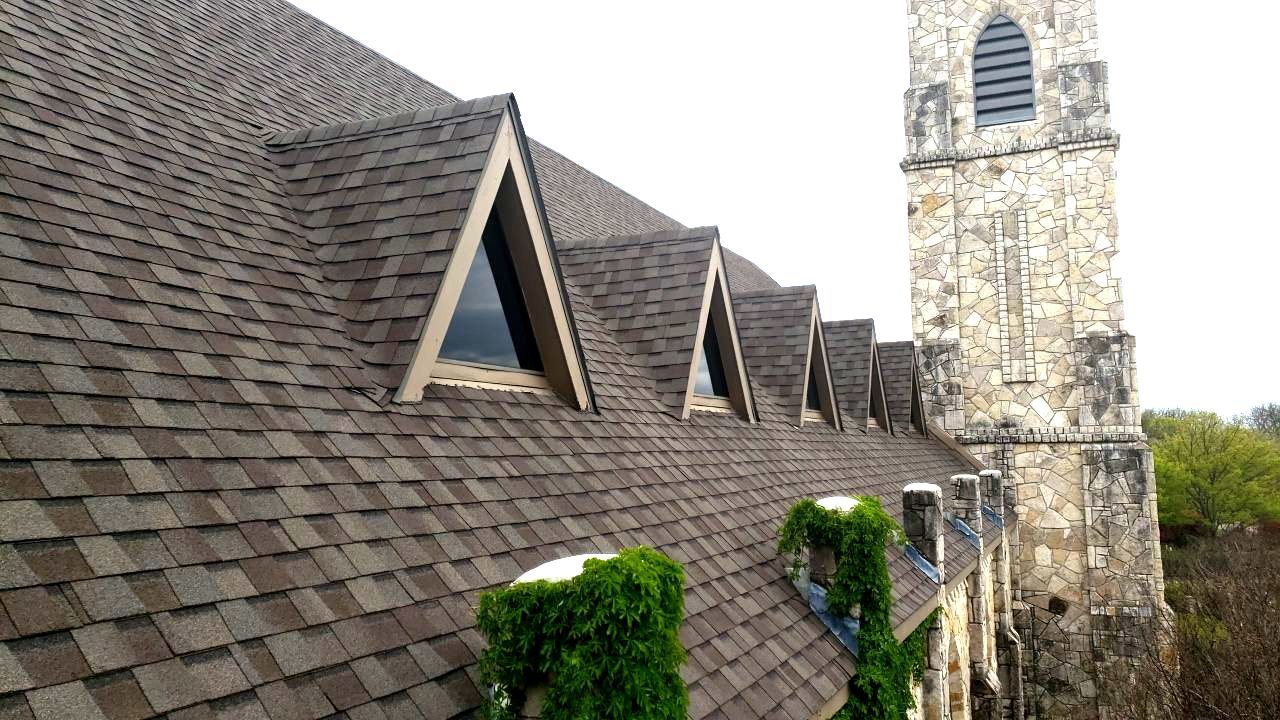
The church’s stone architecture added another layer of complexity. Dozens of stone columns and projections intersected the roofing. Each of these locations required careful flashing and waterproofing to prevent water from entering where the roof met the stonework.
On a building like St. James, the details around those intersections are every bit as important as the shingles covering the main roof surfaces.
Low-Pitch Roofing on the School and Offices
While the sanctuary featured exceptionally steep roofs, portions of the school and office buildings presented the opposite challenge.
Some of these sections measured approximately 2.8/12 in pitch. Asphalt shingles can be installed on slopes in this range, but additional underlayment protection is required.
Bert Roofing installed ice-and-water shield beneath the shingles on these lower-pitched sections rather than relying on a single layer of conventional roofing felt.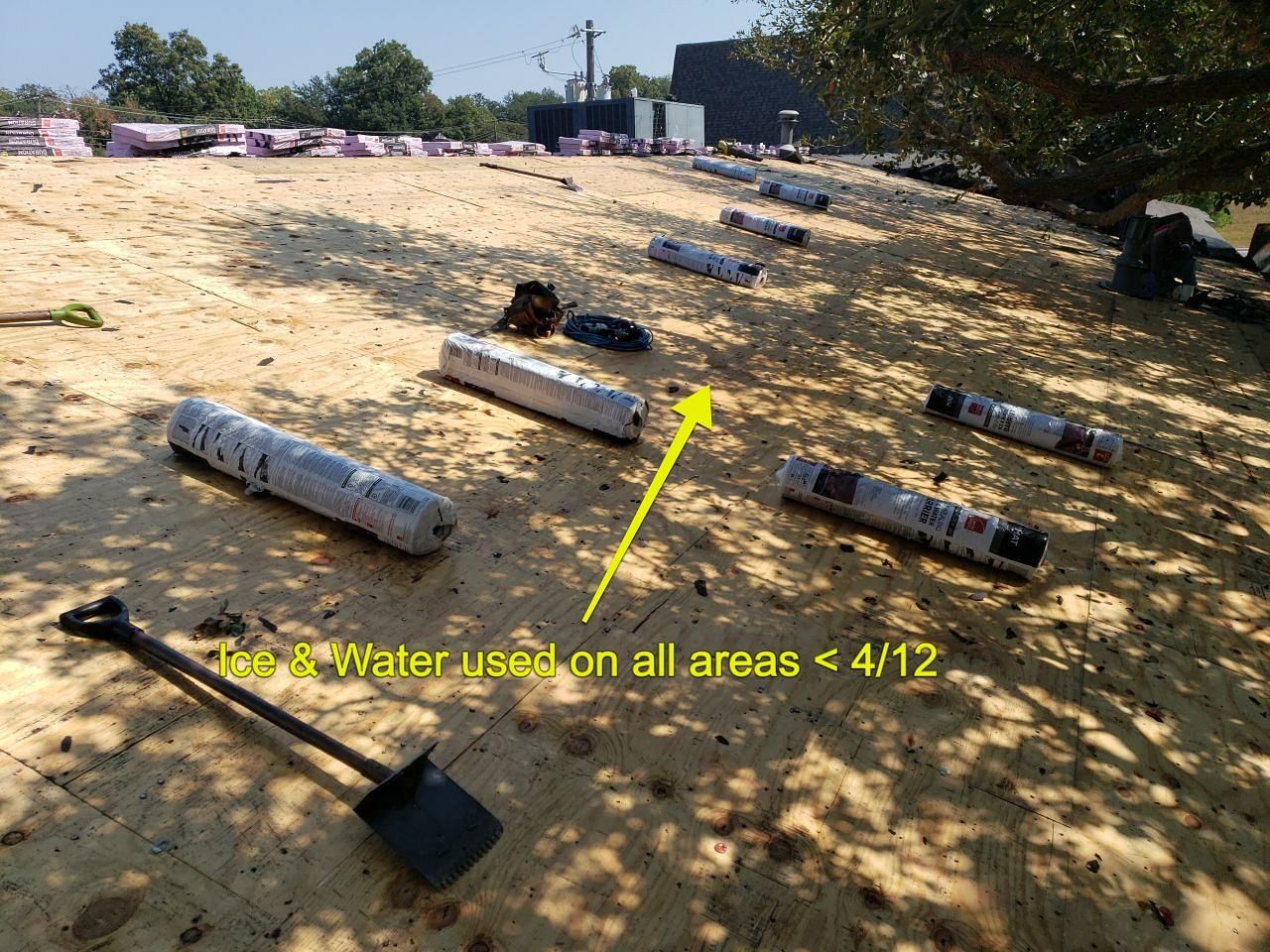
We also replaced existing ridge ventilation on the school and office roofs.
The differences between the sanctuary and school buildings illustrate why a roofing contractor needs to evaluate each roof section individually. The same basic shingle roofing system can require substantially different installation details depending on the slope and configuration.
Working at the Top of the Bell Tower
One of the more memorable parts of the project involved the church’s bell tower.
Although the metal roof at the top was relatively small, reaching it presented its own challenges. Access required climbing through the interior of the tower using a series of ladders.
Once at the top, we cleaned the existing metal roof, sealed its joints, and applied two coats of GACO silicone roof coating.
The work was modest in square footage but certainly not in accessibility.
There was also an unexpected benefit to working at that height: a remarkable view across Lake Highlands. It provided a perspective on the neighborhood that very few people get to experience.
Roofing a Lake Highlands Landmark
Bert Roofing has served Dallas since 1988, and projects in Lake Highlands have always been an important part of our work.
St. James was particularly memorable because of its architecture, the technical differences between its roof sections, and the need to coordinate work around an active school.
Most homeowners will never have a roof as steep as the St. James sanctuary or a bell tower requiring interior ladder access. But the same principles apply to residential work: proper flashing, appropriate materials for the roof pitch, careful installation, and planning around the people who use the property.
Whether the project is a neighborhood church, a school building, or a home in Lake Highlands, those details matter.