TPO vs. Modified Bitumen Roofing: Which Is Better for Your Commercial Roof?
Flat and low-slope roofs around Dallas don’t usually get shingles. Instead, commercial property owners are typically choosing between single-ply membranes like TPO and traditional systems such as modified bitumen. Both can keep water out. Both can last for years. But they behave very differently over time, especially in North Texas heat and storms. Below is a practical comparison of TPO vs. modified bitumen roofing to help you decide what makes sense for your building.
What Is TPO Roofing?
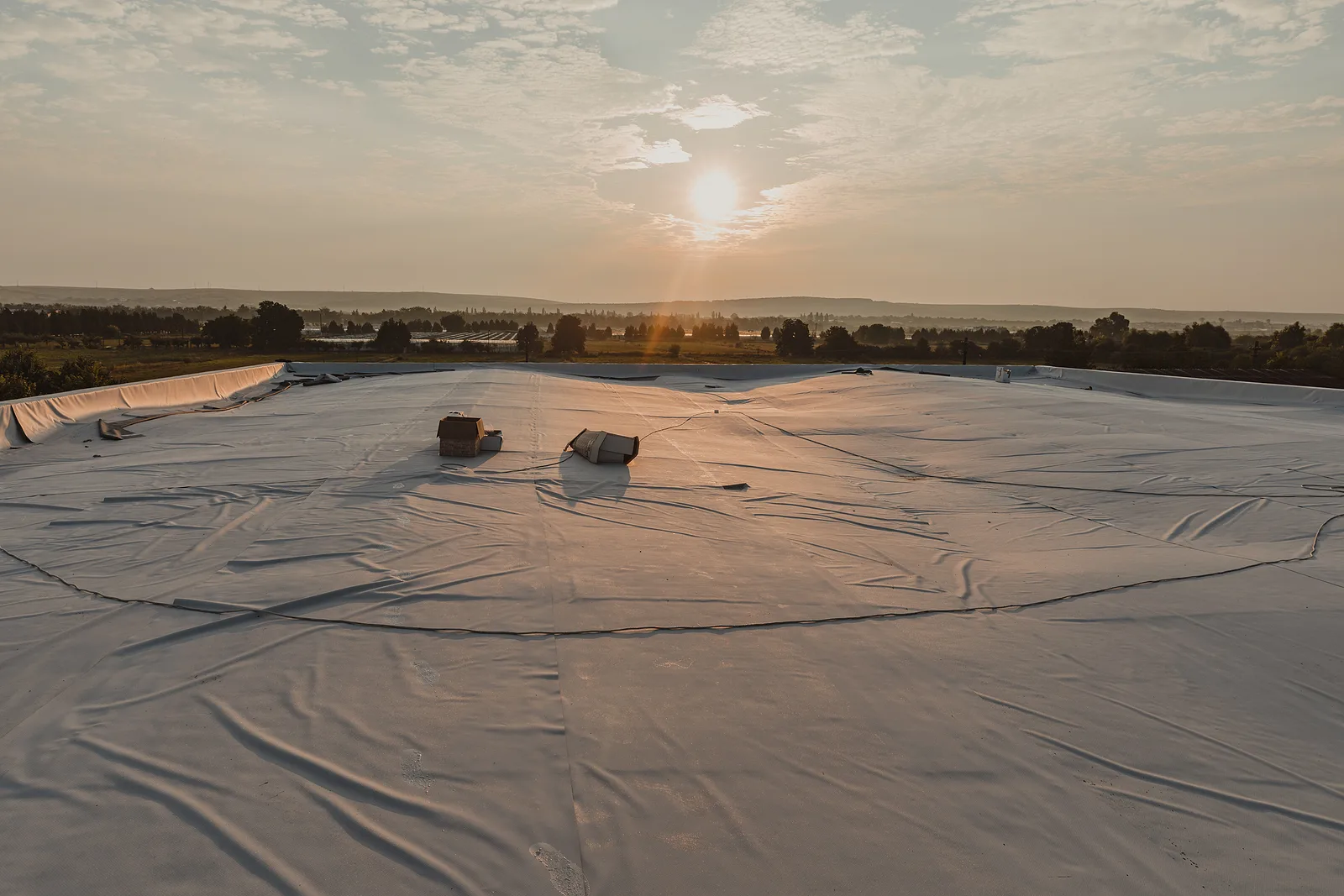
TPO (thermoplastic polyolefin) is a single-ply membrane used on most new commercial low-slope roofs today. It’s been on the market since the 1990s and has become the most common commercial flat-roof material in the U.S. (Wikipedia) A TPO system typically includes:
- Insulation board (polyiso or similar)
- A single-ply TPO membrane, usually 45-, 60-, or 80-mil thick
- Mechanically fastened or fully adhered attachment
- Heat-welded seams for a continuous waterproof surface
Because it is a single layer, TPO installs relatively quickly and is easier to detail than older built-up or multi-ply systems. For a closer look at how TPO performs on real North Dallas projects, see our Lake Highlands Shopping Center TPO Roof Repair case study.
Key Advantages of TPO Roofing
Energy efficiency and “cool roof” performance
Most commercial TPO roofs are white or light-colored. These reflective surfaces help:
- Reduce heat gain into the building
- Lower cooling loads in summer
- Mitigate the urban heat-island effect in dense areas (Wikipedia)
In a market like Dallas, where cooling costs dominate, a properly installed TPO roof can provide meaningful energy savings over darker, asphalt-based systems. White TPO is a industry leader in reflectivity, but to truly understand how these systems lower your energy bills, see our full breakdown on what defines a certified cool roof and how it impacts your attic temperature.”
Strong, heat-welded seams
TPO seams are fused with hot air, creating very strong welds that are typically stronger than the membrane itself. (Wikipedia) This reduces:
- The risk of seam failure
- Long-term leak potential at laps
- Dependency on adhesives that break down under UV
Good chemical and UV resistance
TPO is designed to stand up to:
- UV exposure
- Ozone
- Many common rooftop contaminants
That makes it a solid choice for roofs near restaurants, light industrial operations, or areas with rooftop equipment that can drip oils or chemicals.
Re-cover and retrofit options
Because TPO is relatively light and can often be installed over certain existing low-slope systems (when the substrate is sound and code allows), it is commonly used for:
- Roof recover projects
- Phased replacements
- Budget-sensitive upgrades that avoid full tear-off
A re-cover still requires proper inspection, moisture scanning, and code review, but when it pencils out, it can dramatically reduce total project cost and disruption.
What Is Modified Bitumen Roofing?
Modified bitumen is an asphalt-based membrane that was developed in the 1970s as an upgrade over traditional built-up roofing. (Wikipedia) The “modified” part refers to polymers blended into the asphalt:
- SBS (styrene-butadiene-styrene) for rubber-like flexibility
- APP (atactic polypropylene) for improved aging and UV resistance
These compounds are reinforced with fiberglass or polyester mats and manufactured into rolls. Installers build up the system in multiple plies using one of several methods:
- Torch-applied
- Hot asphalt
- Cold adhesive
- Self-adhered sheets (ARMA)
Modified bitumen has been a workhorse low-slope system for decades, especially for small commercial and institutional properties.
Pros of Modified Bitumen Roofing
Modified bitumen still has a place in the market because it offers some real benefits:
- Familiar, proven technology Many facility managers and architects have long experience with asphalt-based roofing and understand its behavior over time.
- Multi-ply protection When installed as a true multi-ply system, modified bitumen can provide robust puncture resistance and good resilience against foot traffic.
- Multiple application methods Cold-process, hot-applied, self-adhered, and torch methods allow some flexibility based on building conditions, fire regulations, and contractor preference. (ARMA)
For owners with existing modified bitumen roofs that are still fundamentally sound, targeted repairs and maintenance can be a cost-effective way to extend service life.
Where Modified Bitumen Falls Short
Despite its history, modified bitumen has steadily lost ground to single-ply systems like TPO for several reasons:
- Heat and UV aging Asphalt-based membranes are more susceptible to long-term UV and heat degradation than white TPO. In a high-sun market like Dallas, that matters.
- Leak detection challenges Dark, granulated surfaces can make it harder to see fine cracks, splits, or early failures. Small issues can quietly grow into more expensive problems before anyone notices.
- Labor and safety Torch-down and hot-asphalt applications add fire and safety concerns and may be restricted by local codes or building policies. Cold adhesives help, but can be odor-sensitive and slower in some conditions. (Wikipedia)
- Lifecycle cost Even though modified bitumen can be less expensive up front, its shorter expected life and more intensive maintenance often make it more expensive over the full lifecycle compared to modern TPO systems.
TPO vs. Modified Bitumen: Side-by-Side Comparison
| Factor | TPO Single-Ply | Modified Bitumen |
|---|---|---|
| Typical color | White / light (highly reflective) | Usually dark / granulated |
| Seams | Heat-welded, very strong | Asphalt or adhesive-bonded laps |
| UV resistance | Excellent, low degradation | Good initially, declines with aging |
| Energy efficiency | Strong “cool roof” performance | Absorbs more heat |
| Installation complexity | Single-ply, faster installation | Multi-ply, more labor-intensive |
| Fire / odor concerns | Low (no open flame in typical installs) | Torch/hot asphalt options can be restricted |
| Leak detection | Easier on light, clean surface | Harder on dark, granulated surface |
| Common Dallas use case | New installs, re-covers, retrofits on low-slope | Legacy systems, targeted repairs |
For most new or full replacement low-slope projects in North Texas, TPO usually wins on performance, energy savings, and long-term cost of ownership.
When Does Modified Bitumen Still Make Sense?
There are still situations where modified bitumen can be a reasonable choice:
- Existing multi-ply asphalt roofs where a compatible cap sheet overlay is appropriate
- Buildings where a specific spec or warranty demands a modified bitumen system
- Projects where owner or architect prefers asphalt-based systems and understands the maintenance requirements
If you already have a modified bitumen roof that is not at the end of its life, it often makes more sense to maintain and repair it rather than rip it off prematurely. NRCA’s guidance for building owners emphasizes regular inspection and maintenance as the key to getting full service life from modified bitumen systems. (industry.nrca.net)
How to Choose the Right System for Your Dallas Building
For most commercial and light-commercial properties around Dallas, the choice between TPO and modified bitumen comes down to:
- Current roof condition – Is a re-cover possible, or is full tear-off required?
- Energy costs – How much could a cool roof help your utility spend?
- Traffic and use – Is the roof used heavily for equipment access or only occasional visits?
- Budget vs. lifecycle – Is the priority lowest upfront cost or best long-term value?
- Building codes and insurance – Are there fire or reflectivity requirements that narrow the options?
A qualified commercial roofing contractor should walk the roof, review deck condition and insulation, look at drainage, and then give you clear options with pros and cons for each system.
Talk to a Dallas Commercial Roofing Contractor Who Installs Both
Bert Roofing installs and repairs both TPO and modified bitumen systems across the Dallas–Fort Worth area. As an RCAT Licensed Roofing Contractor and long-time local company, we work with all major low-slope manufacturers and follow current industry standards from organizations like the National Roofing Contractors Association (NRCA). (DFW Roofing) Whether you need:
- A TPO re-cover over an aging flat roof
- Targeted modified bitumen repairs and maintenance
- A full low-slope roof replacement on a shopping center, office, or church
we can inspect your existing roof, explain your options in plain language, and recommend the system that fits your building and budget. Looking for flat-roof installation or replacement in Dallas or nearby areas? See our Dallas Roof Installation & Replacement Services page for more details, or contact Bert Roofing today to schedule a commercial roof evaluation.