Is a Stone-Coated Steel Roof Overlay a Good System?
A roof overlay is not automatically a bad roofing system. The problem is that the word “overlay” can describe very different types of roofs.
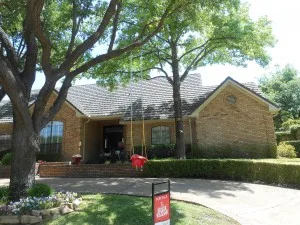
I ran into a good example of this on a home in far North Dallas. The house had a stone-coated steel roof installed over an older cedar shake roof. The steel roof was approximately 15 years old and, based on its condition, there was no obvious roofing reason that it should need to be replaced.
The potential buyers were nevertheless getting estimates for a new roof.
Why?
At the time, they had contacted six major insurance carriers that did not want to insure the property because the steel roof had been installed as an overlay.
That raised a much more interesting question than simply how old the roof was.
Frequently Asked Questions About Steel Roof Overlays
Is installing a new roof over an existing roof always a bad idea?
No.
“Roof overlay” is a broad description, not a specific roofing system. Whether an overlay is appropriate depends heavily on what roofing material is being installed, what it is being installed over, and how the new roof is supported and attached.
An asphalt composition shingle installed over old cedar shakes is very different from a batten-mounted stone-coated steel roof installed over cedar.
Treating the two systems as though they are the same does not make much technical sense.
What is wrong with installing asphalt shingles over cedar shakes?
This is the type of overlay that gives roof overlays a deservedly poor reputation.
Old cedar shakes create an irregular and comparatively soft surface beneath the asphalt shingles. The shingles do not have the same uniform support they would have over a properly constructed solid roof deck.
That can create performance problems and can make the roof more susceptible to damage.
There is also a major issue when the roof eventually has to be replaced. Removing the asphalt shingles does not leave you with a roof deck ready for another shingle roof. The old cedar generally has to be removed as well, and appropriate roof decking then has to be installed before the new roofing system can go on.
That makes the eventual replacement substantially more involved than replacing a conventional asphalt shingle roof over solid decking.
How is a stone-coated steel roof over cedar different?
Many stone-coated steel roofing systems use wood battens to support the metal panels.
Instead of laying the new roofing material directly against the old cedar shakes, the installer creates a supporting framework over the existing roof. The steel panels are then fastened to that system in accordance with the requirements for that particular roofing product.
This is an important distinction.
The old cedar is not functioning as the direct supporting surface for the metal panels in the same way it does when asphalt shingles are installed over cedar.
That is why I do not consider these two types of “overlays” equivalent.
Can stone-coated steel actually be installed over an existing cedar shake roof?
Yes, there are stone-coated steel roofing systems designed and approved for installations using battens, and manufacturers have published installation methods for reroofing applications.
That does not mean that every metal product can automatically be installed over every existing cedar roof.
The condition of the existing roof, attachment of the battens or counter-battens, underlayment, roof slope, flashing details, local requirements, and the specific manufacturer’s installation instructions all matter.
But the mere existence of cedar roofing beneath a properly designed stone-coated steel system does not, by itself, mean the roof is defective.
Does the old cedar underneath shorten the life of the steel roof?
Not necessarily.
The important question is how the steel roofing system was designed and installed.
If the steel panels are properly supported and attached, the fact that an older cedar roof remains underneath does not automatically mean that the steel roof should have the service life of an ordinary roof overlay.
That was particularly relevant on this North Dallas house. A roughly 15-year-old stone-coated steel roof would normally be relatively young for this type of roofing system.
Replacing it solely because somebody used the word “overlay” would potentially mean removing a roof with substantial remaining useful life.
What should be inspected on a steel roof installed over cedar?
The roof still needs to be evaluated as a complete system.
Among the things I would want to look at are the condition of the steel panels, evidence of corrosion or physical damage, flashing around walls and penetrations, valleys, ridge and hip details, the batten system where it can be evaluated, and how the roof was originally attached.
I would also want to identify the manufacturer and roofing profile if possible. Installation requirements are product-specific, and knowing what system is actually on the house is much more useful than simply labeling it a “metal overlay.”
Why would an insurance company object to it?
Insurance underwriting and roofing performance are two different questions.
An insurance company can decide that it does not want to insure a particular roof configuration even when there is no evidence that the roof is currently failing.
That was the unusual part of this particular case.
The buyers were not looking at replacement because the steel was worn out. They were looking at replacement because they were having difficulty obtaining insurance on a house with an overlay roof.
From a roofing standpoint, I did not see a good reason to treat this system the same way I would treat asphalt composition shingles installed over cedar.
From an insurance standpoint, however, that distinction did not necessarily matter to the companies the buyers contacted.
Should you replace a good steel roof just because it is an overlay?
From a roofing standpoint, not automatically.
First determine what roofing system is actually installed and whether it was installed properly. A competent inspection may show that the roof still has considerable useful life.
Unfortunately, a home buyer also has to deal with the practical issue of insurance availability.
A perfectly serviceable roof that cannot be insured on acceptable terms can become a financial problem regardless of whether the underwriting decision makes much sense from a roofing perspective.
That is exactly what made this particular property interesting.
Can a steel roof overlay affect the sale of a house?
Yes. I have now encountered this issue on more than one property.
On the original North Dallas house, insurance availability became a significant concern even though there was no obvious reason that a 15-year-old stone-coated steel roof should have needed replacement.
I later encountered essentially the same situation on another house. In that case, the insurance issue surrounding the roof ultimately contributed to the sale falling apart.
That is why buyers and sellers should investigate this before getting too far into a transaction.
A roof can be structurally and functionally sound while still presenting an underwriting problem.
Those are two separate questions, and with stone-coated steel installed over cedar, it is important to understand the difference.