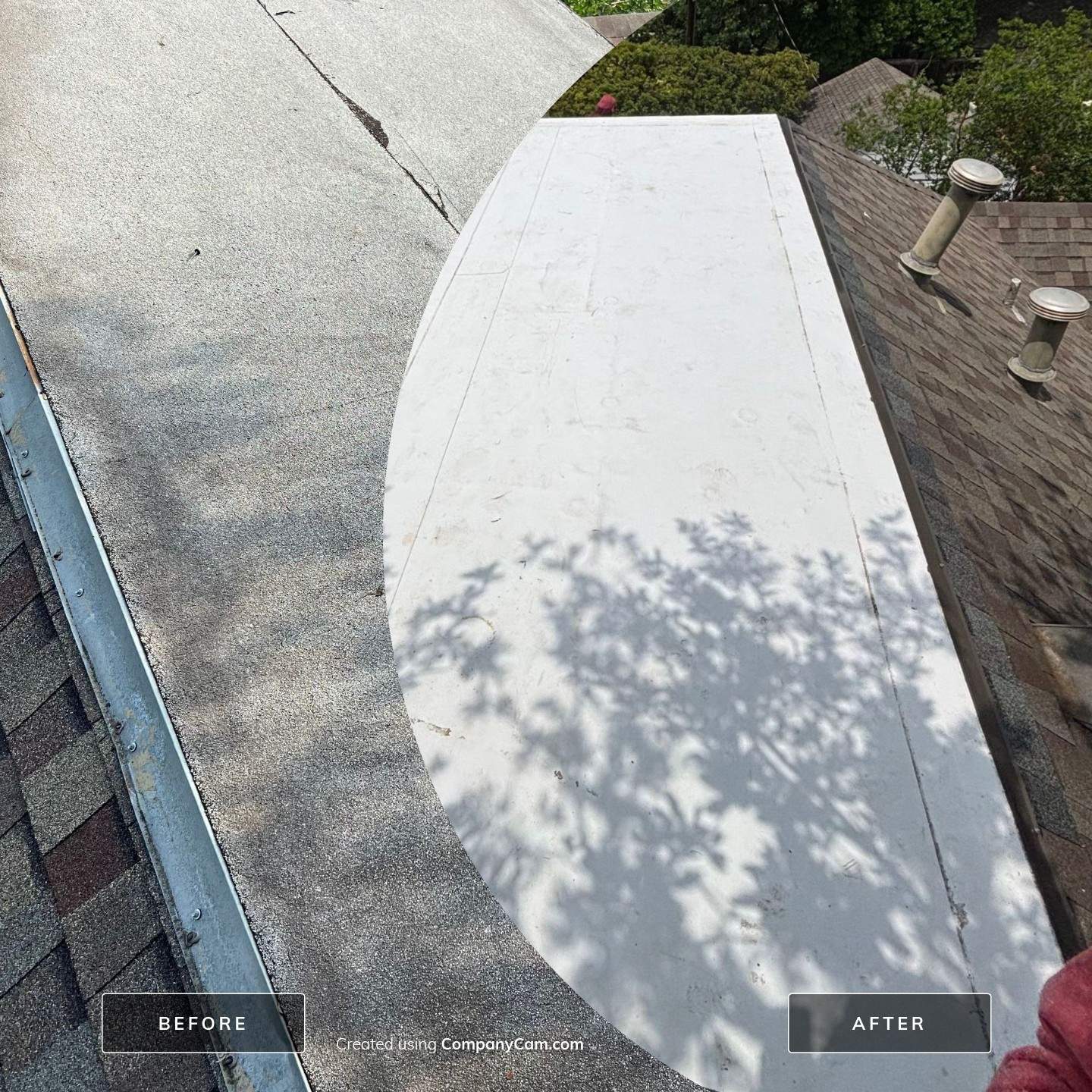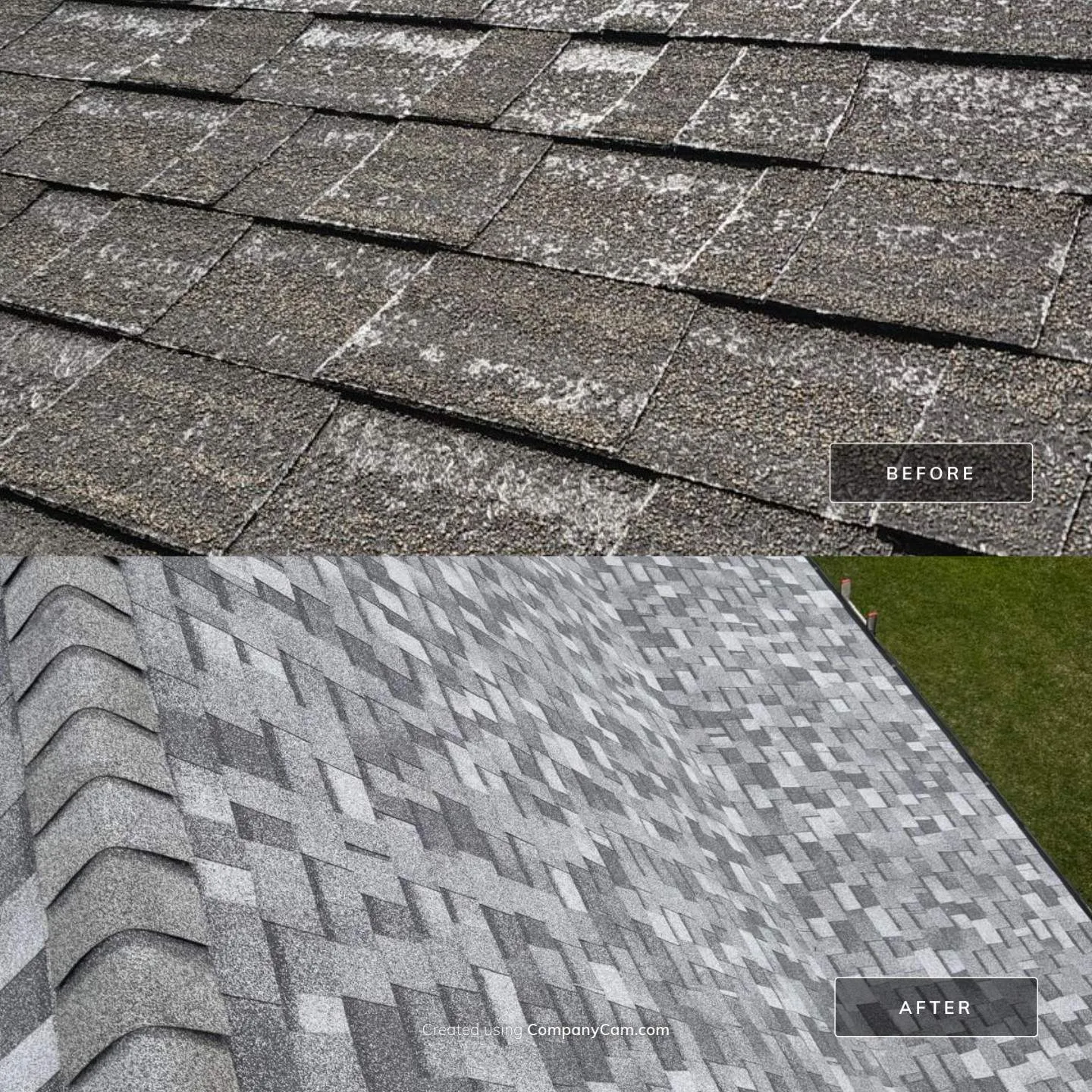
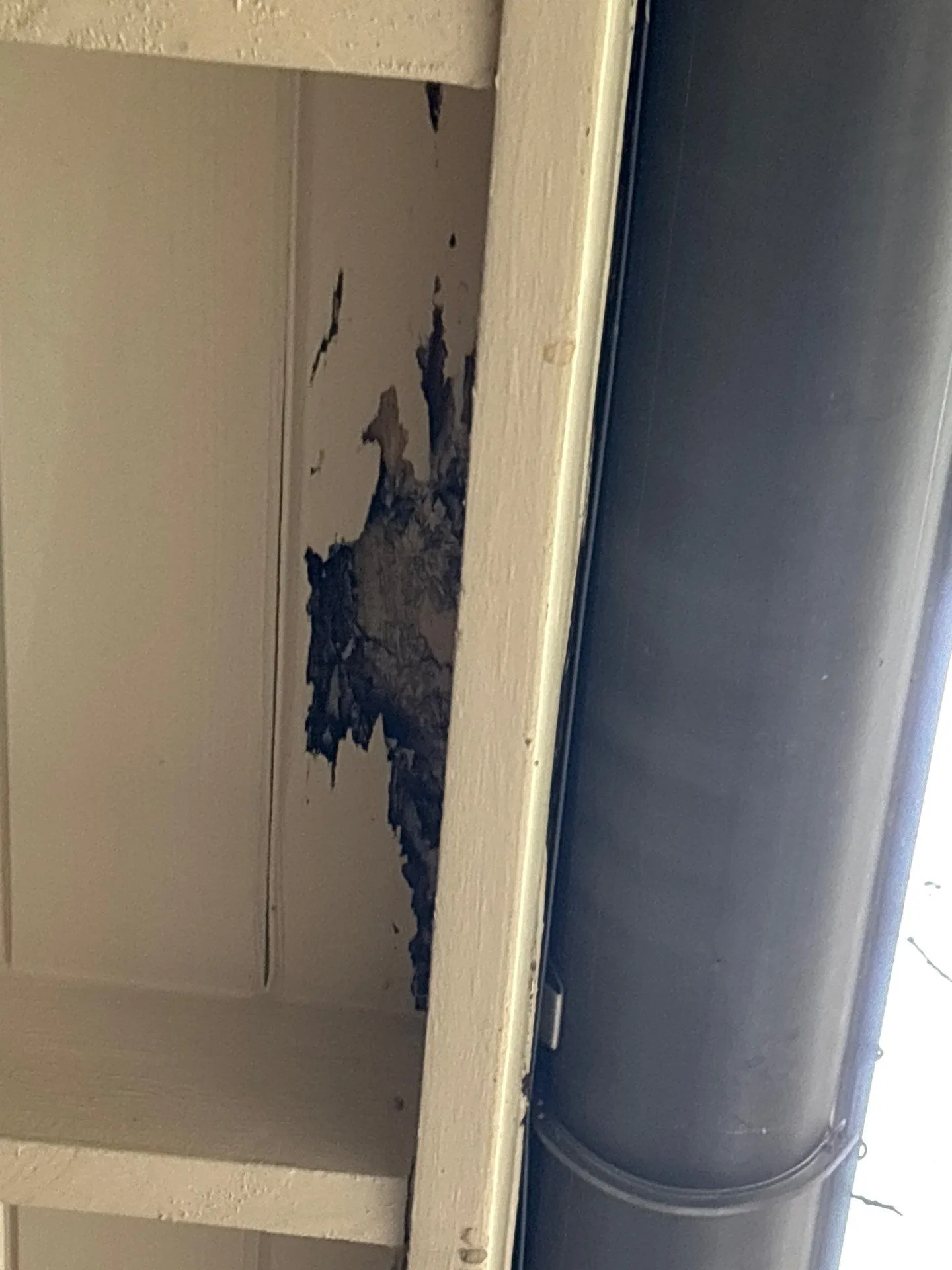
Your roof protects your home from the elements. When there is a leak or any other issue up there, it is important to address it quickly. If a roofing problem is left alone it leads to bigger ones: rotted decking, damaged insulation, stained ceilings, and in some cases mold.
While there are plenty of things that can go wrong on a roof, the most common problems homeowners deal with are leaks, small holes, and cracks. Here is how to find them and what real repair looks like.
Step 1: Locate the Leak
Sometimes a roof leak is obvious. You notice a drip, a wet spot, or a stain that suddenly appears on a ceiling. Other times it is slower and harder to pinpoint, because water can travel along decking, rafters, or insulation before it appears inside.
If you want to patch a roof correctly, step one is always the same: find where the water is actually getting in. Patching the spot you see on the ceiling rarely solves the problem.
Look for Penetrations
Start with anything that cuts through the roof surface. These are common leak areas because they rely on flashing and seals to stay watertight. Penetrations typically include:
- Plumbing vents
- Roof vents
- Chimneys
- Any pipe, hood, or projection that extends through the roof
As you inspect, look for cracked rubber boots, loose flashing, exposed nail heads, lifted shingles near the penetration, or sealant that has dried out and separated.
If getting onto your roof is unsafe, or you are not sure what you are looking at, it is usually smarter to call a professional rather than guess.
Use the Attic
If you have attic access, use it. This is often the fastest way to narrow down the leak path. Bring a bright flashlight and scan the underside of the roof deck for:
- Water stains or darker tracks on the wood
- Damp insulation
- Black marks or signs of mold growth
- Wet areas around vents, chimneys, and valleys
If you do not have attic access, your options are limited to exterior inspection.
Step 2: Locating Difficult Leaks
Some leaks are stubborn. Wind-driven rain can push water sideways. Water can enter in one spot and show up several feet away. If a visual inspection does not find it, a controlled hose test can help. This is a two-person job.
- One person stays inside under the general leak area.
- The other is on the roof using a garden hose.
Start low and work slowly upward in sections. For example, around a chimney: soak the lowest (downhill) section first, then the sides, then the upper areas. Keep the hose on one section for a few minutes before moving on. When water shows up inside, you have narrowed the general source.
Once you have identified the area, you often have to lift or remove shingles to find the exact entry point. If the roof is steep, high, or slippery, that is a good place to stop and let a pro handle it.
Step 3: Choose Your Patching Method
After you find the leak (or after an inspection), the next step is choosing the right repair approach. Patching a roof can mean different things depending on what failed.
Vent and Boot Repair
If a plumbing vent boot is cracked, split, or deteriorated, replacing the boot often solves the problem. If the vent itself is old, damaged, or improperly installed, replacing the entire vent assembly may be necessary. These parts are usually inexpensive, and the repair is straightforward for an experienced roofer.
Patching Holes
Tiny holes can cause slow leaks that take a long time to show up. These are often caused by old mounting brackets, removed hardware, or exposed fasteners.
A common mistake is trying to seal the hole with roof cement or caulk and calling it done. That can work temporarily, but it is not always a long-term fix, especially in areas where water flows heavily or where expansion and contraction will crack the seal.
A better repair typically involves using flashing so the roof sheds water naturally instead of relying on sealant alone. This is one of the reasons it is often best to have a professional handle hole repairs.
Temporary Patches versus Real Repairs
If you have active leaking during a storm, a temporary patch can reduce interior damage. Keep the expectations realistic: a temporary patch is meant to buy time, not permanently solve the issue.
If your roof is leaking repeatedly, if you see soft decking, or if multiple areas show damage, you may be dealing with a bigger problem than a simple patch.
When to Call
The Bert family has been involved in professional roofing since the 1960s. Over the decades we have built a team that diagnoses leaks accurately and repairs them the right way. If you want to solve a puzzling leak once and for all, contact us at 214-321-9341 or request a free inspection online.