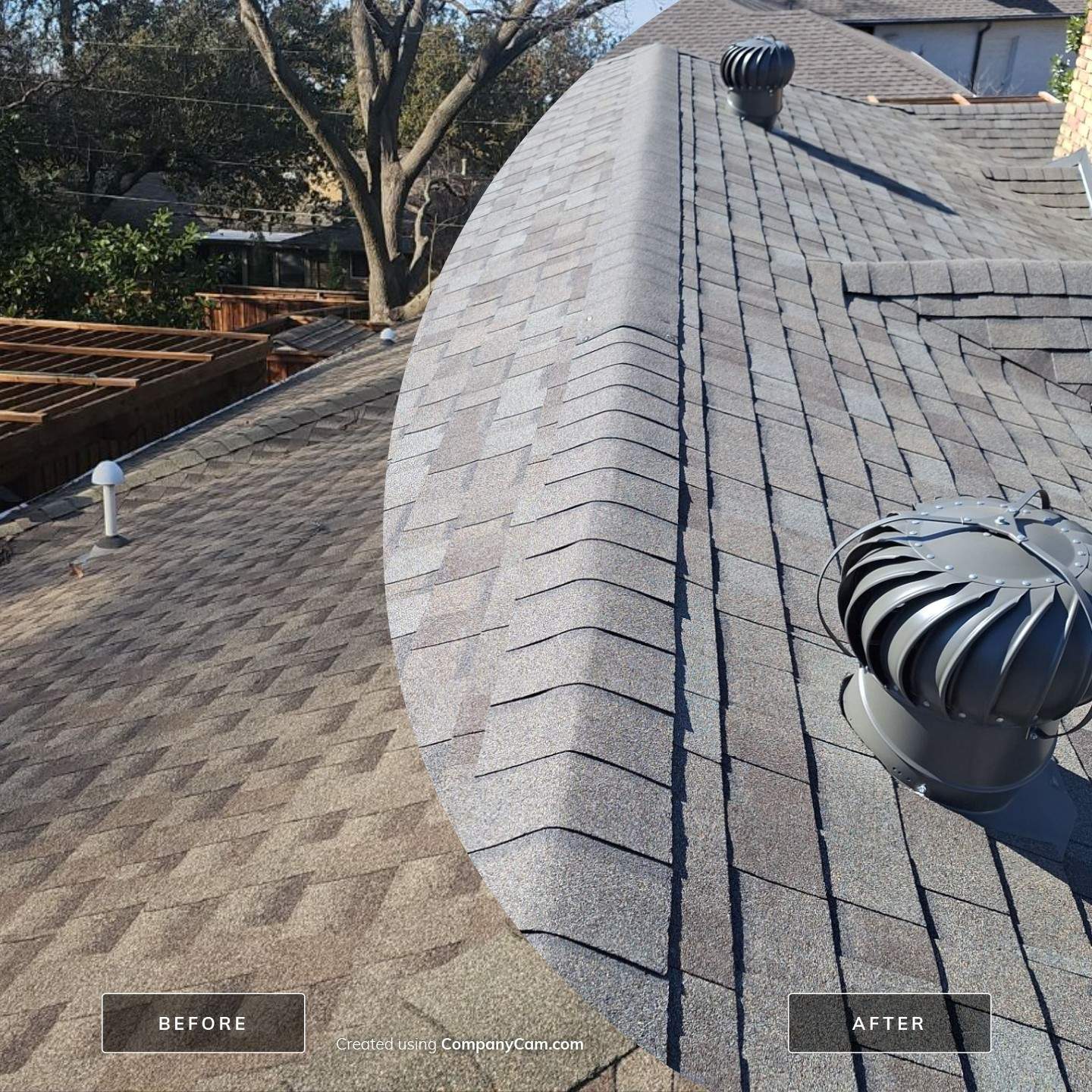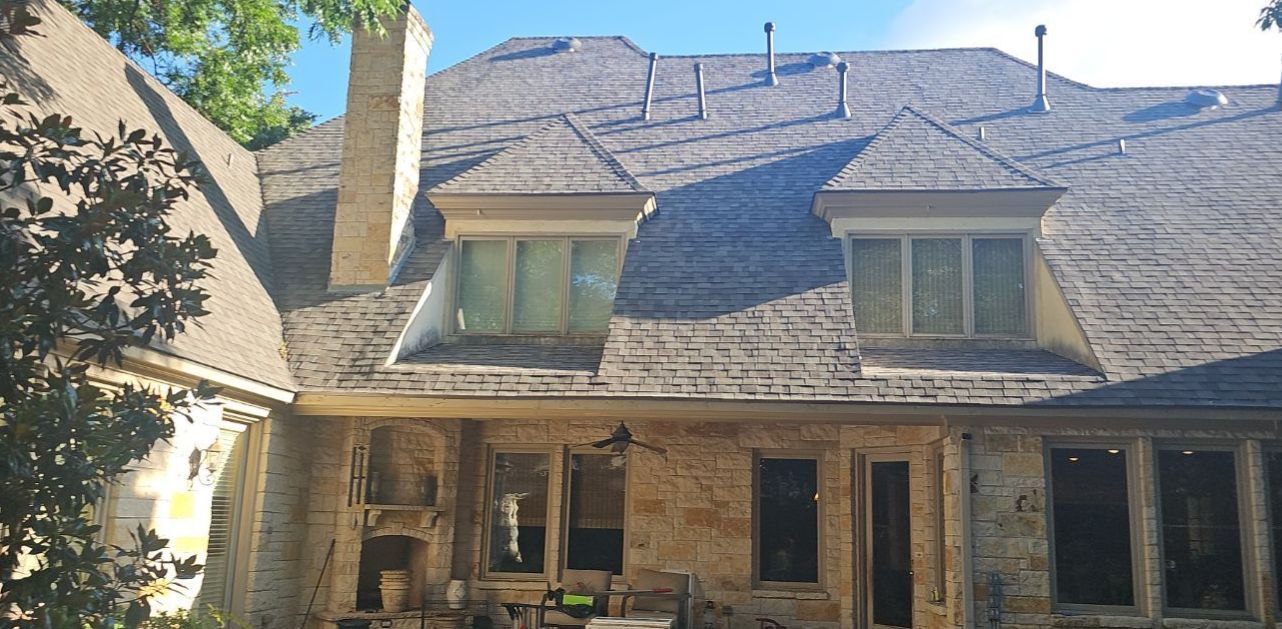
A GAF ArmorShield II Class 4 Roof with a Selective FORTIFIED Upgrade
Not every roof replacement in Dallas is a simple tear-off and reshingle. Some homes have a long maintenance history, some sit in neighborhoods with additional permitting requirements, and some present a more interesting question than simply “what shingle do you want?” This roof replacement on Glenwood Avenue was one of those projects.
The property is located in Northern Hills, just south of Highland Park, and falls within Dallas Conservation District 17. That matters because homes in conservation districts often require a little more care on the front end. In this case, the project required City of Dallas permitting before work began, and as with many older homes in established neighborhoods, the roof replacement needed to be approached with a little more thought than a standard suburban reroof.
This was also not a first-time customer. The owner has used Bert Roofing on a number of other properties over the years, and we had already completed repairs and maintenance work on this particular house before the replacement. That history is useful. It means the recommendation to replace the roof was not based on a single inspection after one leak or one storm. It came after years of seeing how the roof had aged, where prior repairs had been made, and which details continued to need attention.
A roof replacement after years of maintenance and repairs
One of the advantages of working with repeat customers is that roof replacement decisions tend to be better informed. On some homes, the first visit is the first time the contractor has ever seen the property. On others, especially rentals or long-held properties, the contractor may already know the roof’s history well before replacement is ever discussed.
That was the case here. We had completed repairs and maintenance on this home in the past, so by the time the owner decided it was time for a full replacement, the decision was based on more than a snapshot. We already knew the roof had reached the point where continued patching made less sense than installing a new system on the main house.
The detached quarters were not reroofed as part of this project. The work discussed here applies to the main house only.
Why the homeowner selected a Class 4 impact resistant shingle
For the new roof, the homeowner selected GAF ArmorShield II, a Class 4 impact resistant shingle. In North Texas, that is often one of the more practical upgrades available to a homeowner. Dallas is not a coastal hurricane market, but it is certainly a hail market. Because of that, impact resistance is often one of the first things we discuss when a customer wants to spend money on a better roof system.
A Class 4 shingle does not make a roof immune to hail damage, and it does not guarantee an insurance claim will never happen. What it generally does offer is a tougher shingle with better impact resistance than a standard laminated shingle. On many homes in Dallas, that is a more sensible upgrade than spending the same dollars on a package built primarily around extreme wind resistance.
A selective FORTIFIED upgrade instead of a full FORTIFIED roof
The most interesting part of this project was not the shingle selection by itself. It was the decision to include one portion of a FORTIFIED-style roof upgrade without turning the project into a full FORTIFIED roof system.
Homeowners hear the term “FORTIFIED roof” often enough that it can sound like a single product. It is not. A FORTIFIED roof is a system made up of several different components and installation details intended to improve how the roof performs in severe weather. Depending on the level of FORTIFIED upgrade, that can include things such as sealing the roof deck seams, re-fastening decking with ring-shank nails, using specific starter details designed to improve wind resistance, and other measures intended to make the roof assembly more resilient if shingles are lost during a major storm.
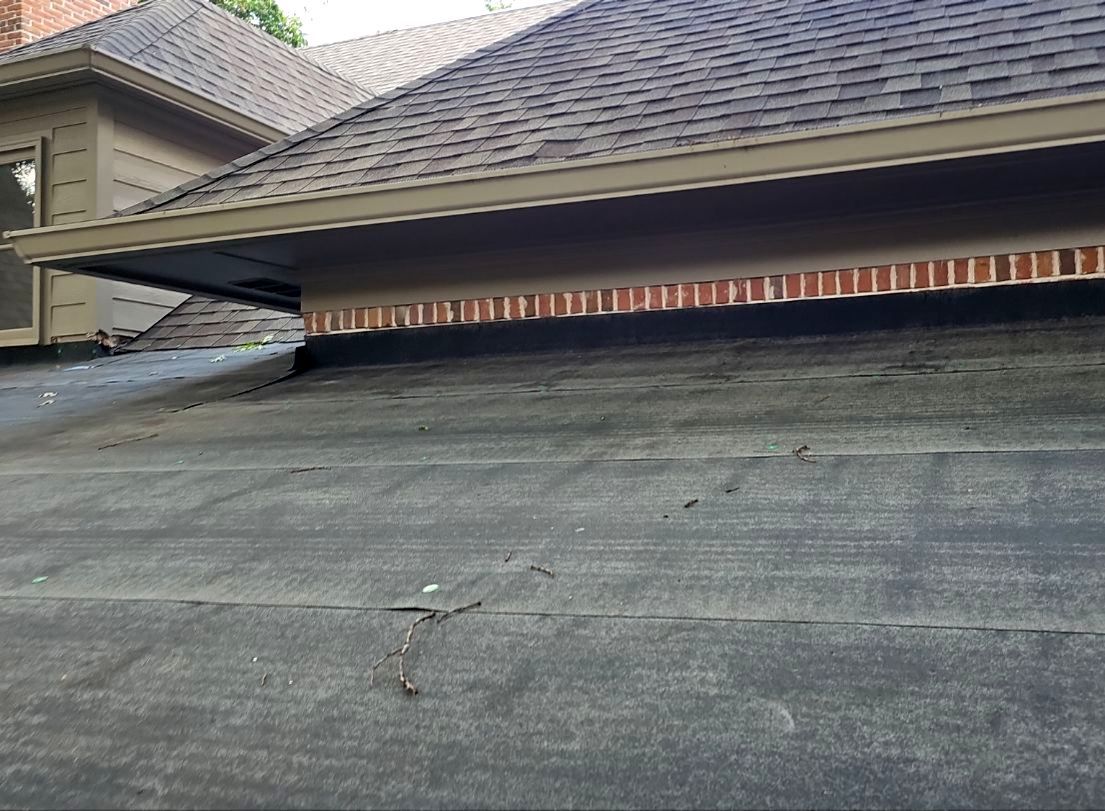
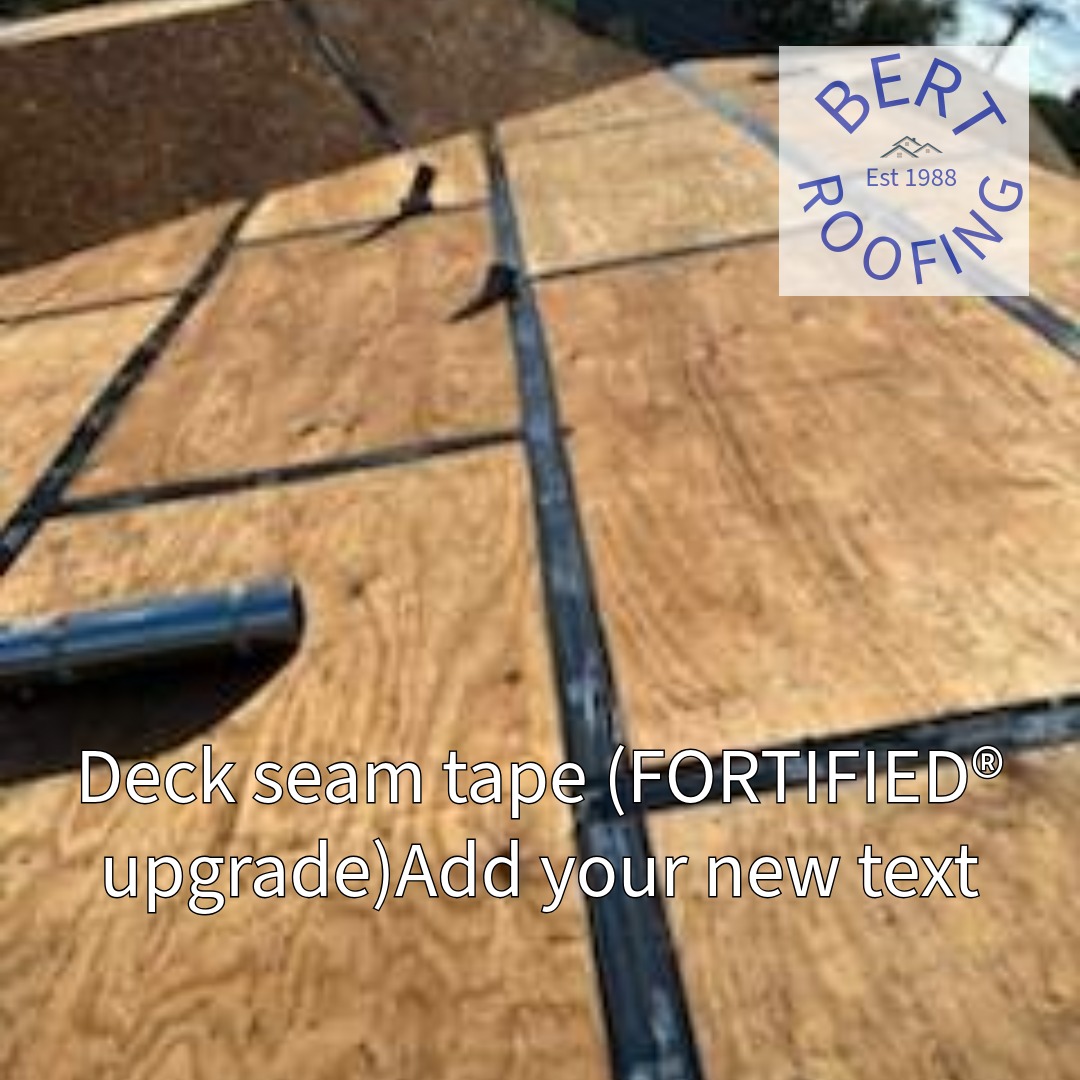
On this roof, we did not install a full FORTIFIED system. Instead, we focused on what we believe is one of the more valuable individual pieces of that system: sealing the seams between the roof decking panels with butyl tape.
Why we taped the roof decking seams
The idea behind deck seam tape is fairly simple. Roof decking is typically installed in 4x8 sheets, and those sheets meet at joints across the roof deck. If a severe storm damages the shingles or blows part of the roof covering off, those seams can become a path for water intrusion. Taping the joints between the decking panels helps reduce the amount of water that can work its way through those seams if the outer roof covering is compromised.
On this project, we added butyl seam tape between the decking joints as part of the reroof. That does not make the roof a full FORTIFIED roof, and it was not presented to the homeowner that way. It was simply one carefully chosen component of a larger system.
In our opinion, this is one of the more practical FORTIFIED-style upgrades a homeowner in Dallas can make if they want additional protection but do not necessarily want to pay for every element of a complete FORTIFIED package.
Why we generally do not push a full FORTIFIED roof in Dallas-Fort Worth
A full FORTIFIED roof is a good system. There is nothing wrong with it. In the right location, it can make a great deal of sense. But as with most roofing upgrades, the better question is not “is it good?” The better question is “is it a good return on investment for this house and this market?”
In our view, the strongest use case for a full FORTIFIED roof is usually closer to the Gulf Coast or in areas with more serious hurricane wind exposure. Dallas-Fort Worth certainly sees severe weather, but it is not a coastal hurricane market. At the same time, Texas does not currently offer the type of broad insurance discount for a FORTIFIED roof that some other states have used to make the economics more attractive for homeowners. That may change over time, but at the time of this project, that incentive was not a meaningful factor.
That matters because homeowners have finite budgets. If someone in Dallas is deciding where to spend upgrade dollars, we generally think the first question should be where that money creates the most practical value. In many cases, if the choice is between a full FORTIFIED roof package and moving up to a better impact resistant shingle, Bert Roofing will usually lean toward the better shingle first.
That was the logic here. Rather than trying to sell every available upgrade, we looked at the roof, the house, the local weather risks, and the homeowner’s budget, then selected one part of the FORTIFIED concept that we thought offered a particularly good value.
Working in a Dallas conservation district requires a little extra care
The conservation district aspect of this project is worth mentioning because it is one more variable that can affect how a reroof is handled. The City permit for this project identifies the property as being in Conservation District 17, and the reroof permit was issued specifically for tear-off and replacement of the existing roof covering with no structural changes or layout changes.
That does not mean every conservation district roof is dramatically different from a roof outside one of those districts. It does mean the contractor should pay attention to permitting, scope, and neighborhood context. On older homes in neighborhoods near Highland Park, University Park, and other established parts of Dallas, that familiarity can matter.
Final thoughts on this Northern Hills roof replacement
This roof replacement on Glenwood is a good example of how roofing decisions are not always as simple as choosing between “basic” and “premium.” Sometimes the more useful question is how to allocate upgrade dollars intelligently.
For this homeowner, the final plan made sense:
- replace the aging roof on the main house rather than continue piecemeal repairs
- use a Class 4 impact resistant shingle that is well suited to North Texas weather
- add a selective FORTIFIED-style upgrade by taping the roof deck seams
- handle the reroof within the permitting requirements of a home located in Dallas Conservation District 17
Not every Dallas home needs a full FORTIFIED roof system. Not every homeowner should pay for every available upgrade. In many cases, the better answer is to understand which improvements matter most for the house, the neighborhood, and the type of weather the roof is actually likely to face.
If you own a home in Northern Hills, the Park Cities area, Lakewood, East Dallas, or another older Dallas neighborhood and you are trying to decide whether continued repairs still make sense or whether it is time for a replacement, Bert Roofing would be glad to take a look.