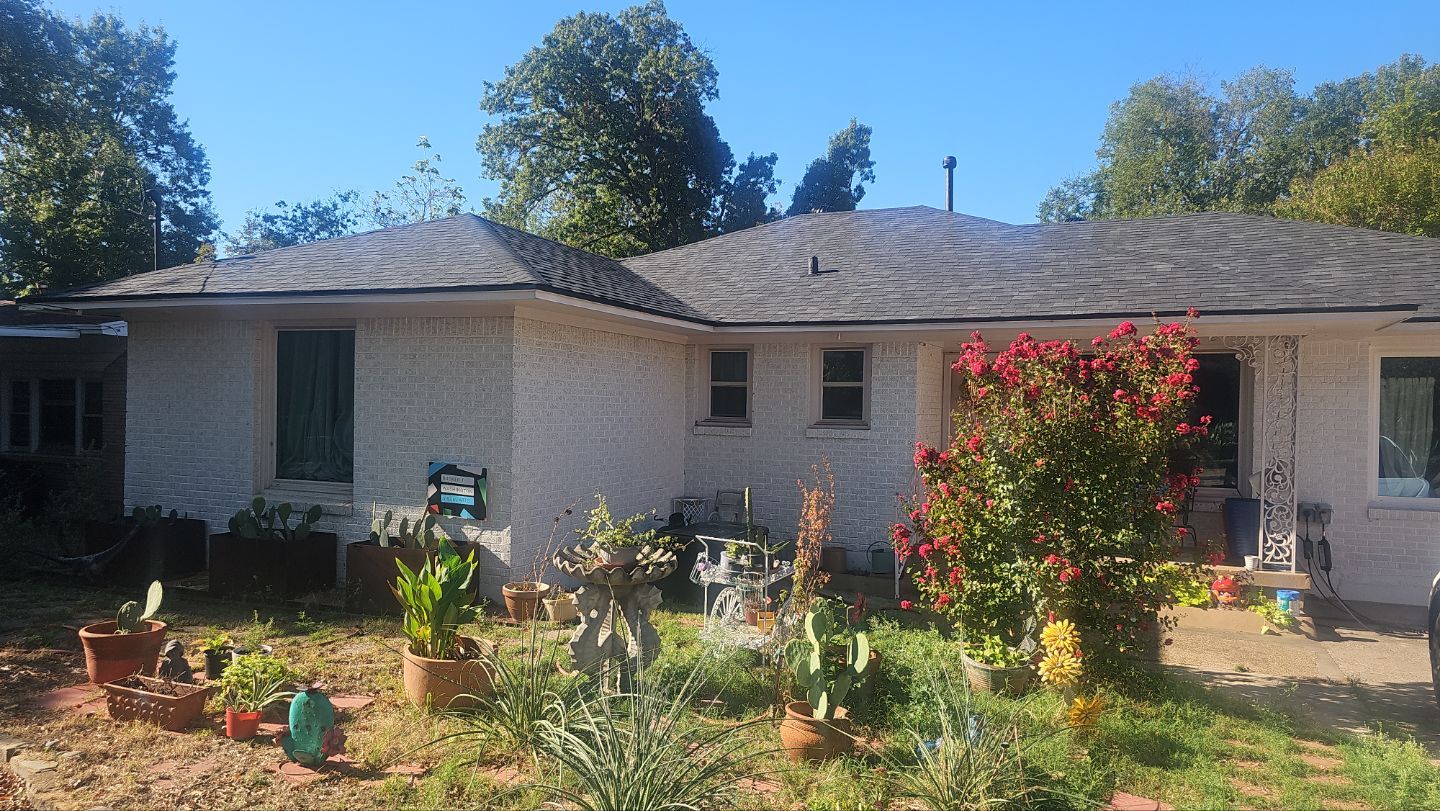
Two old ventilation dormers stood partway up the rear roof of this Casa View home. During the roof replacement, we removed both, repaired the decking where they had been, and eliminated an awkward part of the attic ventilation system.
The house is just off Peavy Road near Bryan Adams High School in Dallas 75228, about a two-minute drive from our office. It was a project close to home, with two noticeable changes: a cleaner rear roofline and new Owens Corning Duration STORM shingles in Onyx Black.
Why the old dormer vents came out
The two structures were louvered dormer vents: small, roofed projections that provided openings into the attic rather than windows or additional living space. They reflected an older approach to ventilation from the 1950s and early 1960s, when the house was built.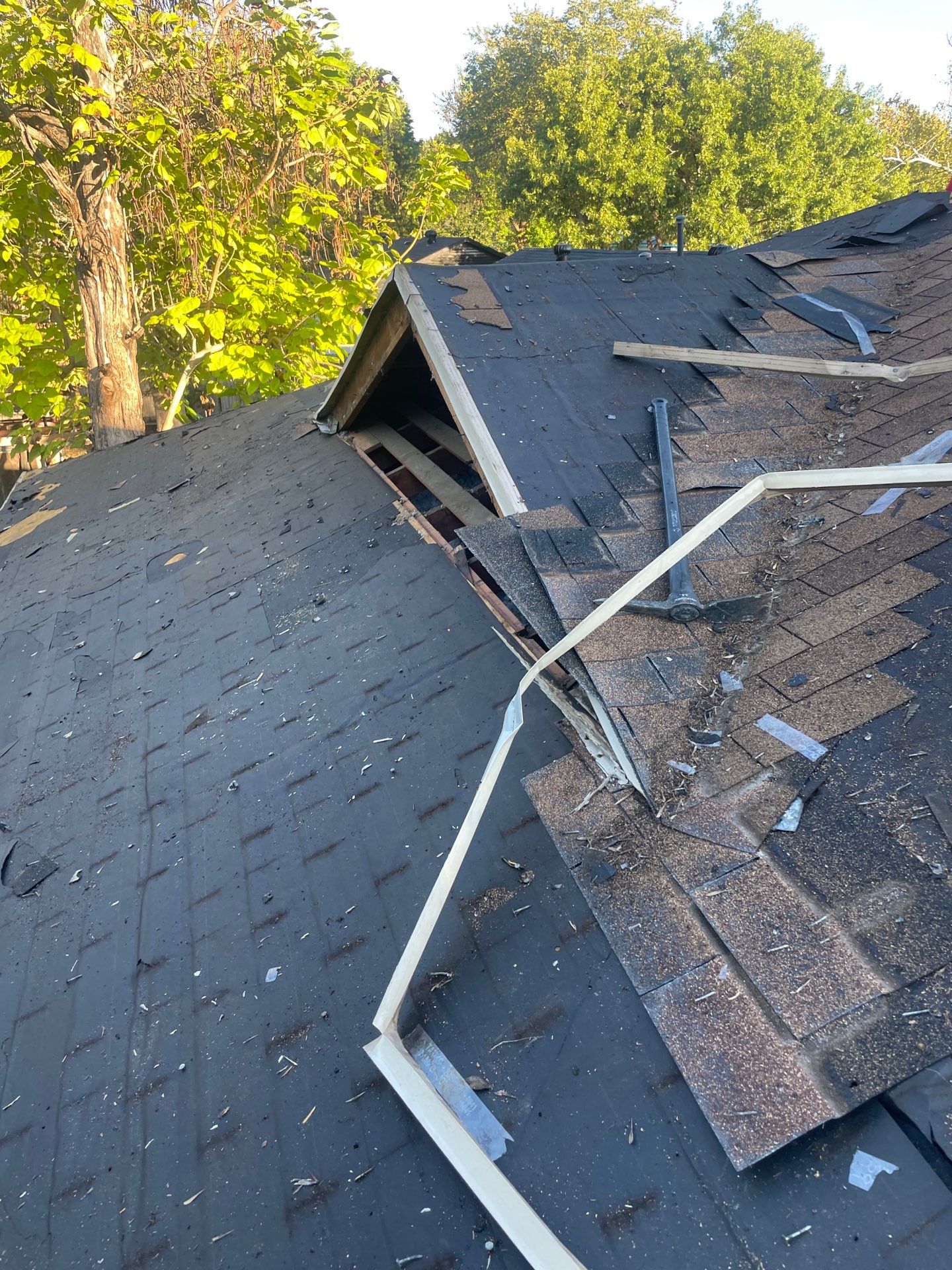
Their location was the problem. On this roof, they were too high for intake and too low for exhaust.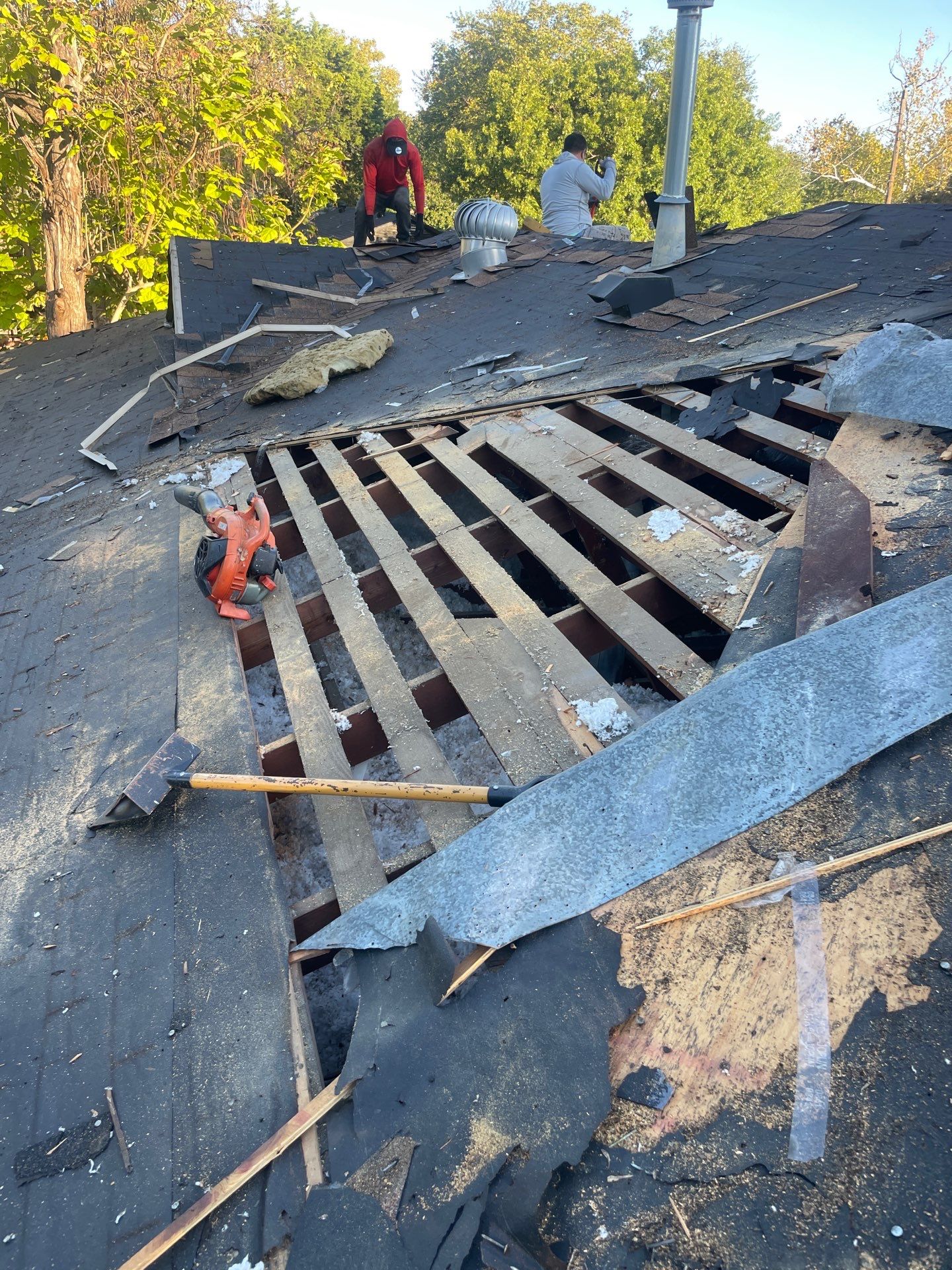
For a soffit-and-turbine ventilation system, we want air entering through the soffit vents at the eaves and leaving through the turbines higher on the roof. Openings between those points can give the airflow a shortcut, allowing an exhaust vent to draw from a nearby opening rather than from the soffits. More openings do not necessarily produce a better ventilation system.
For this house, the better arrangement was to remove the dormer vents and let the soffits handle intake and the turbines handle exhaust. That approach depends on adequate, unobstructed intake; removing old vents is not automatically the right answer for every roof.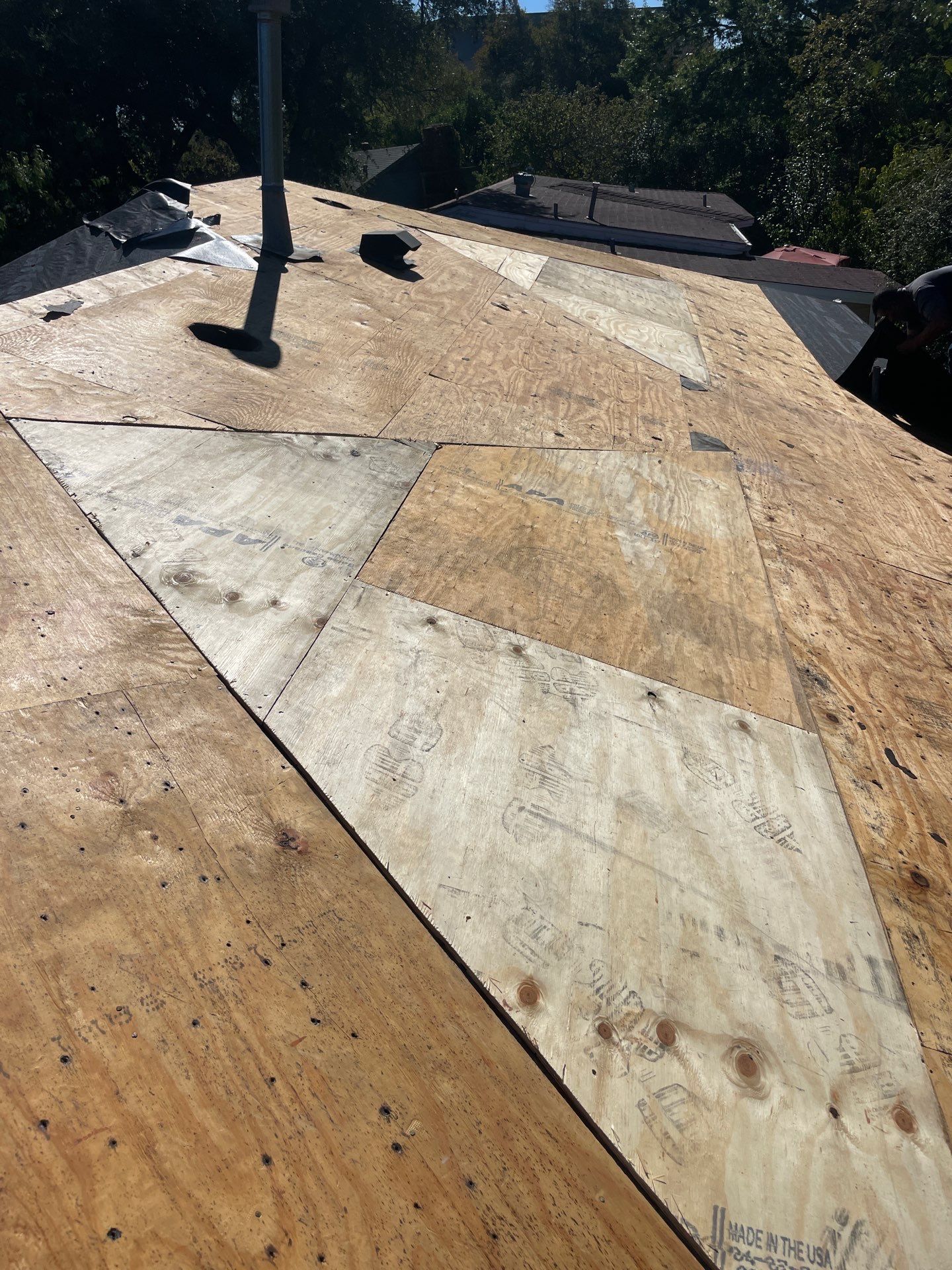
We took down both dormers and repaired the decking at their openings as part of the roof replacement. Those areas then became part of the continuous roof surface instead of leaving two structures to roof around again.
Starting with an online roof estimate
Before our inspection, the homeowner had used the Bert Roofing Instant Roof Estimate tool to get an initial idea of replacement cost.
The tool uses aerial measurements and the selected roofing material to provide a preliminary price range. It gives homeowners a useful starting point before arranging a visit, but it cannot account for everything that may affect the work. Bert Roofing
Tree coverage can make portions of a roof difficult to assess from above. Multiple layers of old shingles, access limitations, decking repairs, and unusual roof details can also change the scope. Some concealed conditions may not become apparent until the old roofing is removed.
An on-site inspection helps us check the measurements, review the existing roof, and work through those details before preparing the written estimate. On this project, evaluating the old ventilation dormers was an important part of that process. Their location and purpose mattered just as much as the square footage surrounding them.
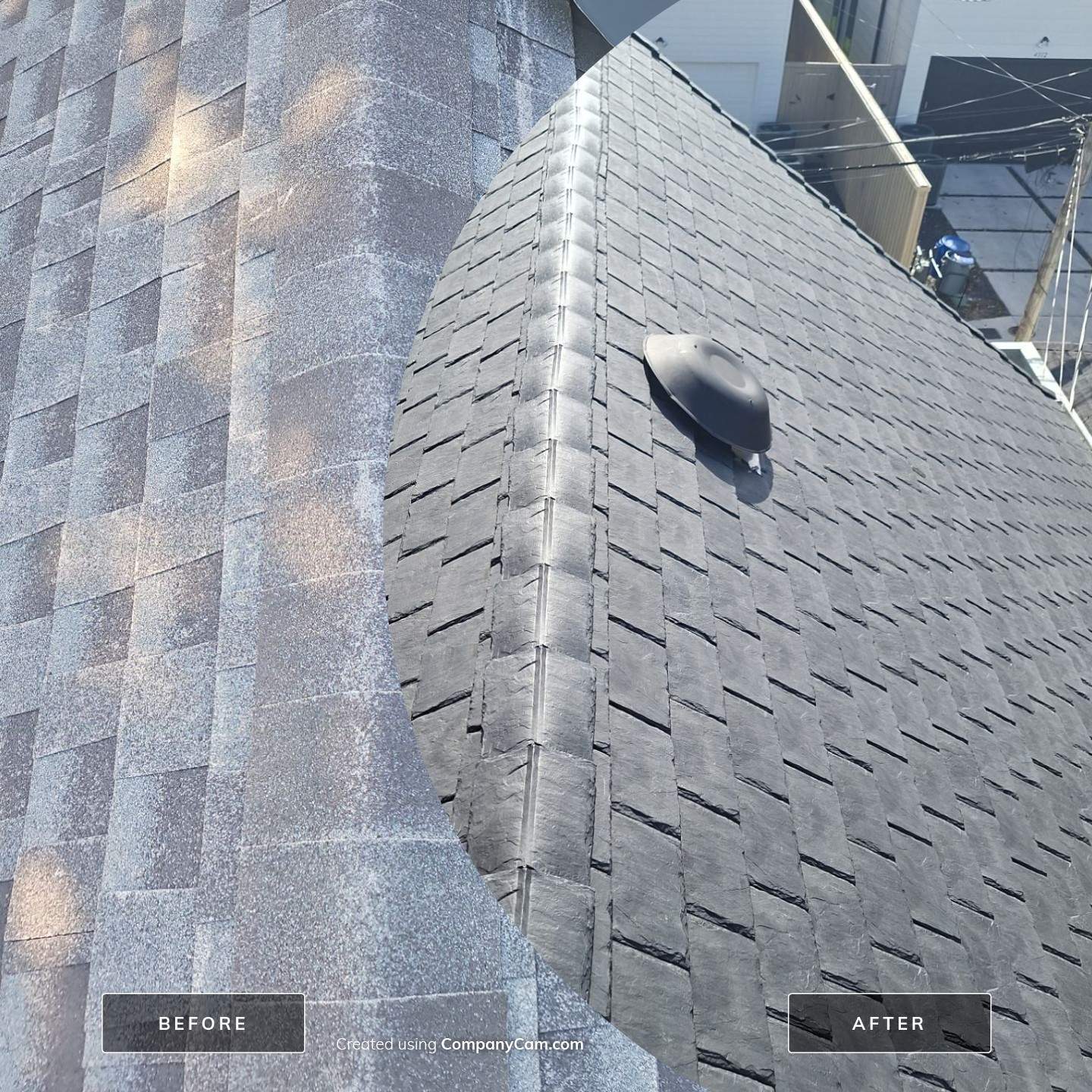
Onyx Black and a cleaner rear roofline
The homeowner selected Owens Corning TruDefinition Duration STORM shingles in Onyx Black. Duration STORM carries a Class 4 impact-resistance rating under UL 2218 and uses a reinforcing polymeric backing as part of its WeatherGuard technology. Impact-resistant does not mean hail-proof, but it was a meaningful product upgrade for this roof. Owens Corning
The color change was immediately noticeable. The darker shingles provided more contrast against the home’s light-colored exterior and gave the roof a sharper appearance without changing the character of the house.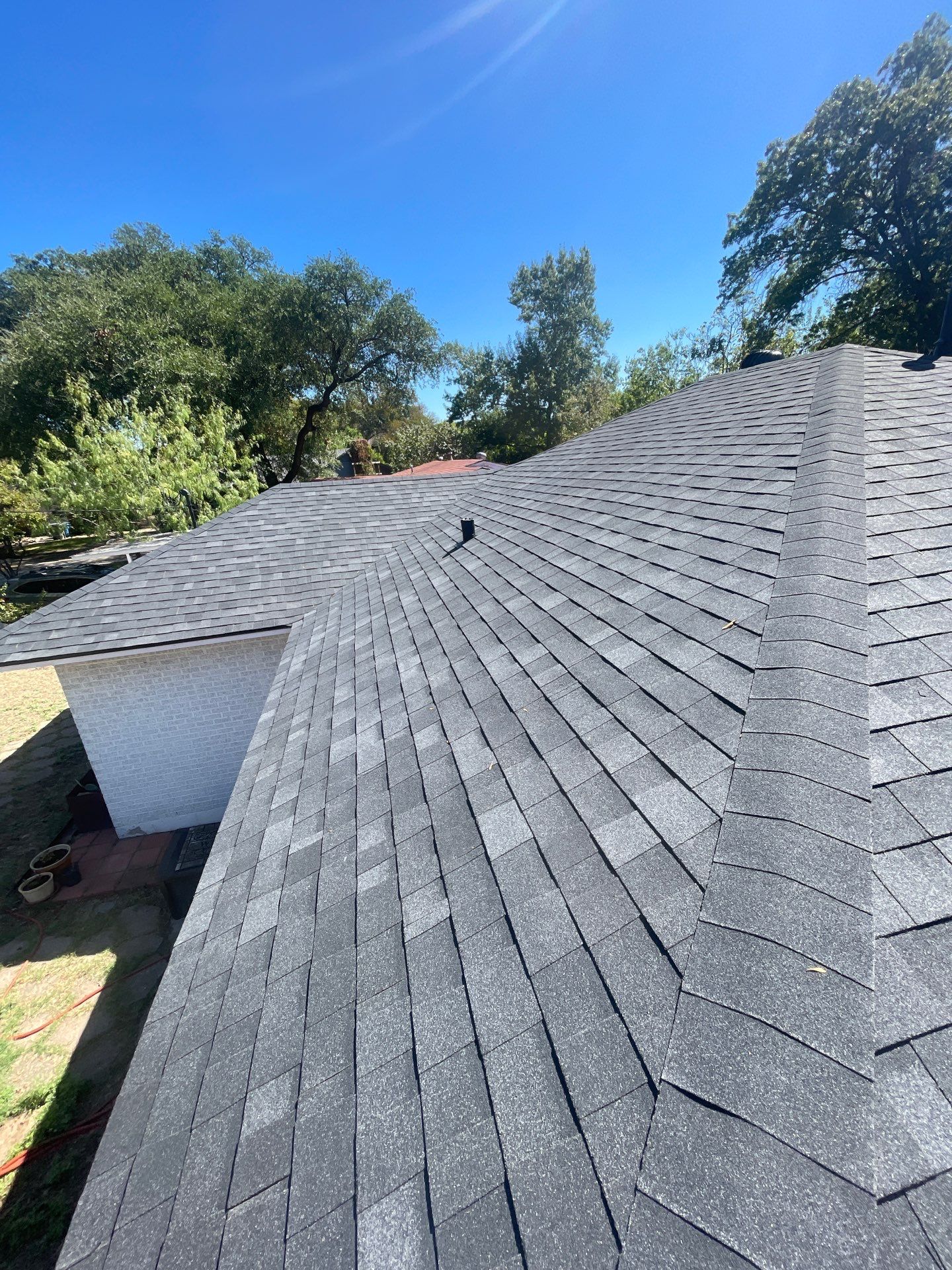
At the rear, removing the two dormers made just as much difference as the new shingle color. The roof no longer had those bulky interruptions, and the repaired areas blended into the surrounding slope. The homeowner was particularly pleased with how much cleaner and neater the back of the house looked.
For this Casa View home, replacing the shingles was also an opportunity to correct an older ventilation detail rather than carry it forward into another roof.