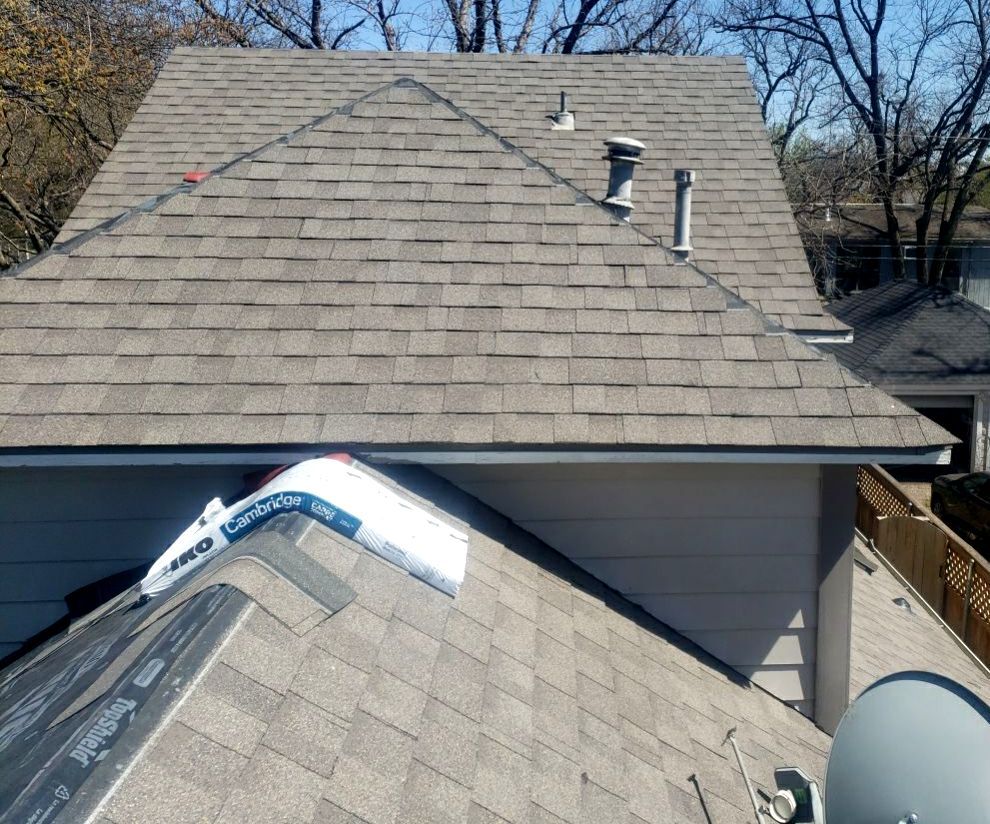
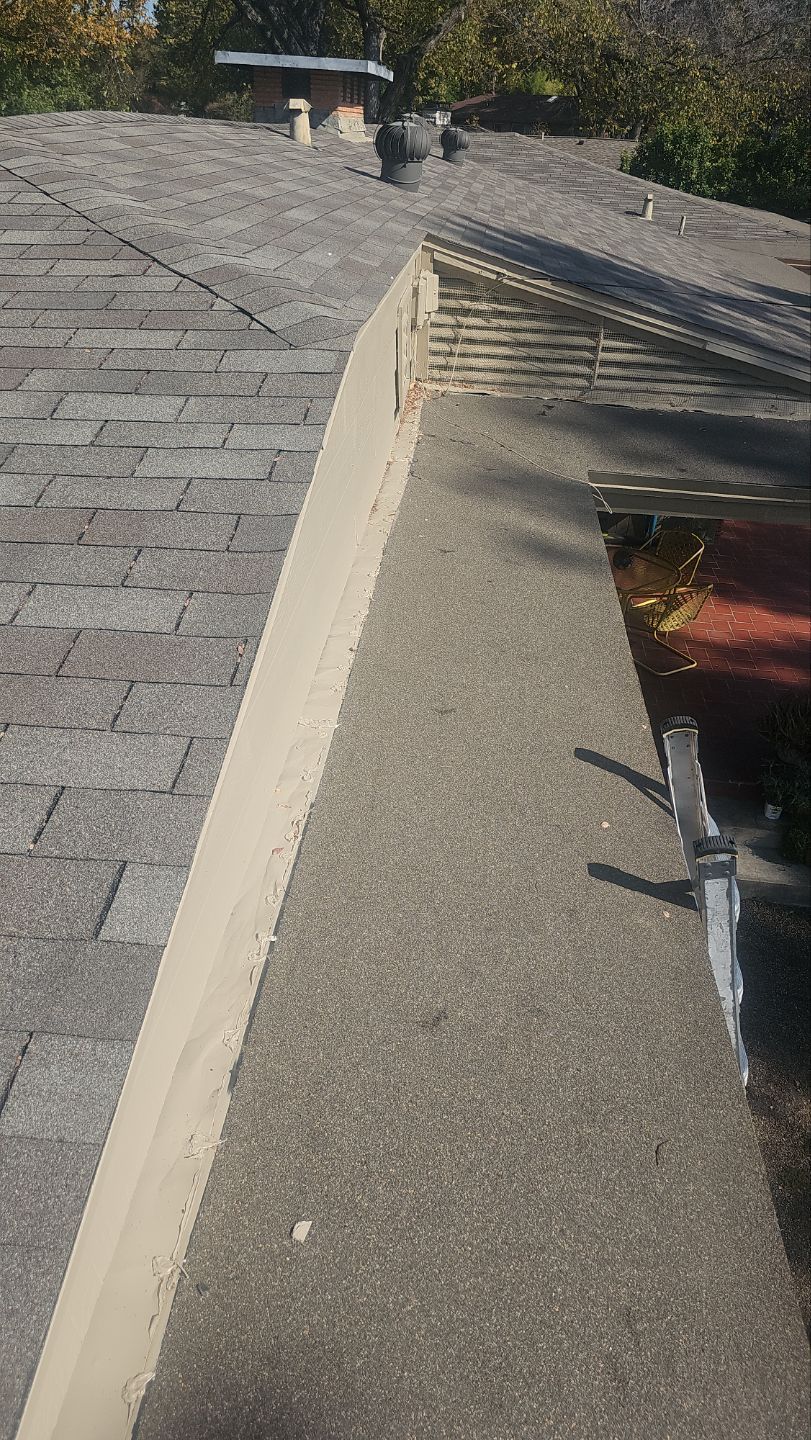
A homeowner in the Lake Park Estates neighborhood of East Dallas contacted Bert Roofing about numerous roof leaks. The house had an unusual roof design, with conventional composition shingles on the steeper sections and modified-bitumen roofing around the lower perimeter.
The composition shingles appeared to be in good condition. The problems were concentrated in the low-slope sections, where poor workmanship during an earlier installation had resulted in repeated leaks.
Our job was to correct those problems without unnecessarily replacing the rest of the roof.
An Unusual Roof Design and a Familiar Neighborhood
The home has a somewhat bell-shaped roof profile. The upper portion has enough pitch for composition shingles, but the slope decreases considerably as the roof approaches the eaves. These lower sections require a roofing system designed for low slopes.
The homeowners were already familiar with Bert Roofing. They lived near our East Dallas office and had considered using us when the roof was replaced several years earlier. However, the work was handled through a general contractor who used his own roofing subcontractor.
There was also a small Baylor flag displayed in the front yard. As a Baylor graduate myself, that gave us an immediate point of connection.
Unfortunately, the earlier roofing installation had left the homeowners with persistent leaks around the lower portions of their roof.
An Unexpected Discovery During Tear-Off
Our original plan was straightforward. We would remove the existing modified-bitumen roofing, inspect the wood decking, make any necessary repairs, and install a new roofing system.
The original specifications included a 1/4-inch gypsum cover board, such as DensDeck, over the wood decking. This was intended to provide thermal protection during the installation of the torch-applied modified-bitumen roofing. Keeping open flames away from combustible wood is an important consideration with this type of installation.
Once work began, however, we discovered something unexpected.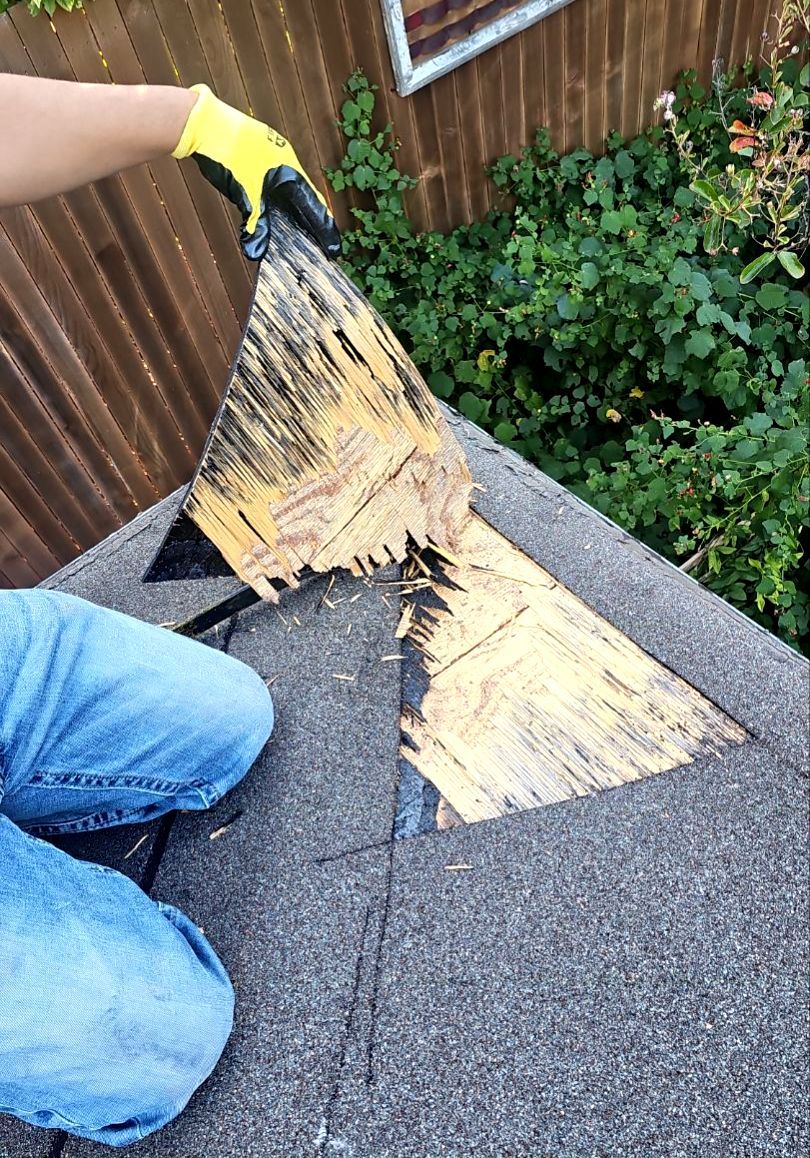
The previous modified-bitumen roofing had been installed directly against the plywood decking. There was no separate thermal barrier or mechanically attached base sheet beneath the existing membrane.
When we attempted to remove the old roofing, the bond was so strong that a layer of the plywood came off with it.
This created a significant problem.
Continuing with a complete tear-off could have required replacing much of the wood decking around the perimeter of the house. That would also have meant additional work, including finishing and painting exposed decking on the underside of the roof.
What had started as a relatively straightforward roofing project could have become considerably more expensive.
Changing the Plan to Avoid Unnecessary Expense
Rather than proceeding with a complete tear-off that could damage extensive areas of otherwise serviceable plywood, we reconsidered the installation approach.
The existing modified-bitumen roofing was firmly bonded to the decking. We determined that it could remain in place as part of a roof-recover installation, with the new roofing installed over the existing material.
This revised approach avoided removing the old membrane from the plywood and eliminated the need for the gypsum cover board specified in our original proposal.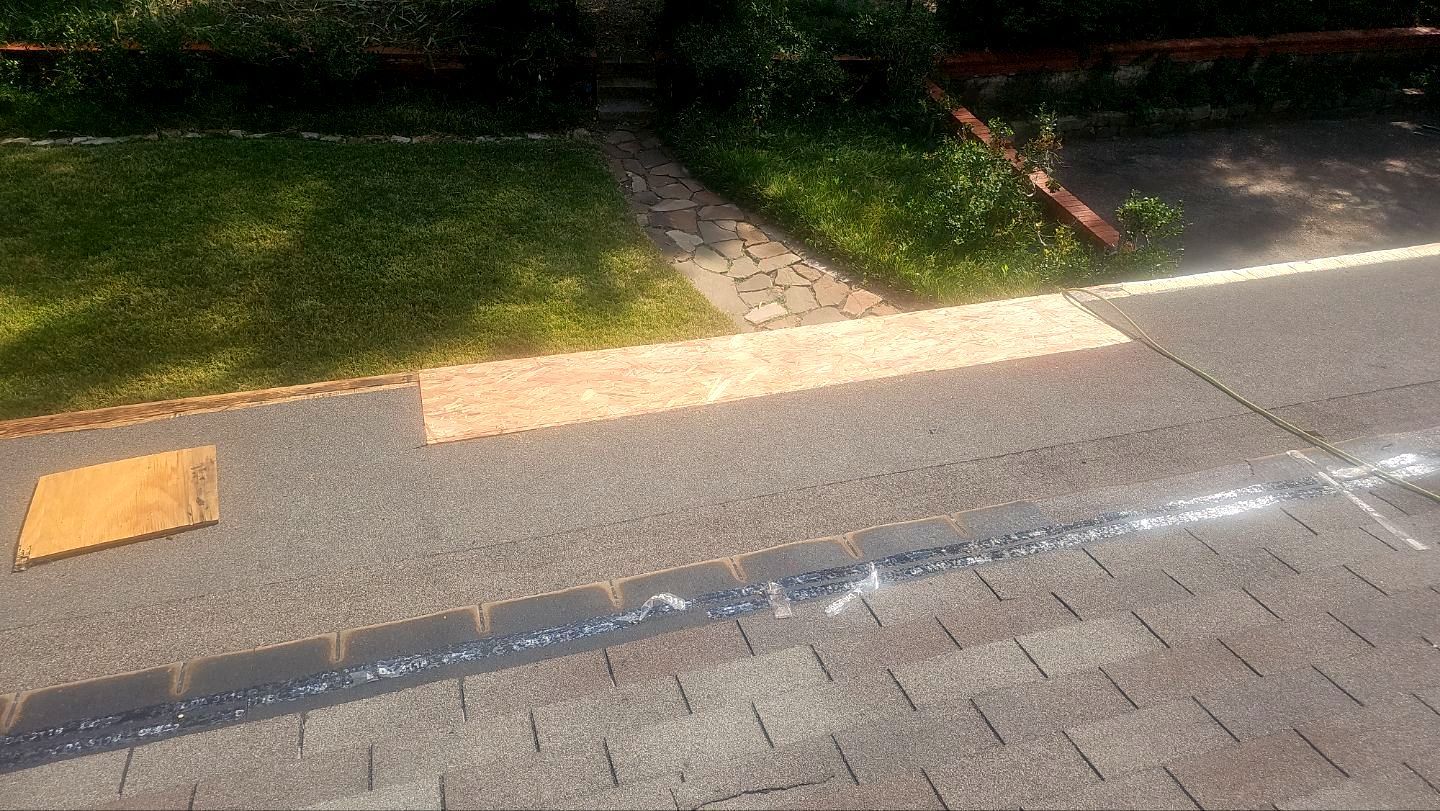
We still inspected the exposed decking and replaced material that was unsuitable for supporting the new roofing system. Ultimately, only one sheet of decking needed replacement.
The new system included CertainTeed modified-bitumen roofing, with a Black Diamond base sheet and a Weathered Wood granulated cap sheet.
By adapting the installation to the conditions we actually encountered, we avoided extensive decking replacement and the related finishing work.
The change also reduced the homeowner’s final cost. Eliminating the originally specified gypsum board and avoiding widespread decking replacement made the project less expensive than initially anticipated.
Getting the Transition Between Roof Systems Right
Another important part of the installation was the transition between the low-slope modified bitumen and the composition shingles above it.
The upper edge of the modified-bitumen roofing needed to extend beneath the shingles, rather than simply terminate against them.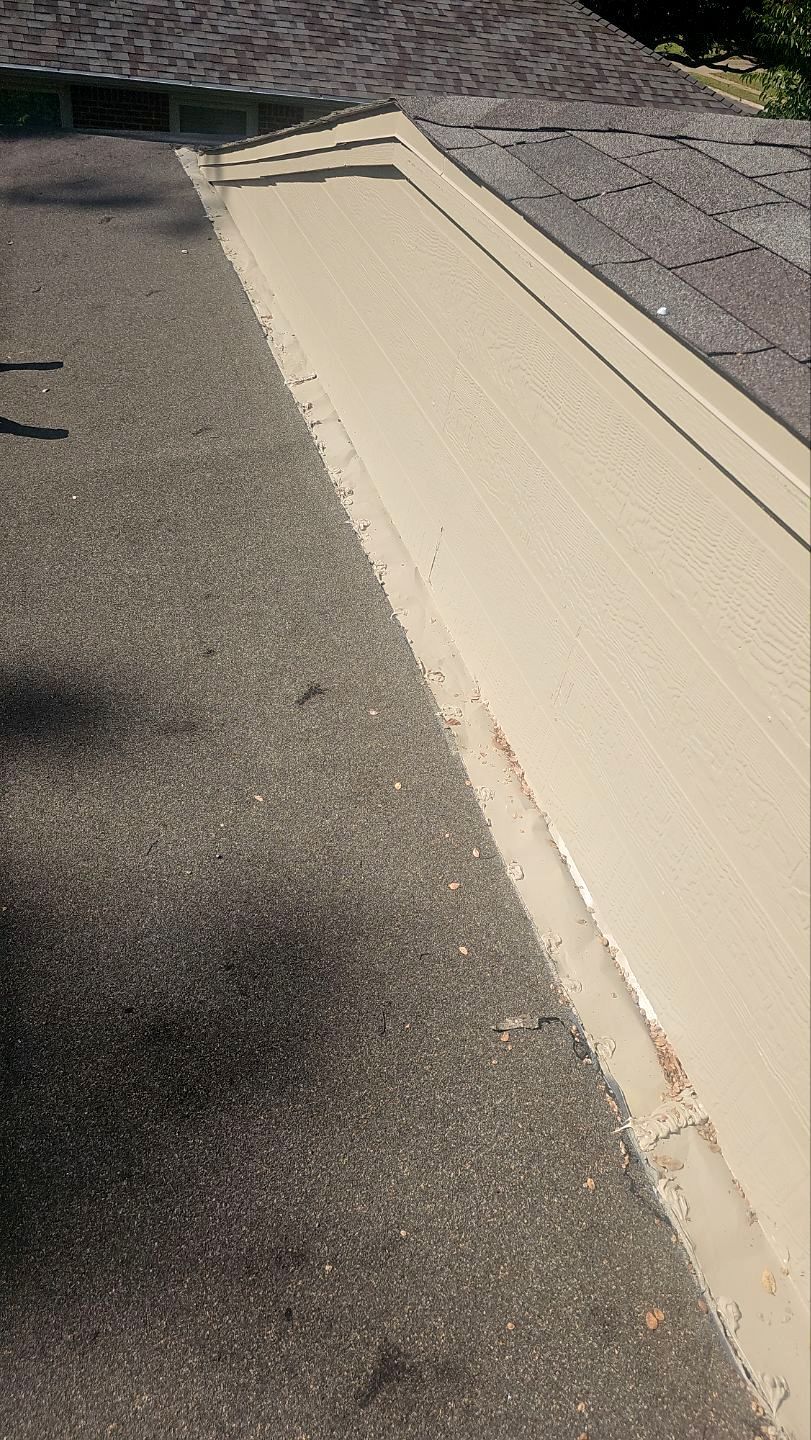
To accomplish this, we removed the lower courses of composition shingles around the roof perimeter. The new modified-bitumen membrane was extended up the slope, and the shingles were then replaced over its upper edge.
This overlapping arrangement allows water to drain from the steeper shingle roof onto the lower modified-bitumen roof without entering behind the roofing material.
New custom metal edging was also installed along the low-slope roof perimeter.
These transitions are particularly important on a roof like this one, where two different roofing systems meet around much of the house.
A Practical Solution for an East Dallas Home
Once we resolved the unexpected decking conditions, the remainder of the installation went smoothly.
The project was completed in October 2025. Bert Roofing installed the new CertainTeed modified-bitumen system, replaced the limited amount of unsuitable decking, installed new metal edging, and completed the transitions to the existing composition shingles.
Knowing when to repair or replace a roof can prevent homeowners from spending money on roofing that still has years of useful service life.
This Lake Park Estates project illustrates why experience and judgment matter, especially on Dallas homes with unusual roof designs. The initial plan was reasonable based on what we could see, but once the existing materials were exposed, conditions called for a different approach.
Rather than allowing an unexpected discovery to turn into an unnecessarily expensive project, we adjusted the scope, addressed the problem areas, and reduced the homeowner’s cost.
Bert Roofing has served Dallas homeowners since 1988, providing roof repairs, roof replacements, and low-slope roofing systems throughout East Dallas and the surrounding neighborhoods.