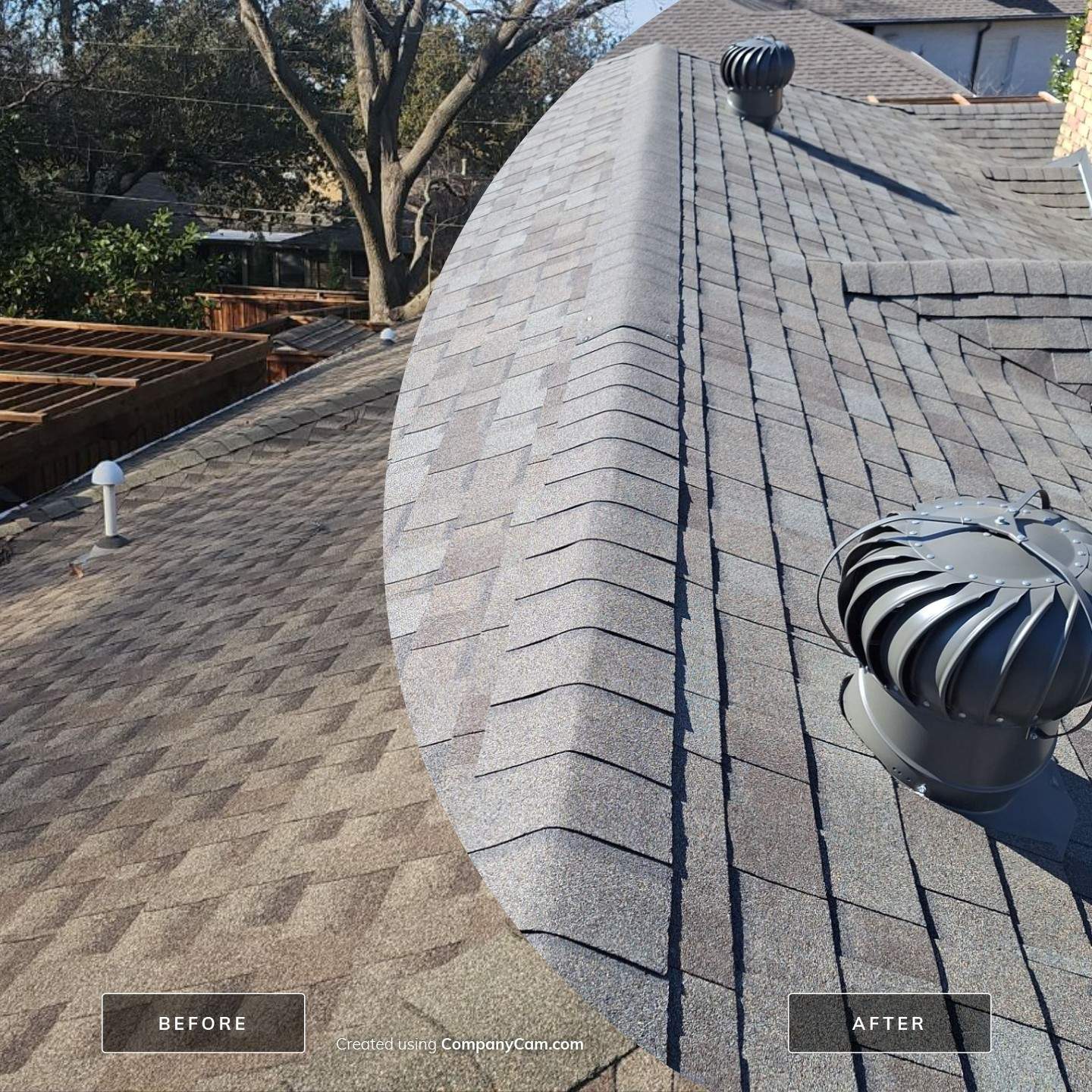
We had worked on this 75214 home before, completing repairs as the existing roof aged. Eventually, the roof reached the point where roof replacement made more sense than continuing to address isolated problems.
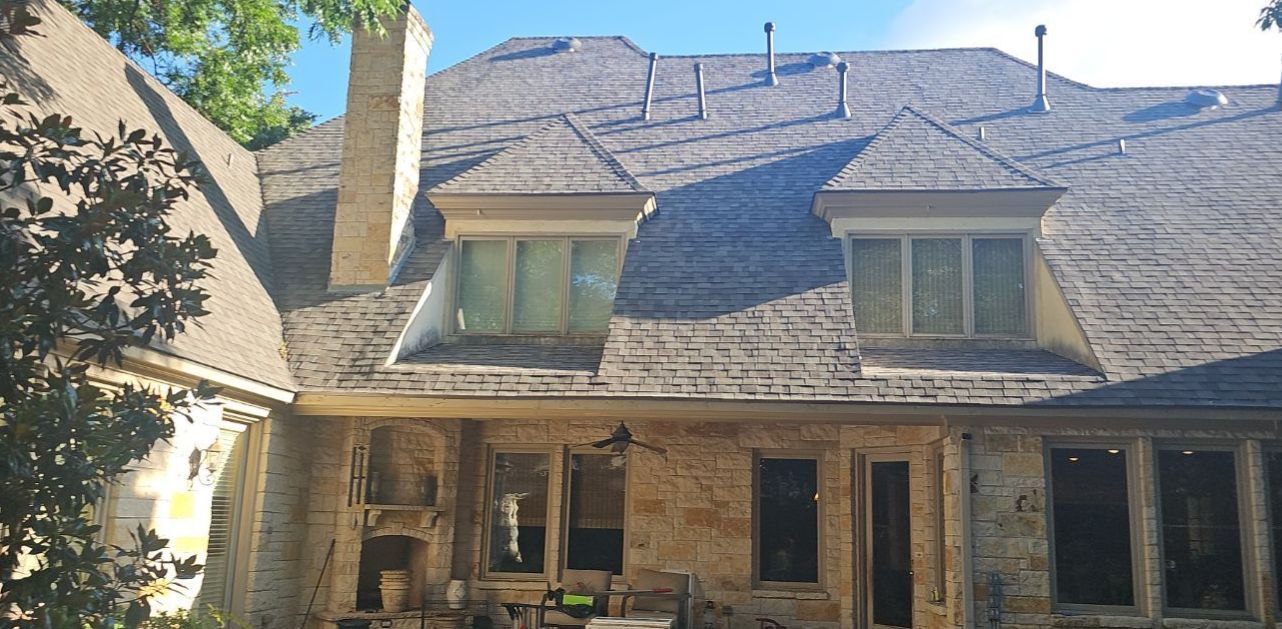
The home is located near University Boulevard, between Skillman and Abrams, in the northern part of 75214. It is a substantial roof rather than a simple one-story rectangle. EagleView measured approximately 51.4 squares before waste, with 15 roof facets. Most of the roof is a 4/12 pitch, with some 7/12 sections and a small low-slope area.
Upgrading to an Owens Corning Class 4 Roof
For the main roof, the homeowners selected Owens Corning Duration Storm shingles in Driftwood. Duration Storm is a Class 4 impact-resistant shingle, which is the highest impact-resistance classification under the UL 2218 testing standard.
The material order also included matching Owens Corning Class 4 hip and ridge shingles, starter strip, synthetic underlayment and Owens Corning WeatherLock ice and water protection.
Class 4 shingles are not necessary on every roof, but they can make sense for homeowners who want a more impact-resistant roofing system in North Texas. In this case, the homeowners chose the upgraded product as part of replacing an older roof rather than simply going back with a basic laminated shingle.
Localized Rotten Decking Found During Tear-Off
One benefit of removing an old roof completely is that the wood roof deck can finally be inspected directly.
Once the existing roofing materials were removed, we found several localized areas of deteriorated decking. The damage was not extensive enough to require a full redeck, but four separate areas needed to be removed and replaced before the new roofing system could be installed. The final invoice documents those four decking repairs.
The project photographs show the damaged areas after the old roofing was removed and the replacement decking installed. 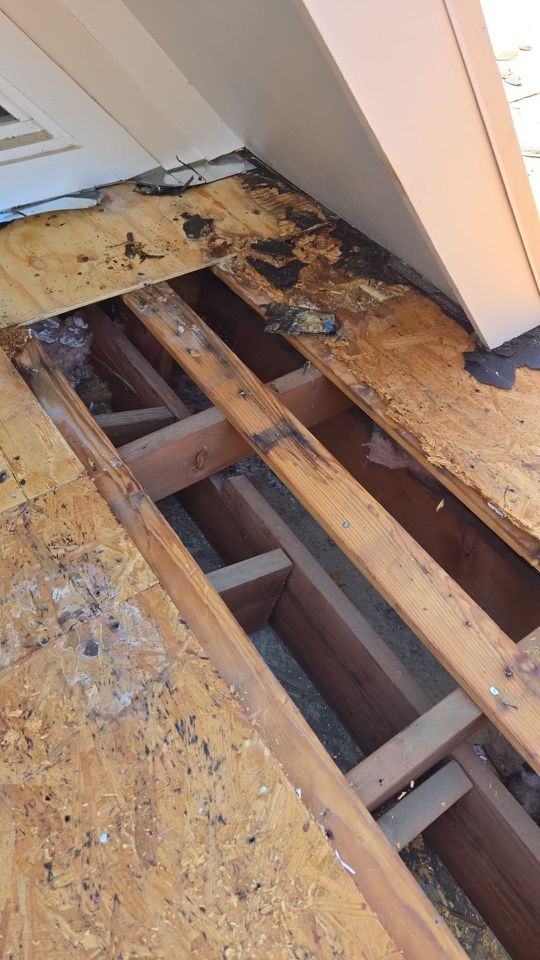
This is one reason we do not try to predict an exact decking repair quantity before tear-off. Some deterioration can be identified in advance, but other areas only become visible once the existing shingles and underlayment are removed.
A Different Roofing System for the Low-Slope Area
One small portion of this roof required a different approach.
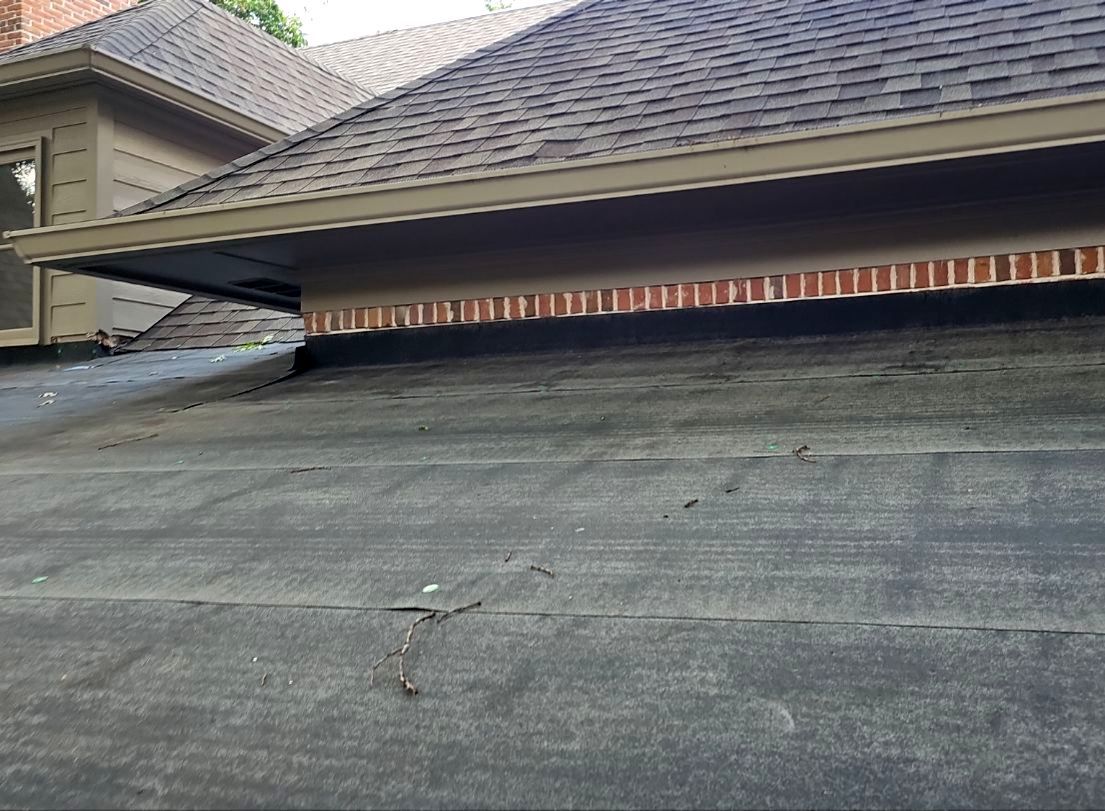
The EagleView measurements show a section at approximately a 1/12 pitch. 63154985 (1) Asphalt shingles are intended for steeper roof slopes, so we did not simply continue the shingles across this flatter portion.
Instead, we installed a CertainTeed Flintastic self-adhered modified-bitumen roofing system. The material order included both Flintastic SA PlyBase and a Flintastic SA Cap Sheet for the low-slope area. 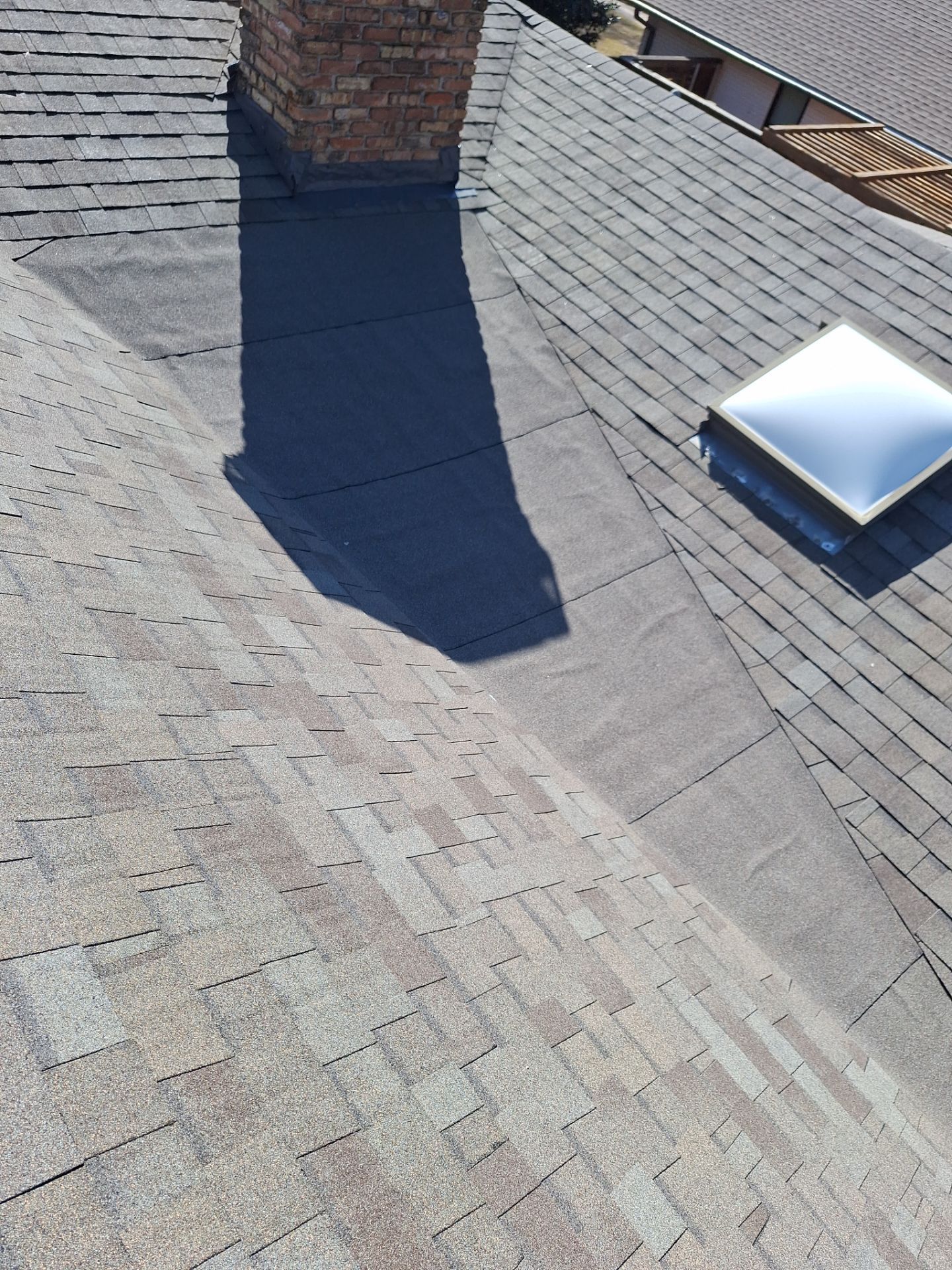
This type of detail is easy to overlook from the ground because the finished roof appears visually consistent. Technically, however, the steeper and low-slope portions of the roof require different materials to perform properly.
Completing the Roof as a System
Along with the new shingles and low-slope roofing, the project included new drip edge, step flashing, valley metal, roof vents and other accessories rather than treating the job as simply a shingle replacement. 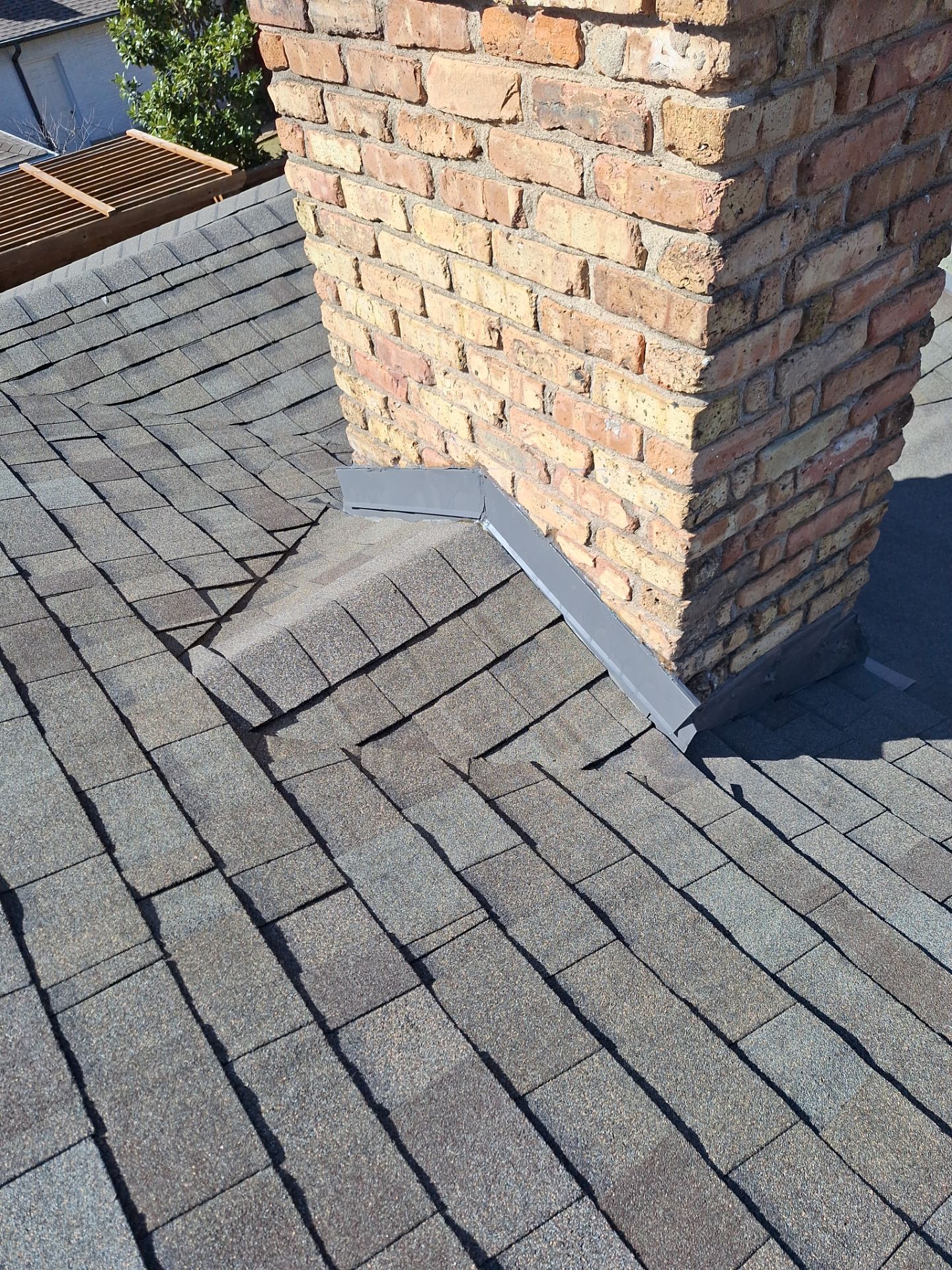
That combination of details is what made this project worth documenting. It was a roof we already knew from previous repair work, but the eventual replacement involved several different decisions: upgrading to a Class 4 shingle, replacing localized deteriorated decking, and using a separate modified-bitumen system where the roof pitch became too low for shingles.
The finished result was an Owens Corning Duration Storm roof in Driftwood designed around the actual conditions of the home rather than using one roofing material everywhere.