Class 4 Shingles, Roof Age, and Real-World Hail: Why One North Dallas Roof Survived and Another Didn’t
In North Dallas, a lot of homeowners assume that once they upgrade to a Class 4 impact-resistant shingle, they’re basically done thinking about hail. Reality is a little more complicated.
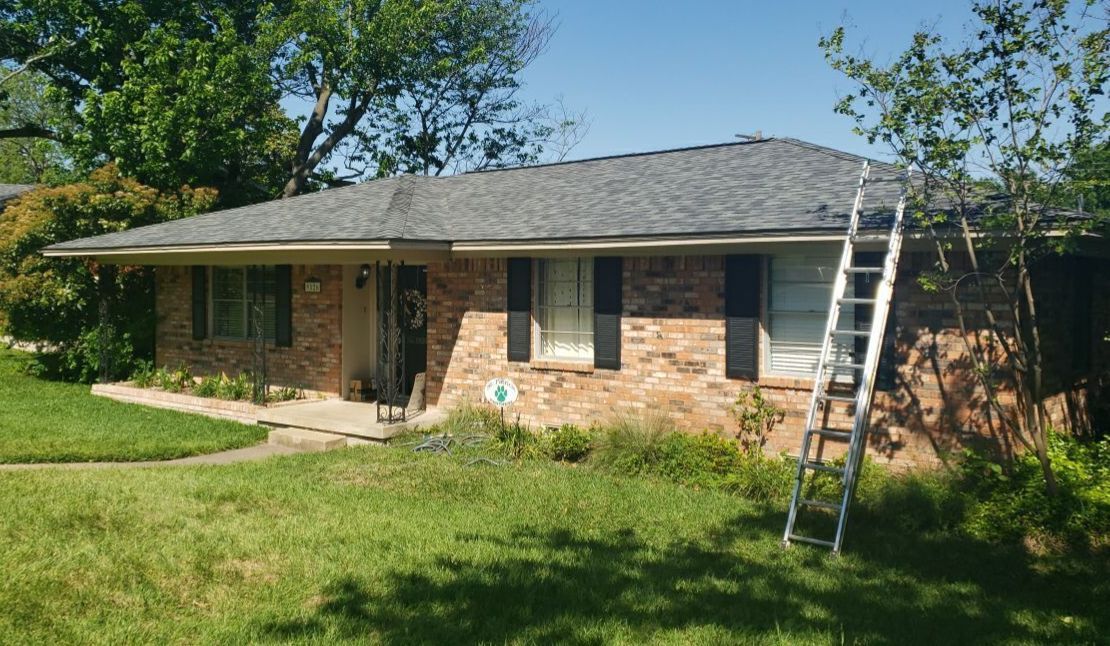
Recently we were called out to check a Class 4 roof on Bent Creek Trail in Dallas 75252—a home we re-roofed back in 2016 after a hailstorm. Just a couple of blocks away, on Willow Wood, we’re about to replace another Class 4 roof that was totaled by the most recent hail. Both are impact-resistant systems. The difference? Age.
This post walks through what we found, what’s changed in the Class 4 shingle world since 2016, and why age is just as important as the rating on the bundle.
2016 Hail Replacement on Bent Creek Trail: How Is It Holding Up?
Back in 2016, we replaced the roof on a home on Bent Creek Trail after storm damage. That roof was installed with:
- Shingle:
- Color: Teak
- Type of job: Storm-related full replacement
Fast-forward about nine years. The homeowner didn’t have an active leak, missing shingles, or any obvious problem—they simply wanted a professional to look everything over and tell them the truth about the roof’s condition.
What we saw on the roof
For a roof installed in 2016, the surface looked about like you’d expect from a properly installed Class 4 system:
- Granule wear in the “normal” range for its age
- No storm-related breaks, fractures, or obvious hail bruising
- No lifted or creased shingles
- Flashings and penetrations (pipe boots, vents, etc.) in acceptable condition for the age of the system
In short: no weather-related damage and no functional problems at the time of inspection.
The Roof Isn’t the Only Place Water Sneaks In
While the shingles were in good shape, not everything on the exterior looked as healthy.
Some of the trim/siding at the corners—painted 1×4 material, likely pine or possibly cedar—was starting to look pretty rough. There were areas where we’d flag possible water intrusion if left alone.
That’s a common pattern we see:
- The roof is the most frequent source people blame for leaks.
- But siding, corner boards, windows, skylights, chimneys, and wall flashings can be just as guilty—sometimes more so.
So a clean bill of health on the shingles doesn’t mean the whole exterior envelope is perfect. In this case, we’d recommend the homeowner stay ahead of those siding issues with repair/replacement and paint before they turn into interior damage.
What Happened to Owens Corning WeatherGuard?
The roof on Bent Creek Trail is covered with Owens Corning WeatherGuard, a Class 4 impact-resistant shingle that is no longer in production. Owens Corning has since evolved its Class 4 lineup.
Today, the closest products in the same general tier are:
TruDefinition® Duration STORM®
- Class 4 impact-resistant, tested to UL 2218
- Uses integrated polymeric backing / reinforced glass mat to achieve its impact resistance
- Built on the familiar TruDefinition® Duration platform with SureNail® Technology and up to 130-mph wind performanceOwens Corning+1
TruDefinition® Duration FLEX®
- Also UL 2218 Class 4 impact-resistant
- Uses SBS polymer-modified asphalt—essentially a rubberized binder—to increase flexibility and help absorb impact energy from hail and debris Owens Corning+1
So if you have an older WeatherGuard roof and eventually need replacement, Duration STORM is the closer cousin in design philosophy (reinforced mat), while Duration FLEX is a different approach (flexible, SBS-modified asphalt) in a similar performance tier.
As an Owens Corning Preferred Contractor, we work with these systems regularly and can match the right product to the specific house, budget, and insurance situation.
For more technical detail straight from the source, see Owens Corning’s information on their Class 4 impact-resistant shingles.Owens Corning
What “Class 4” Actually Means (and What Homeowners Get Wrong)
“Class 4” is a lab test rating, not a magic force field.
Under UL 2218, shingles are tested by dropping steel balls from 20 feet onto the shingle surface. A Class 4 rating—the highest level—means the shingle can withstand the impact of a 2-inch steel ball without cracking or rupturing through the shingle.IBHS+2Cedar Shake Roofing+2
Key points:
- Class 4 shingles are designed to handle more severe impacts than standard architectural shingles.
- They often reduce the likelihood of hail damage, but they absolutely can still be damaged, especially as they age.
- In Texas, having a UL 2218-rated roof can qualify you for insurance premium credits when the product is on the Texas Department of Insurance approved list and properly documented with your carrier.Texas Department of Insurance+2CertainTeed+2
Bottom line:
Class 4 significantly raises the bar, but it doesn’t make the roof invincible or ageless.
Same Storm, Two Class 4 Roofs: Bent Creek vs. Willow Wood
Now to the interesting part.
Just a minute away by truck, on Willow Wood, we’re about to replace another Class 4 impact-resistant roof, this time a GAF system. It’s in the same general area and was hit by the same hailstorm that rolled over Bent Creek Trail.
The difference?
- The Willow Wood roof is roughly 22–23 years old.
- The Bent Creek Trail WeatherGuard roof is about nine years old.
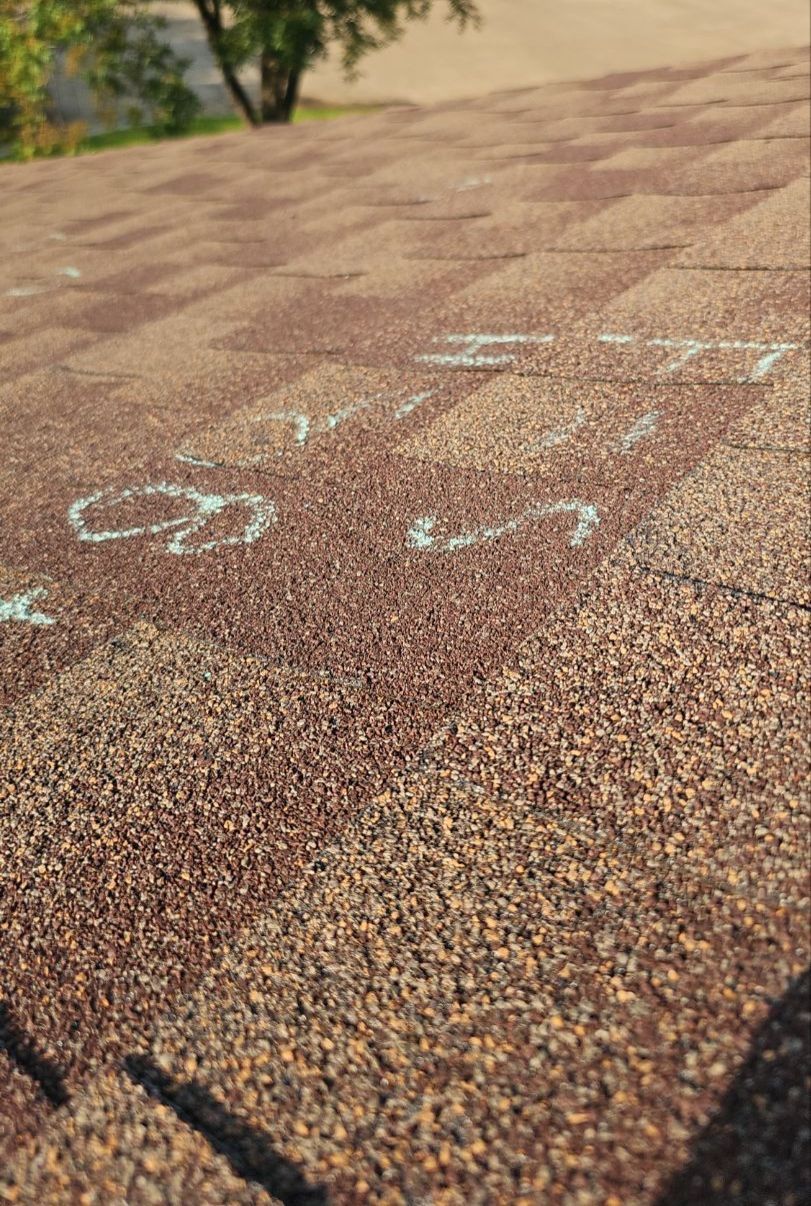
On Willow Wood, the hail clearly totaled the roof—we have close-up photos showing obvious hail impact marks, bruising, and functional damage. On Bent Creek Trail, the same storm barely left a mark.
That’s the real-world lesson:
-
Age makes a huge difference, even for Class 4.
-
The older a shingle gets, the more it loses flexibility and the ability to absorb impact without cracking.
-
A storm that a relatively young Class 4 roof shrugs off can be the last straw for a 20+-year-old Class 4 system.
Class 4 Shingles Still Wear Out
It’s worth stating plainly:
- A Class 4 roof still has a finite lifespan.
- It still ages in the Texas heat, UV, and daily expansion/contraction cycles.
- It can be damaged by hail if the stones are large enough or the roof is old and brittle enough.
The benefit isn’t that you “never replace a roof again.” The benefit is:
- Fewer claims and repairs over the life of the roof.
- Better odds of coming through moderate hail with cosmetic or minor wear instead of a full replacement.
- Potential insurance premium reductions, depending on your carrier and policy.
On Bent Creek Trail, that’s exactly what we’re seeing: a nine-year-old Class 4 roof that’s still in serviceable condition after a storm that pushed a 23-year-old Class 4 roof nearby over the edge.
When Should a Dallas Homeowner Start Worrying About a Class 4 Roof?
There’s no single “expiration date,” but a few practical guidelines for North Dallas:
- Around 15 years in, it’s smart to get regular professional inspections, especially after notable hail events.
- By the 20–25-year mark, even Class 4 roofs are often nearing the end of their realistic service life in our climate—particularly if they’ve seen multiple hail cycles.
- Any time you see:
- Interior water stains
- Shingle fractures, exposed mat, or widespread granule loss
- Deteriorated siding, corner boards, or other exterior components near roof-to-wall junctions
…it’s time to get an experienced, local contractor on site.
As this Bent Creek / Willow Wood comparison shows, age plus storm history matters more than the label on the bundle.
Takeaways for Homeowners in North Dallas
From these two properties, the lessons are pretty simple:
- Class 4 is absolutely worth considering in hail-prone areas like Dallas, but it’s not indestructible.
- A younger Class 4 roof can shrug off hail that will destroy an older Class 4 roof down the street.
- The rest of your exterior—siding, trim, skylights, walls, and flashings—also needs attention. Not every water problem is a “roof leak.”
- Regular inspections, especially as the roof passes 15–20 years old, let you act based on data instead of guesswork.
If you’re in North Dallas and have an older impact-resistant roof—or you’re thinking about upgrading to Class 4—Bert Roofing can help you sort out what makes sense for your specific house and insurance situation.
Looking for roof replacement in Dallas, including North Dallas neighborhoods like 75252 and nearby areas? Check out our Dallas Roof Replacement Services page for more details and options for impact-resistant shingles, including Owens Corning Duration STORM and Duration FLEX.
For manufacturer details on Owens Corning’s Class 4 products, you can also visit the Owens Corning roofing website and review their current Class 4 lineup and technical data .Owens Corning