A newer roof is not necessarily a trouble-free roof.
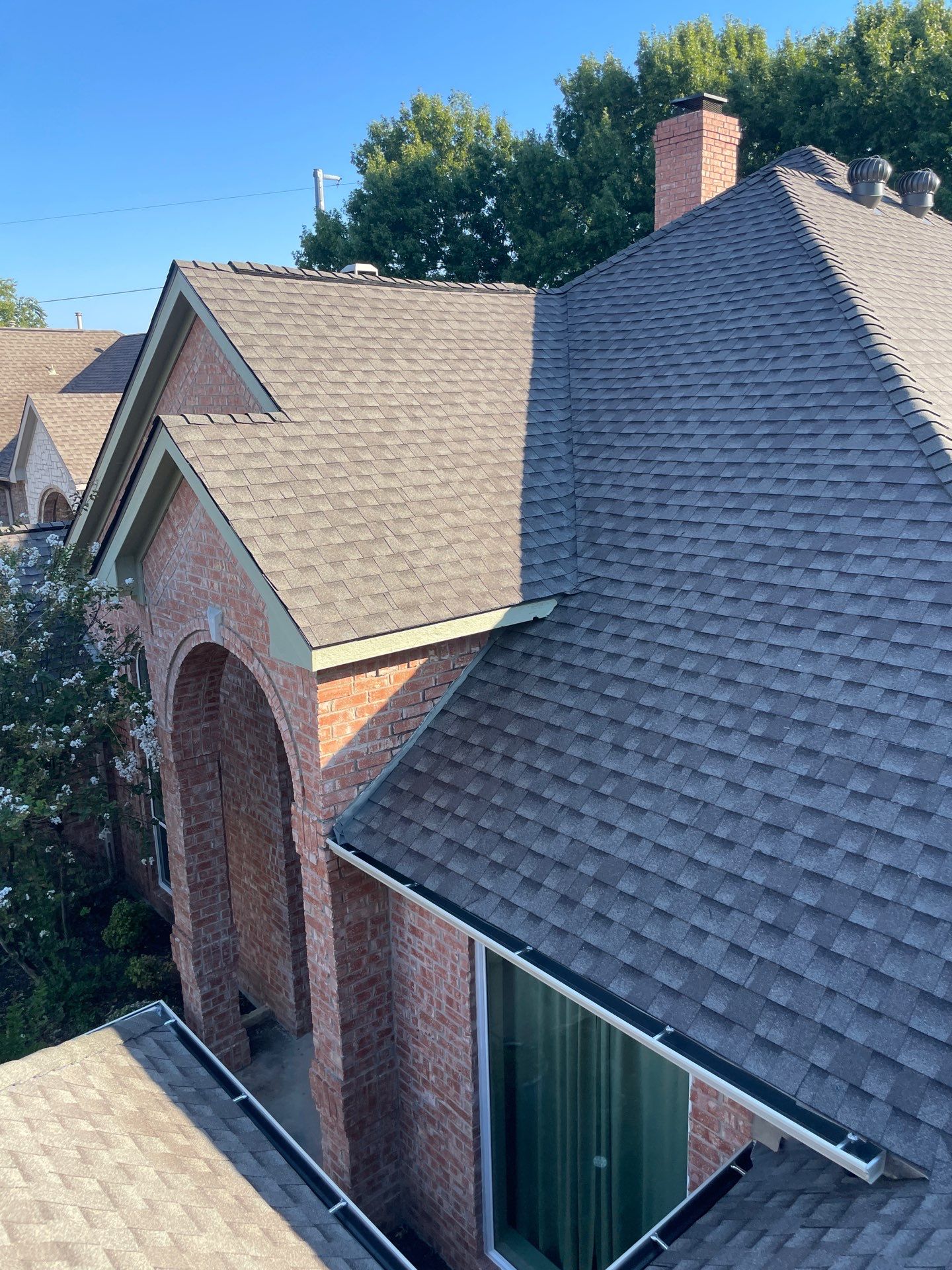
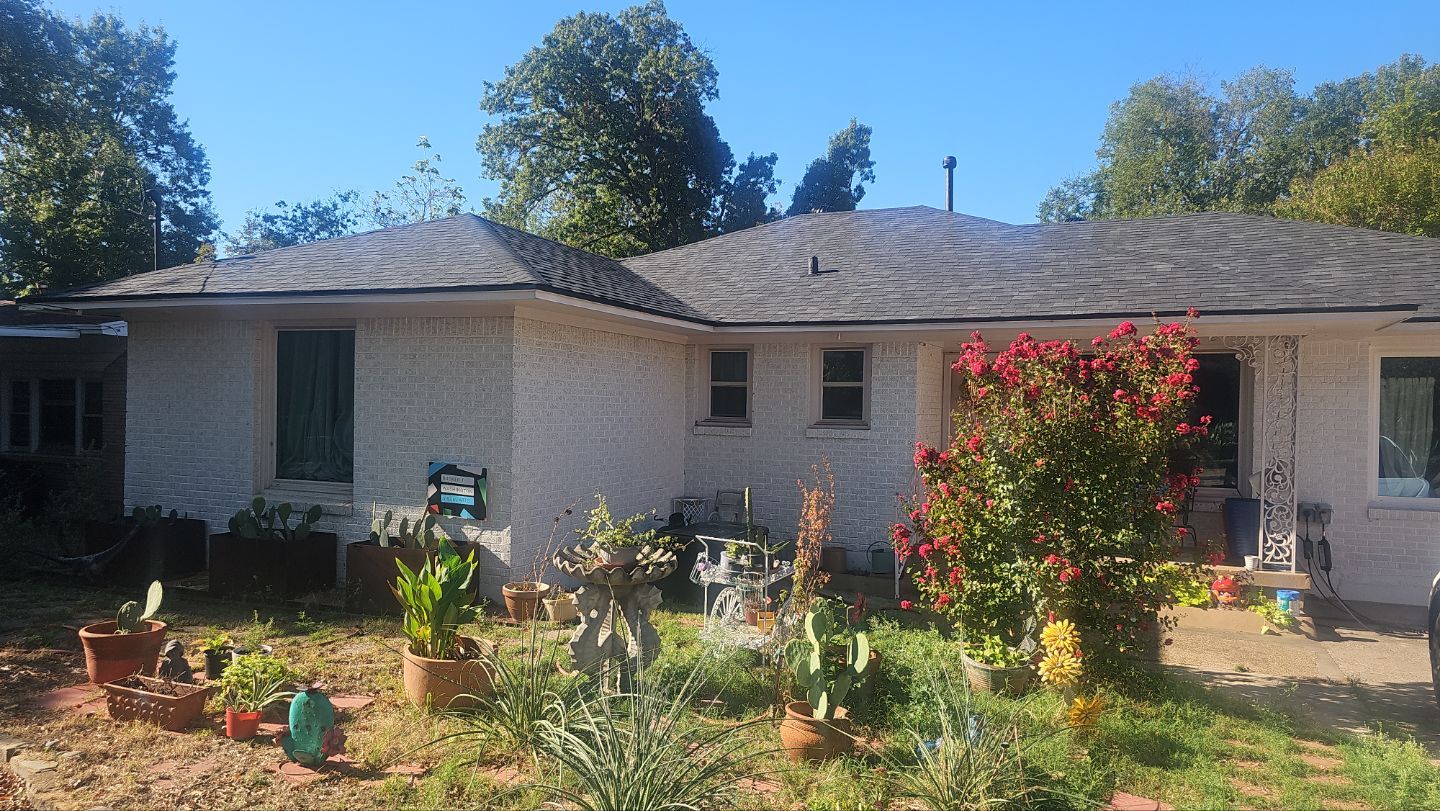
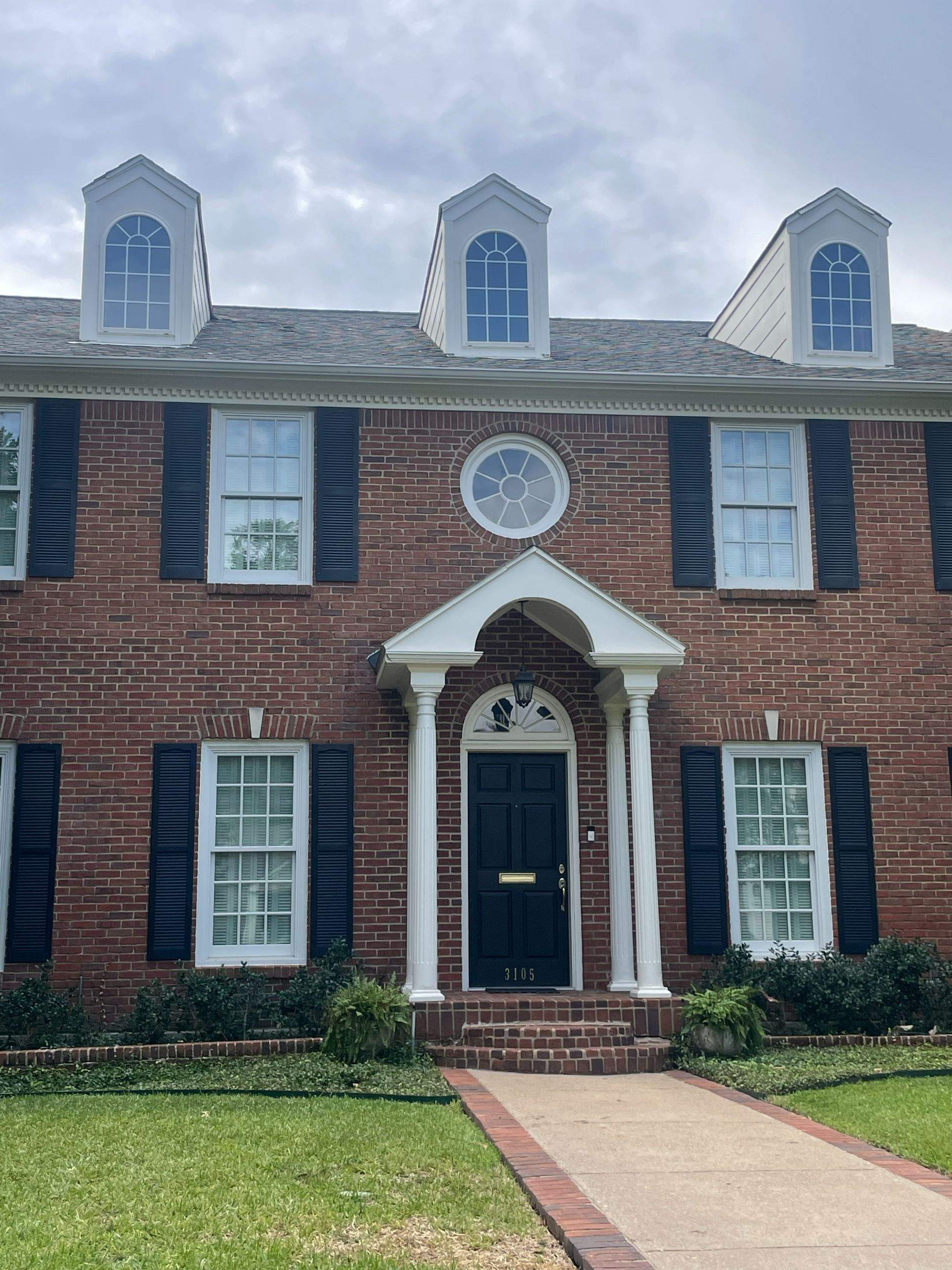
This home on Vanderbilt Avenue in Dallas 75206 had been re-roofed shortly before the current homeowner purchased the property. The detached garage was not included in that work. Bert Roofing later replaced the garage roof, which had performed without problems.
Several years later, the homeowner called us back about a different issue: water was getting in around the chimney on the main house.
This was not a case of an old roof simply reaching the end of its life. The problem was concentrated around the chimney, where previous repair work had relied heavily on black plastic roofing cement instead of resolving the flashing detail underneath.
The chimney had already been repaired once
The homeowner had been dealing with the problem for some time. In his original email to us, he explained that he had previously attempted a quick repair with a handyman, but it had not stopped the water. By the time we inspected the roof, the soffit below the chimney had begun to rot and peel.
That history was important.
When a leak keeps returning in the same location, continuing to add sealant is usually not the answer. At some point you have to determine whether a properroof repair can correct the flashing system instead of continuing to patch the surface.
That was particularly evident at this chimney.
Too much plastic roofing cement is usually a warning sign
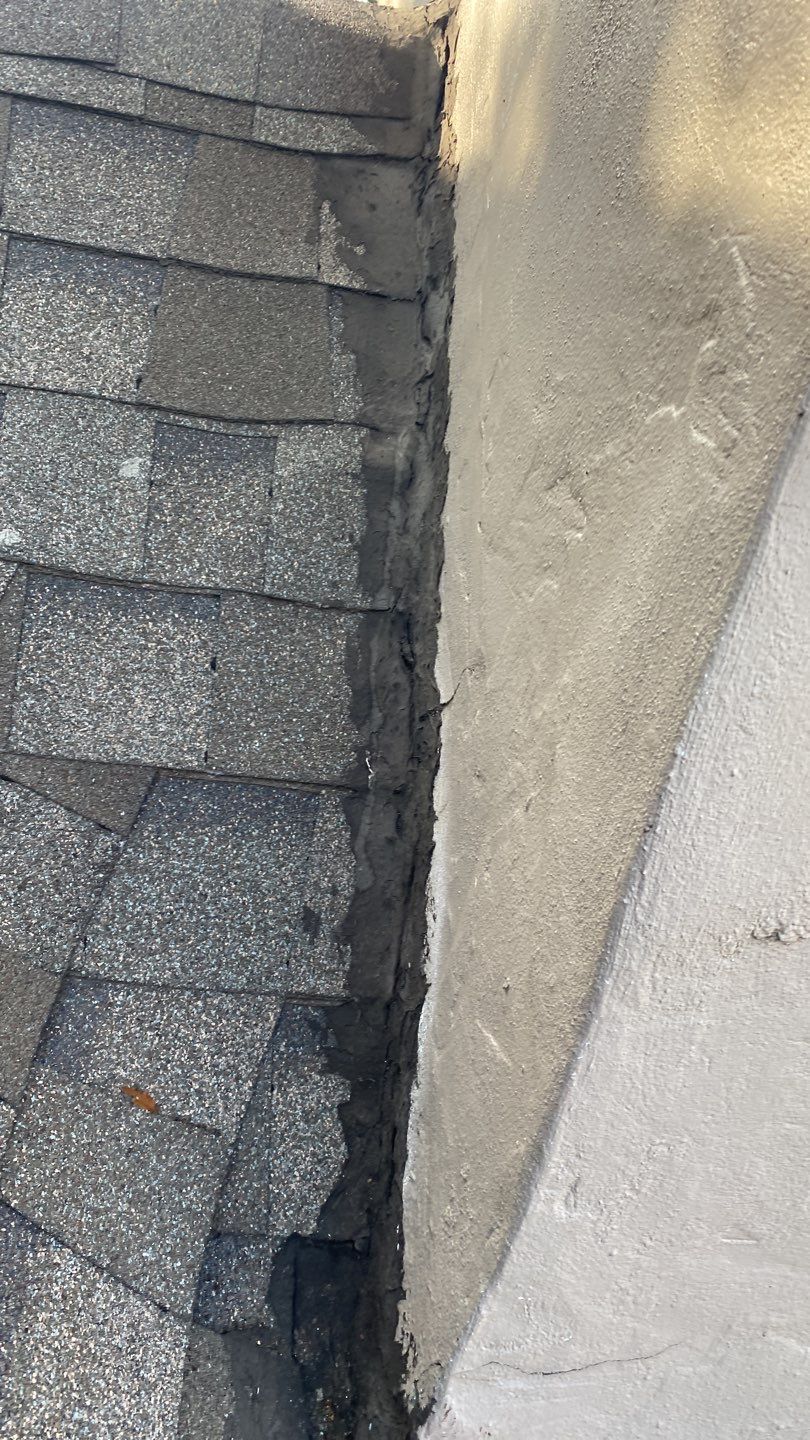
One of the first things that stood out was the amount of black plastic roofing cement around the chimney.
Plastic cement has legitimate roofing uses. What we generally do not want to see is a chimney depending on a large amount of exposed cement to remain watertight.
A properly flashed chimney relies primarily on metal flashing that directs water onto the roof surface. The flashing needs to work with the shingles, and the upper portion needs an effective counterflashing detail.
When large areas around a chimney have been covered with plastic cement, it often tells us that someone has been trying to control the water from the surface rather than correcting what is underneath.
The photographs from this project show exactly that condition. In photos 13 and 14, substantial amounts of black roofing cement are visible around the chimney and roof intersection.
There is another problem with relying on exposed plastic cement: sunlight is hard on it. UV exposure and normal weathering cause roofing cement to dry, crack and deteriorate. A patch that stops water temporarily can eventually begin leaking again.
That is why repeatedly applying more roofing cement can become a matter of kicking the can down the road.
We rebuilt the chimney flashing instead of adding another patch
Our repair scope was substantially different from simply applying more sealant.
We removed and replaced the chimney flashing, installed approximately 50 square feet of ice-and-water protection, and replaced the shingles disturbed by the repair. We also fabricated and installed new counterflashing at the chimney.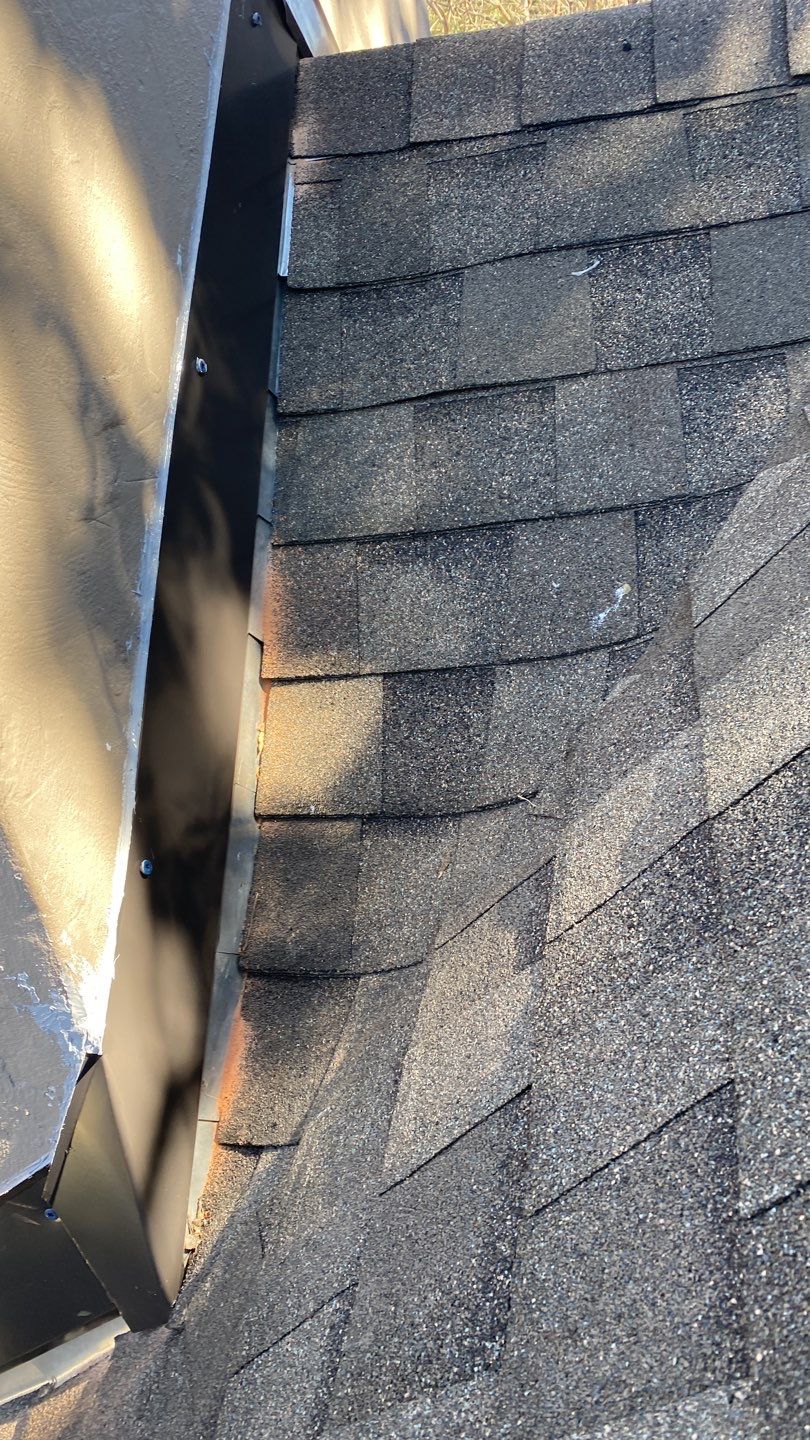
The counterflashing is an important part of the system. It protects the upper edge of the roof flashing and helps prevent water running down the chimney from getting behind it.
The work order separately documents the installation of the custom counterflashing.
There were several smaller roofing issues as well
The chimney was the primary concern, but it was not the only maintenance item we identified.
The repair scope also included replacing buckled shingles on the east, or driveway, side of the house, addressing shingles along wall returns and placing gutter screen beneath shingles at the front. We also noted a front gutter that potentially needed to be re-sloped.
These were relatively small items compared with replacing an entire roof, but small details are often where roof leaks begin.
A roof can have thousands of square feet of shingles performing perfectly while a few inches of improperly constructed flashing allow water into the house.
Why chimney leaks can happen even on newer roofs
Homeowners understandably associate leaks with old roofs. Age certainly matters, but it is only one part of roof performance.
Chimneys are one of the more complicated penetrations through a residential roof. Water has to be directed around a large masonry structure while shingles, flashing and masonry all intersect.
If that detail is built correctly, it can perform for many years.
If it is dependent on caulk or roofing cement, the roof can leak even when the surrounding shingles still have considerable useful life remaining.
That was the useful lesson from this Vanderbilt Avenue project. The answer was not another coating of black cement and it certainly was not replacing an otherwise serviceable roof. The appropriate repair was to get underneath the previous patches and correct the flashing system.
Roof leak repair in Dallas 75206
This was also a repeat-customer relationship, although for two different roofs on the property.
Bert Roofing had previously replaced the detached garage roof. When the homeowner later had trouble with the chimney area on the main house, he called us back to investigate it.
For us, that is one of the advantages of roof repair work across East Dallas. The objective is not automatically to sell a roof replacement. If the roof still has useful life and the problem can be isolated to a repairable detail, the better answer is usually to repair the actual problem.
On this house in Dallas 75206, that meant removing a series of temporary-looking surface repairs and rebuilding the chimney flashing so the metal—not a layer of black roofing cement—did the work it was supposed to do.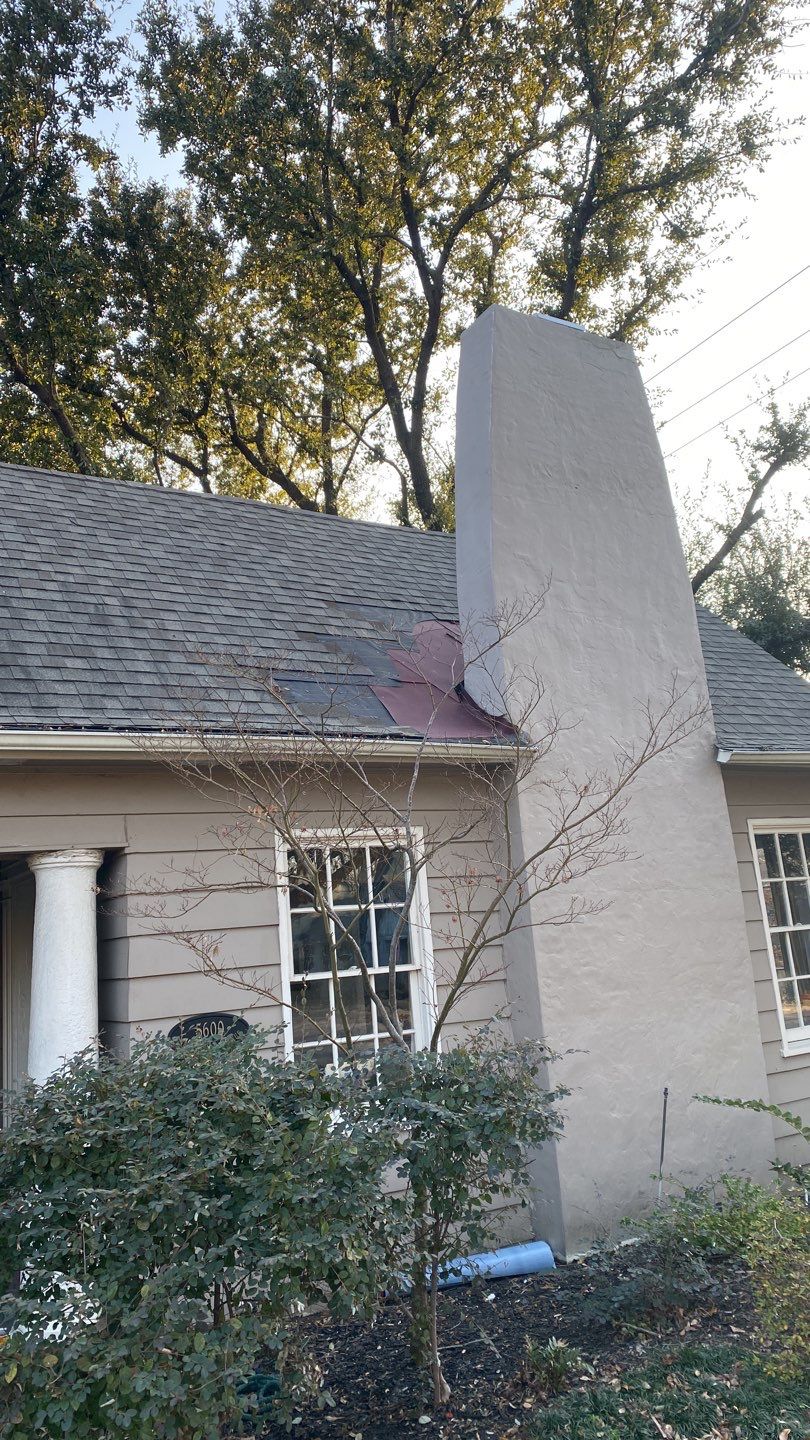
FAQ
Is roofing cement supposed to be used around a chimney?
It can be used in limited applications, but a chimney should not depend on large amounts of exposed roofing cement as its primary waterproofing system. Proper metal flashing and counterflashing should do most of the work.
Why does plastic roofing cement eventually fail?
Exposed roofing cement is affected by sunlight, heat and normal weathering. Over time it can harden, shrink and crack. That is one reason it is a poor substitute for correctly installed flashing.
Does a chimney leak mean the entire roof needs replacement?
No. If the surrounding roof is still serviceable and the leak is isolated to the chimney flashing, a properly designed repair can make much more sense than replacing the entire roof.
What is counterflashing?
Counterflashing is metal installed at the chimney or wall above the roof flashing. Its purpose is to prevent water from getting behind the upper edge of the flashing system.