A roof leak does not always tell you where the worst damage is.
That was the case on this Lakewood home in Dallas 75214. Bert Roofing had installed the roof roughly 12 years earlier using GAF ArmorShield shingles, with small sections of GAF Liberty modified-bitumen roofing where the roof geometry drops into a very low slope.
The homeowner called after water showed up during a period of heavy May rainfall. The visible leak was on the west side of the rear roof.
What made this repair unusual was what happened on the opposite side.
An Awkward Roof Transition at the Bottom of Two Valleys
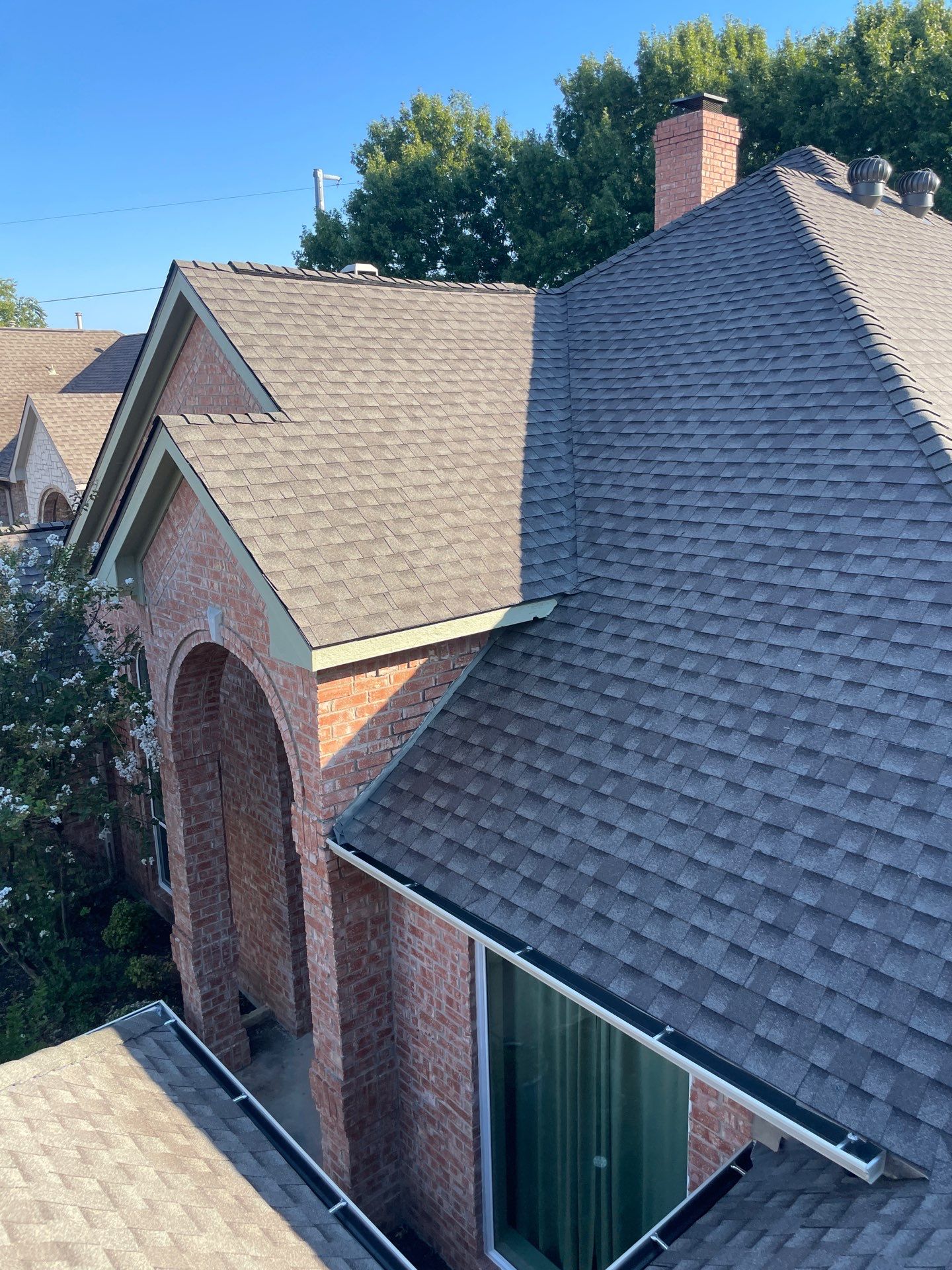
The rear of the house has a projecting section with a valley running down each side. Near the bottom of each valley, the framing flattens enough that conventional shingles are not the appropriate material for the last few square feet.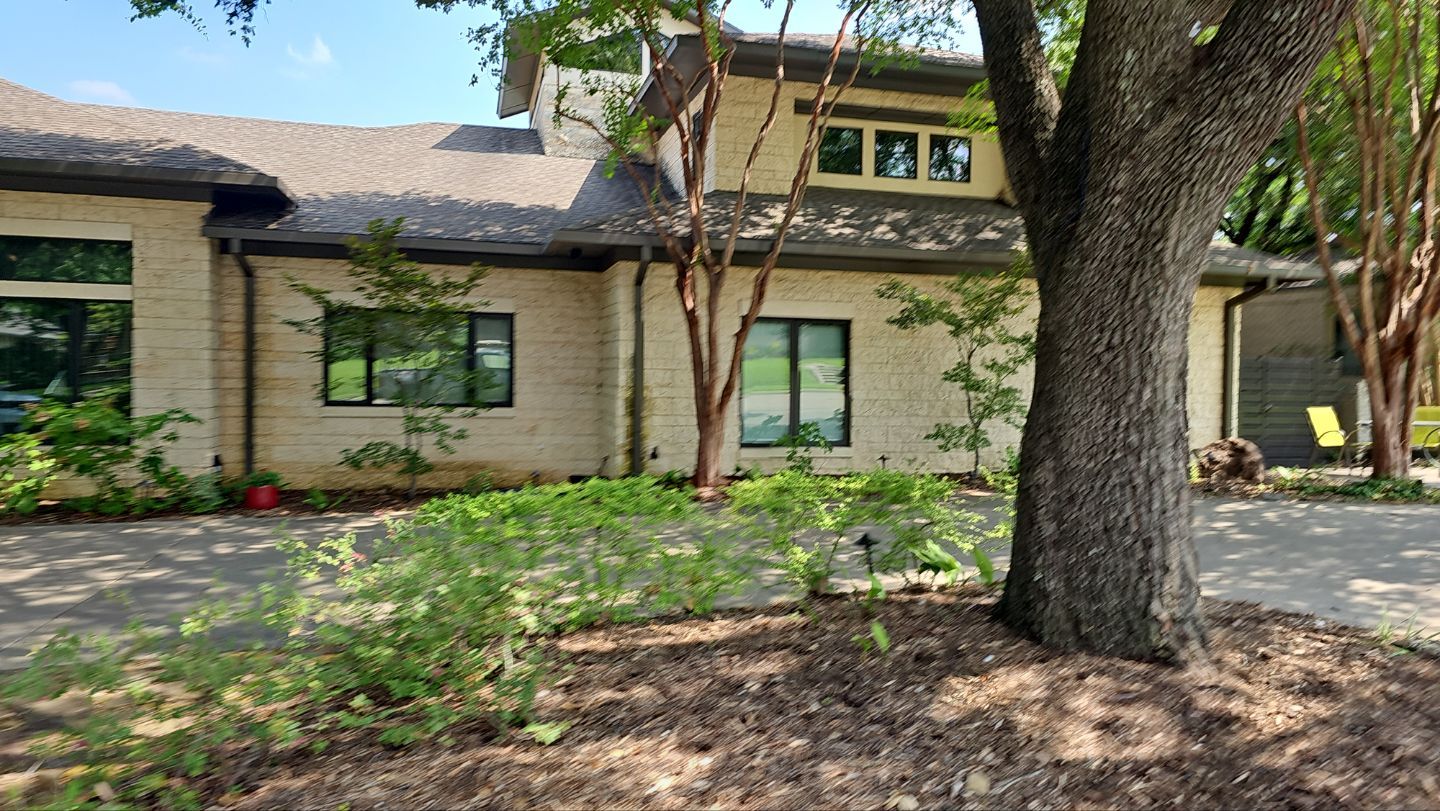
When we originally roofed the house, we handled those areas with a self-adhered modified-bitumen roofing system rather than trying to force shingles into a roof pitch where they do not perform well.
That distinction matters.
Shingles are designed to shed water on sufficiently steep roof slopes. As pitch decreases, water moves more slowly and has more opportunity to work underneath the roofing. A membrane roofing product is better suited for these small low-slope transitions.
The original inspection for this repair identified the low-pitch membrane at the bottom of the valley as the area requiring replacement.
Repairing the Side That Actually Leaked
The west side had produced noticeable water intrusion.
At approximately 12 years old, deterioration of the modified-bitumen roofing was one reasonable explanation. Minor movement in the structure could also have affected this complicated transition over time. We did not need to isolate one exact failure point to make an effective repair.
The solution was to remove the old low-slope roofing, install new GAF Liberty self-adhered membrane, properly tie the membrane into the surrounding GAF ArmorShield roofing, and extend the membrane up the adjoining wall.
A small portion of the flashing was loosened so the membrane could be turned vertically behind it and the wall-to-roof transition rebuilt correctly.
The repair estimate specified both GAF ArmorShield II shingles and Liberty Cap Sheet for this work.
The Homeowner Made a Practical Decision
There was a nearly identical low-slope section on the east side of the same roof.
It had never leaked as far as the homeowner knew.
But since the two areas were the same age and constructed almost identically, he asked a reasonable question: if we were already mobilized, why not repair both?
That made economic sense.
A meaningful portion of the cost of a small roof repair has nothing to do with the number of square feet involved. There is still time spent purchasing materials, loading the truck, traveling to the property, setting up the work area, protecting the property, cleaning up and hauling debris.
Doing the second section during the same trip therefore cost considerably less than returning later for an entirely separate repair.
The homeowner’s authorization specifically asked us to complete both sides at the same time.
As it turned out, that decision uncovered the more important problem.
The Side That Had Never Leaked Was Worse
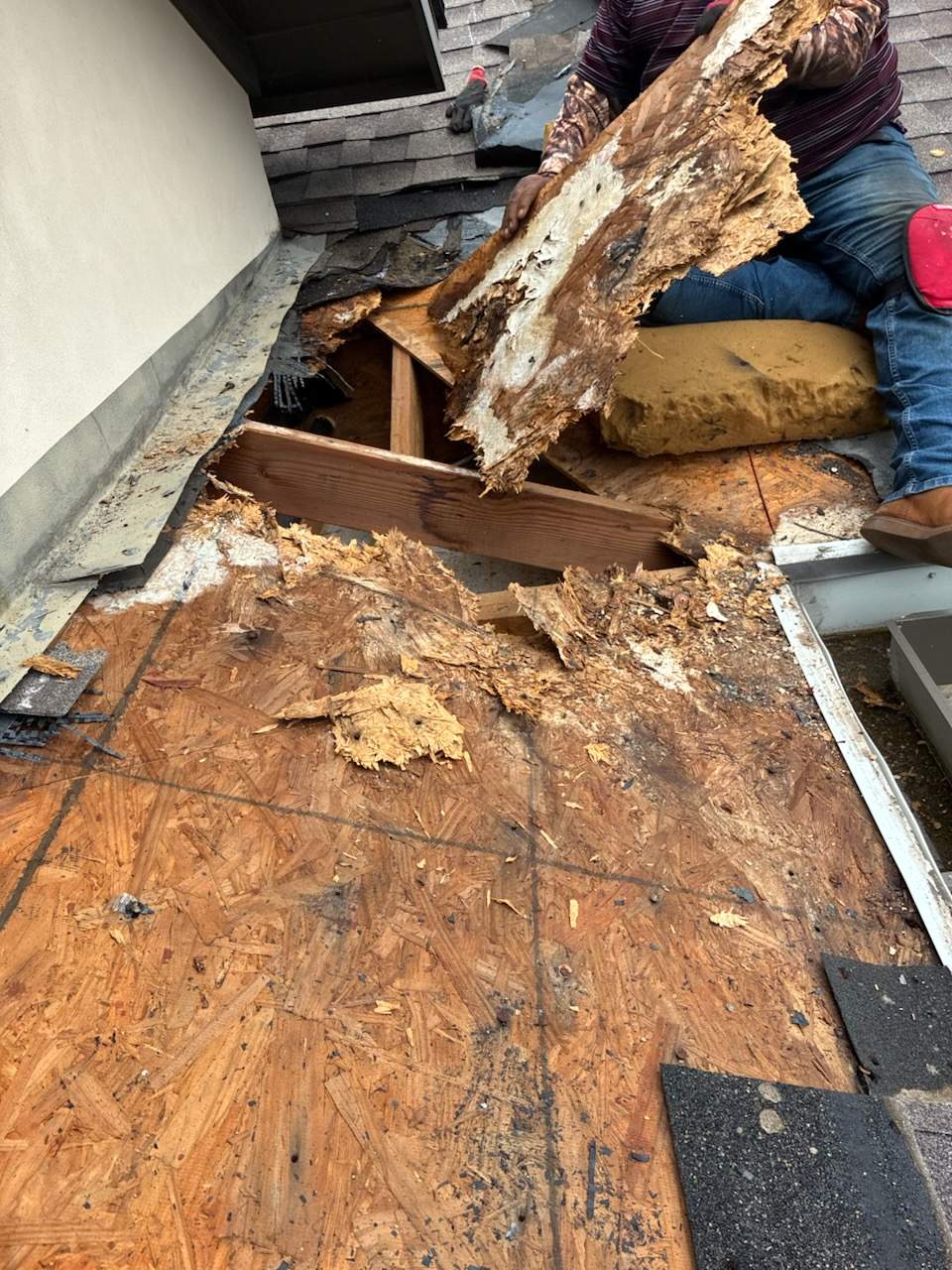
Once the roofing was removed from the east side, we found significant deterioration in the roof decking.
This was not just a slightly soft area.
Approximately two 4-by-8 sheets of decking—roughly 64 square feet—were involved. Our invoice documents the additional east-side scope and the decking replacement.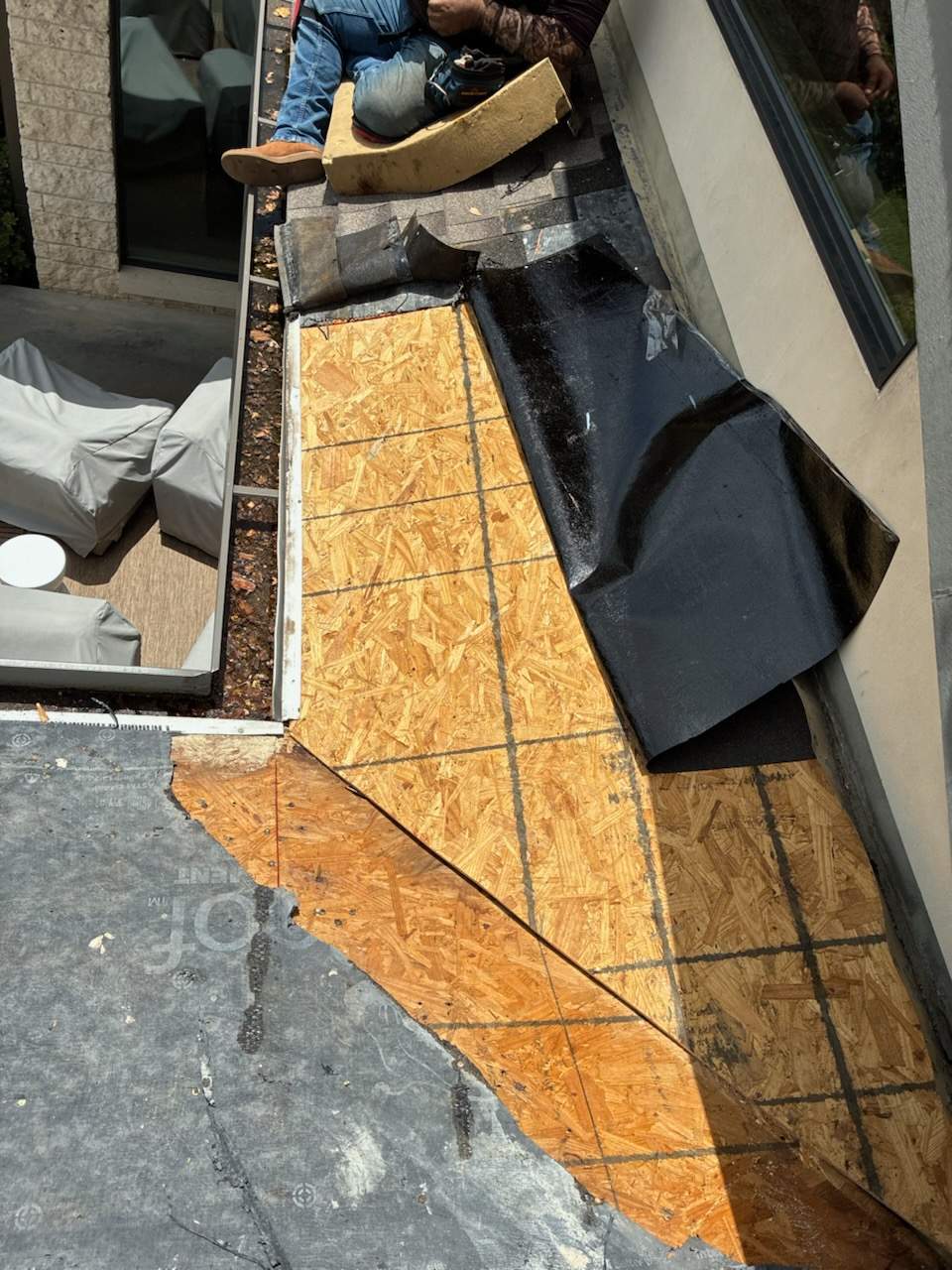
The photographs taken during the repair show the extent of the concealed damage after the roof was opened. Photo 35 in the project documentation shows heavily deteriorated decking that would not have been apparent from the exterior before removal.
The homeowner had never seen water inside this part of the house.
That was the interesting part of the investigation.
Following the Water Back to the Siding
Once the damaged decking was exposed, the water path became easier to follow.
Instead of originating from the low-slope roofing itself, the moisture appeared to be coming from a small opening in the siding near the roof.
It was not a dramatic defect. It was the type of small opening that can admit a limited amount of water only under certain conditions.
That also explained why the problem had remained hidden.
A larger roof leak may quickly produce a stain or dripping water that gets someone’s attention. A very small intermittent leak can be more deceptive. A small amount of moisture entering repeatedly over a long period can deteriorate wood without ever creating an obvious interior leak.
The siding opening was straightforward to repair once it was located.
Finding it was the difficult part.
Replacing the Damaged Decking and Rebuilding the Roof
After removing the deteriorated decking, we replaced the affected area with new roof decking and rebuilt the low-slope roofing section.
The new GAF Liberty membrane was integrated with the surrounding shingle roof and extended up the wall behind the flashing just as it was on the west side.
The result was two matching low-slope areas repaired during one project instead of waiting for the second side to become an obvious problem.
In this case, the side that prompted the service call had the visible leak.
The side that had never produced a known leak had the greater concealed damage.
What This Lakewood Roof Repair Illustrates
There are two practical lessons from this project.
First, small low-slope sections deserve the same attention as the rest of a roof. Even when they represent only a few square feet, the roofing material still needs to match the pitch and drainage conditions.
Second, the amount of water a homeowner sees does not necessarily indicate the amount of damage taking place.
An obvious leak may be discovered quickly. A very slow, intermittent leak can sometimes operate unnoticed long enough to cause substantially more deterioration.
In this case, repairing both sides at the same time was initially a decision based largely on efficiency and cost.
It also turned out to be the decision that uncovered the more serious problem.